From Reactive to Prescriptive: The Evolution of Reliability and APM in Maximo
Maximo's reliability capabilities have evolved from basic PM scheduling to AI-powered prescriptive maintenance. This article covers Reliability Strategies, Maximo Health, Condition Insight, and how to build a maturity roadmap from reactive to prescriptive.


From Reactive to Prescriptive: The Evolution of Reliability and APM in Maximo
Asset reliability has evolved from a discipline of guesswork and calendar-based maintenance into a data-driven, AI-powered practice. IBM Maximo Application Suite has been at the center of this transformation, building a progression path that takes organizations from reactive maintenance through preventive, condition-based, predictive, and ultimately prescriptive maintenance. With MAS 9.2 and the introduction of Maximo Condition Insight, the platform now offers agentic AI that does not just predict failures but recommends specific actions and can generate work orders automatically. This article is a technical deep dive into the reliability and APM capabilities in Maximo, how they fit together, and how to build a practical maturity roadmap for your organization.
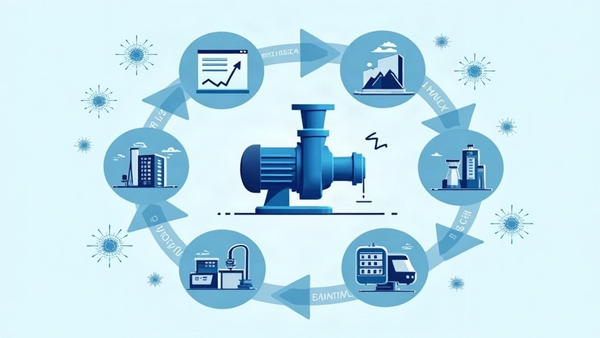
The asset management maturity spectrum in Maximo includes six stages: reactive (run-to-failure and corrective work), preventive (calendar and meter-based schedules), condition-based (using inspections and sensors), risk-based (assessing asset criticality and failure risks), predictive (leveraging AI models to forecast failures), and financially optimized (balancing cost, risk, and asset health). Each stage builds on the data and processes established in the previous one. You cannot skip stages. An organization with poor work order data cannot jump to predictive maintenance, because the AI models need historical data to learn from. The maturity journey is as much about data quality as it is about technology.
Reliability Strategies: The RCM Foundation
Reliability Strategies is an add-on for Maximo Manage, introduced in MAS 8.11 and significantly enhanced in 9.1 and 9.2. It brings Reliability-Centered Maintenance (RCM) directly into Maximo through a prebuilt strategy library built on RCM and FMEA (Failure Modes and Effects Analysis) principles. The library includes over 800 asset types, more than 58,000 failure modes, and over 5,000 recommended preventive maintenance tasks. IBM estimates that approximately 32,000 years of cumulative expert experience have gone into building this library, drawing from industry experts, research institutes, and domain specialists.
The library is not just a reference. It is designed to be used directly within Maximo. A typical workflow includes:
- Select an asset type and configuration: Browse the library to find the asset type that matches your equipment. The library covers common industrial assets such as pumps, motors, valves, heat exchangers, conveyors, transformers, and more. Each asset type includes configuration options that reflect different operating contexts.
- Review failure modes: For the selected asset type, review the failure modes that have been documented. Each failure mode describes what fails, how it fails, and why it fails. This is the FMEA content, structured in a way that is accessible to maintenance planners without requiring a reliability engineering background.
- Evaluate mitigation activities: Review the recommended activities to mitigate each failure mode. Each activity includes an effectiveness rating, which indicates the likelihood of the activity finding or preventing the problem before a failure occurs. This helps you prioritize which mitigation activities to implement.
- Convert to maintenance plans: When you identify relevant mitigation activities, copy them directly into job plans and PM records in Maximo. This converts the RCM analysis into actionable maintenance tasks that the system can execute automatically.
MAS 9.1 added the ability to link failure modes to existing failure classifications in Maximo. This means when a technician records a failure on a work order, the system can connect it to the corresponding failure mode in the strategy library, closing the loop between strategy and execution. The generative AI-powered FMEA builder, introduced in 9.1, can generate failure mode recommendations for asset types not already in the library. If you have specialized equipment that the library does not cover, the AI can suggest failure modes based on the asset description and operating context.
MAS 9.2 enhances the linkage between reliability strategies and job plans. Strategies can now generate preventive maintenance records directly, with improved tracking of implementation progress. This closes a long-standing gap between strategy design and execution. Instead of creating strategies in isolation and manually translating them into PMs, organizations can operationalize them within Maximo in a few clicks. The RCM Advisor, announced for future release, will further automate this process with AI-driven workflows that recommend asset strategies and identify reliability gaps.
Maximo Health: Scoring and Insights
Maximo Health is the framework that transforms raw asset data into actionable insights. It takes the work orders, maintenance logs, inspection reports, and meter readings that you already capture in Maximo Manage and translates them into easy-to-read health, criticality, and risk scores. These scores highlight which assets are performing well, which ones are slipping, and which ones need urgent attention.
Maximo Health relies on a structured scoring framework:
- Scoring Groups: Assets are organized into categories with similar scoring logic. For example, you might create a scoring group for "High-Voltage Transformers" or "Critical Pumps." Each group has its own scoring configuration.
- Contributors: These are the factors that influence a score. Out-of-the-box contributors include overdue PMs, work order backlog, equipment age, inspection results, and meter readings. You can extend contributors with organization-specific factors.
- Weights: Each contributor carries a weight that reflects its impact on the overall score. For example, overdue PMs might carry a weight of 30%, while equipment age carries 10%. The weights are configurable per scoring group.
- Thresholds: Define the score ranges for each health category (such as Good, Fair, Poor) so that the scores are interpretable and actionable.
As of MAS 9.1, Maximo Health is no longer a standalone suite application. It is now an add-on within Maximo Manage. If you are upgrading from Maximo Health 9.0 as a standalone application, you must first add Maximo Health as an add-on in Maximo Manage 9.0 before proceeding with the upgrade to 9.1 or 9.2.
The practical value of Maximo Health is that it surfaces problems you did not know you had. A pump might not have failed yet, but its health score has been declining for three months because of an increasing work order backlog, missed PMs, and degrading inspection results. Without the health score, each of those signals exists in isolation. With the health score, they are combined into a single, actionable metric that a maintenance manager can use to prioritize attention.
Maximo Condition Insight: Agentic AI for APM
Maximo Condition Insight, introduced in MAS 9.2, is the most significant advancement in Maximo's APM capabilities. It is an agentic AI capability powered by IBM watsonx that evaluates work orders, metrics, time-series data, meter readings, FMEA data, and alerts to produce explainable summaries of asset condition. Unlike a dashboard that simply displays data, Condition Insight interprets the data and communicates its findings in plain, understandable language.
The key differentiator is explainability. Many AI tools can predict failures, but they produce a probability score without explaining why. Condition Insight tells you what is happening with the asset, what trends it is seeing, and what it recommends doing about it. This makes AI practical for maintenance teams that do not have data science expertise. A reliability engineer can ask Condition Insight to evaluate an asset and receive a response like: "Asset CONV-001 has shown increasing vibration readings over the past 30 days, with three readings above the warning threshold. Two recent work orders addressed bearing-related issues. The FMEA library identifies bearing degradation as a common failure mode for this asset type. Recommendation: Schedule a vibration analysis and bearing inspection within the next 7 days. Consider deferring the routine PM scheduled for next week, as the asset condition suggests a more targeted intervention is needed."
This level of analysis, performed in seconds rather than the hours it would take a human to gather and review the same data, is what makes Condition Insight a game-changer for reliability teams. It does not replace the reliability engineer. It augments them by doing the data gathering and pattern recognition that would otherwise consume hours of their day.
Condition Insight works in concert with the other APM applications. It pulls data from Maximo Manage (work orders, asset records, meter readings), Maximo Monitor (time-series sensor data), Maximo Predict (failure prediction models), and the Reliability Strategies library (FMEA content). This integration is what separates Maximo's APM from standalone AI tools that require custom builds and data pipelines. The data is already in the Maximo ecosystem. Condition Insight just needs to analyze it.
Looking forward, IBM is developing four AI agents that will create a fully automated condition-based maintenance workflow: a monitoring agent that continuously watches asset state, an analysis agent that interprets patterns, a recommendation agent that suggests actions, and an execution agent that generates work orders. These agents will work together to identify issues, analyze root causes, recommend interventions, and create the work orders to execute them, all without human intervention for routine decisions. The MCP Server capability in 9.2 allows organizations to bring their own agents and integrate them with Maximo Manage APIs, so the automation can be extended beyond what IBM provides out of the box.
Building a Maturity Roadmap
Moving from reactive to prescriptive maintenance is a journey that most organizations complete in stages over several years. Here is a practical roadmap for progressing through the maturity levels using Maximo's capabilities.
Stage 1: Reactive to Preventive (0-6 months) If you are currently in reactive mode, start by capturing all maintenance work in Maximo work orders. Every repair, inspection, and service should be recorded, even if it is created manually. In parallel, build job plans for your top 20 critical assets and create PM records with appropriate frequencies. Activate the PMWoGenCronTask to automate work order generation. This stage is about building the data foundation. The quality of your work order data determines the quality of everything that follows.
Stage 2: Preventive to Condition-Based (6-18 months) Once PMs are running reliably, add condition monitoring for your most critical assets. Start with 10-20 assets where you have meter data (run hours, temperature, vibration) or can easily capture it through Maximo Mobile. Define condition monitoring records with meaningful thresholds. Activate the MeasurePointWoGenCronTask to generate work orders automatically when thresholds are breached. This is where you start to see the value of data-driven maintenance over calendar-based maintenance.
Stage 3: Condition-Based to Risk-Based (12-24 months) Implement Maximo Health to calculate asset health, criticality, and risk scores. Configure scoring groups and contributors that reflect your operating context. Use the health scores to prioritize maintenance and capital investment decisions. This is also the stage where you should deploy the Reliability Strategies add-on, using the library to identify failure modes and mitigation activities for your asset types. Convert the library recommendations into job plans and PMs.
Stage 4: Risk-Based to Predictive (18-36 months) Integrate sensor data from Maximo Monitor or external IoT systems to feed real-time condition data into Maximo Manage. Deploy Maximo Predict to build failure prediction models based on your historical work order data and sensor data. At this stage, the system can forecast failures before they happen, giving you time to plan interventions rather than reacting to breakdowns. The data quality work from stages 1 and 2 pays off here, because the prediction models need clean, complete data to be accurate.
Stage 5: Predictive to Prescriptive (24-48 months) Deploy Maximo Condition Insight to get AI-driven, explainable recommendations for asset maintenance. The AI analyzes the data that you have been collecting for years and tells you not just what will fail, but why and what to do about it. As the AI agents become available through the Feature Channel, deploy them incrementally to automate the routine decisions. The goal is not to replace human judgment for complex decisions, but to automate the 80% of routine maintenance decisions that follow predictable patterns, freeing reliability engineers to focus on the 20% that require expert analysis.
Practical Implications
The most common mistake organizations make with APM is trying to skip stages. They buy the AI tools before they have the data, deploy predictive models before they have clean work order history, or implement condition monitoring without first having reliable PMs. The result is expensive technology that produces unreliable outputs. The maturity progression exists for a reason: each stage builds the data and process foundation that the next stage depends on.
If you are unsure where your organization stands, conduct a data quality assessment. Look at your work order history for the past 12 months. Are failure codes consistently populated? Are actual labor hours recorded? Are meter readings captured for critical assets? If the answer to any of these is no, you have work to do in stages 1-2 before investing in predictive or prescriptive capabilities. Maximo Health can actually help with this assessment, because its scoring will reveal data gaps. If assets have insufficient data to calculate a health score, that tells you exactly where your data quality problems are.
For reliability engineers, the Reliability Strategies library is the most underutilized resource in Maximo. With 800 asset types and 58,000 failure modes, it provides a starting point for RCM analysis that would take a team of engineers years to build from scratch. The AI-powered FMEA builder fills the gaps for asset types not in the library. If you have not yet explored the library, spend an hour browsing it. Find your most common asset type, review the failure modes, and compare them to what you are currently maintaining. The gap between what the library recommends and what you are doing is your improvement opportunity.
For maintenance managers, the key metric to watch is the ratio of planned to unplanned work. World-class maintenance organizations achieve 80% or higher planned work. If your ratio is inverted (more unplanned than planned), focus on stages 1-2 before investing in advanced APM. The ROI of getting PMs right is higher than the ROI of predictive AI on a poor data foundation.
Bottom Line
Maximo's reliability and APM capabilities have evolved to the point where prescriptive maintenance is no longer theoretical. With Reliability Strategies providing the RCM foundation, Maximo Health translating data into scores, and Condition Insight delivering AI-driven recommendations in plain language, the tools are all there. The differentiator between organizations that succeed and those that struggle is not the technology. It is the discipline to follow the maturity progression, invest in data quality, and build the processes that make the technology effective. Start where you are, use the tools that match your maturity level, and progress deliberately. The path from reactive to prescriptive is well-defined. The question is whether you are willing to walk it.