MAS 9.2 Platform Readiness: What the 2026 Release Cycle Means for Your Upgrade Path
MAS 9.2 is generally available. This article breaks down the platform changes that matter most for administrators moving off MAS 8.x, including Java and database currency updates, OpenShift lifecycle considerations, licensing visibility, and a practical readiness checklist built from the 2026…

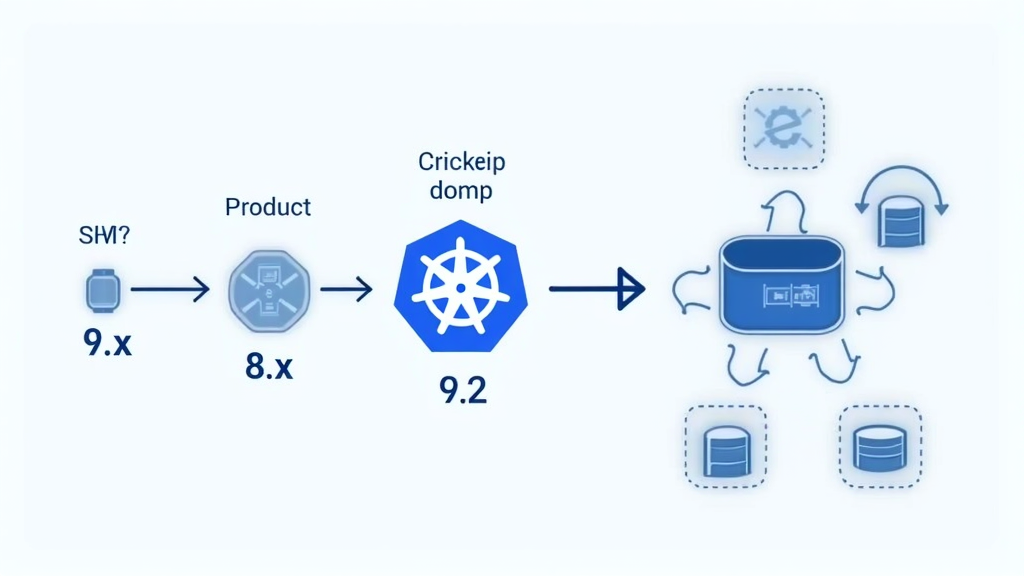
MAS 9.2 Platform Readiness: What the 2026 Release Cycle Means for Your Upgrade Path
The Maximo Application Suite release calendar for 2026 has been unusually busy. Between the final MAS 8.10 and 8.11 support window closing at the end of April, the MAS 9.0 and 9.1 monthly fix pack cadence continuing through the first half of the year, and the general availability of MAS 9.2 in July, platform teams are being asked to make upgrade decisions faster than ever. The question is no longer whether to move to MAS 9.x, but which release to target, how to sequence the migration, and what new platform dependencies need to be in place before the first production cutover.
This article is for the administrators and architects who have to answer those questions. It focuses on the platform layer: the MAS core, the OpenShift footprint, the licensing and entitlement model, the currency updates for Java and databases, and the practical release management changes that IBM has introduced in 2026. It does not attempt to cover every application-level enhancement in Manage, Monitor, or APM, because those deserve their own deep dives. Instead, it gives you a grounded view of what the 9.2 platform release means for your environment, your schedules, and your risk profile.
If you are still on MAS 8.x, the clock is now explicit. Standard support and software updates for MAS 8.10 and 8.11 ended on April 30, 2026. That means no more monthly fix packs, no more security patches, and no more prerequisite currency updates on the 8.x line. If you are on MAS 9.0, you have a stable, well-documented path forward, but you should already be evaluating whether 9.1 or 9.2 is the right target. If you are on 9.1, the 9.2 release is the natural next checkpoint, especially if AI extensibility, improved administrative tooling, or updated database support are part of your roadmap.
The real shift in 2026 is that the platform itself is moving faster than the applications. The MAS core is now released monthly, the operator catalog is updated with security patches and bug fixes on a regular cadence, and the surrounding ecosystem of OpenShift, Cloud Pak for Data, MongoDB, DB2, Oracle, and Java versions is advancing in lockstep. That makes upgrade planning less about feature gaps and more about dependency management. This article walks through the key platform considerations and ends with a practical readiness checklist you can adapt for your own environment.
Understanding the MAS 9.x Release Cadence and Support Timeline
IBM moved to a monthly fix pack cadence for the MAS core and its major applications some time ago, and the 2026 calendar shows that cadence in full effect. MAS core 9.0 reached 9.0.27 in late June 2026, while 9.1 reached 9.1.19 in the same period. MAS 9.2 was made generally available in July 2026. This is not the slower, quarterly release model that many Maximo customers remember from the 7.6 or early 8.x years. It is a continuous delivery model wrapped in discrete version numbers, and it changes how you should think about patching, testing, and support.
The first thing to understand is that 9.0, 9.1, and 9.2 are not just feature releases. They are also supported upgrade paths. Customers on MAS 8.x are encouraged to move to MAS 9.0 first, establish stability, and then evaluate 9.1 or 9.2. Customers already on 9.0 can move directly to 9.2 if their application footprint supports it. Customers on 9.1 can treat 9.2 as a smaller incremental upgrade than the 8.x to 9.0 jump. The exact path depends on which applications you have installed, which industry solutions are in use, and whether you are running on the architecture IBM now supports for 9.x.
In 2026, IBM added support for IBM System/390x (s390x) and IBM Power (ppc64le) architectures in MAS core and Maximo Manage base 9.0.12 and later. This matters for two reasons. First, it means that mainframe-class infrastructure can now host the MAS control plane and the Manage base workload, which opens the door for regulated or centralized IT organizations to consolidate platforms. Second, it signals that IBM is treating MAS as a true enterprise platform, not just a containerized application for x86 cloud environments. If your organization has standardized on IBM Z or Power for certain workloads, the 9.x line is now a viable target.
The support timeline is also clearer than it has been in the past. MAS 8.10 and 8.11 standard support ended on April 30, 2026. That is a hard date, and IBM has repeatedly communicated that customers should begin upgrade plans for MAS 9.0 if they have not already done so. The 9.0 and 9.1 lines continue to receive monthly fix packs, and 9.2 will follow the same pattern once it is established. If you are still planning your migration, your runway is shorter than it appears, because testing, environment provisioning, and cutover windows all consume calendar time.
A practical approach is to freeze your 8.x environment on the last available fix pack, build a parallel 9.x landing zone, and execute a structured migration rather than an in-place upgrade. This is especially true for customers with significant customization, multiple industry add-ons, or complex integration landscapes. The monthly cadence means that you do not have to wait for a major release to get fixes, but it also means that you need a repeatable patch process once you are on 9.x.
What MAS 9.2 Changes at the Platform Layer
The headline for MAS 9.2 is AI extensibility through Model Context Protocol, agents, skills, and APIs. That is an application-layer story, and it is genuinely important for teams building AI-assisted workflows. But underneath that headline, the platform itself has several changes that administrators need to understand before they can safely enable any of the AI features.
First, MAS 9.2 raises the currency bar for several dependencies. Java is moving to Java 25 for most of the suite, with Java 21 remaining for Maximo Real Estate and Facilities. DB2 12.1 is now supported, Oracle 26ai is supported once it is available on-premises, MongoDB 8.0 is supported, and Cloud Pak for Data 5.2 is supported. BIRT is upgraded to 4.21, and Cognos moves to 12.1. These are not cosmetic changes. Each one has implications for driver versions, backup and restore procedures, monitoring queries, and integration endpoints.
Second, the MAS core administration experience continues to mature. The 9.2 release includes improvements to user management and security UI, a focus menu for faster navigation, and better license consumption visibility through the License Consumption Dashboard. There is also OAuth2 SMTP authentication support for outgoing emails, which matters for organizations using Microsoft 365 or other cloud email providers. The suite navigation is cleaner, and role-based entry points are stronger, which reduces the friction for new users and makes entitlement review easier.
Third, data import and monitoring have been improved. The 9.2 release notes mention improved data import capabilities, which is relevant for anyone doing bulk migrations or regular reference data refreshes. Suite license service updates and support for additional languages round out the administrative improvements. None of these are dramatic individually, but together they reduce the daily friction of running MAS at scale.
The platform change that should be on every architect's radar is the ongoing shift toward OpenShift as the primary runtime. MAS has been OpenShift-first for several releases, but 9.2 tightens that assumption. The operator catalog, the suite license service, the identity provider integration, and the monitoring stack all assume an OpenShift-native deployment model. If you are still running Maximo in a traditional WebSphere or Liberty deployment, the move to MAS 9.x is also a move to OpenShift, and that is a larger transformation than a version upgrade.
OpenShift, Operators, and the Catalog Model
One of the most important mental shifts when moving to MAS 9.x is accepting that the Maximo you knew is now a set of operators running on OpenShift. The IBM Maximo Operator Catalog v9 is the delivery vehicle for security updates, bug fixes, and new application versions. When IBM publishes a new catalog, your cluster can pull updated operators and apply them according to the approved update strategy. This is fundamentally different from the old model of downloading fix packs, staging them on a file system, and running update scripts by hand.
The operator model has clear advantages. Patches are smaller and more targeted. Rollback is more structured. Dependencies between core and applications are expressed in the operator bundle, which reduces the chance of mismatched versions. The catalog also includes the Suite License Service, the Truststore Manager, and the Data Dictionary, which are shared services that multiple applications depend on.
But the operator model also introduces new responsibilities. You need an OpenShift cluster that is sized correctly for the MAS control plane, the application workloads, and the supporting services. You need a cluster-admin team that understands operators, subscriptions, and catalog sources. You need a network architecture that supports the MAS ingress and egress patterns, including the routes for the suite and the applications. And you need a backup and disaster recovery strategy that covers the persistent volumes, the cluster state, and the MAS configuration data stored outside the traditional Maximo database.
In 2026, IBM has been clearer about known issues and release-specific caveats in the operator catalog notes. For example, customers using Maximo Assist 8.7 or 8.8 were advised not to update and to contact IBM Support for guidance because of the removal of IBM Watson Discovery. Customers with HSE installed were advised to avoid the January 2026 release because of a known issue. Customers with Maximo Real Estate and Facilities were advised to defer the February 2026 release. These caveats are exactly the kind of detail that a release manager needs to incorporate into a go/no-go decision, and they illustrate why reading the catalog release notes is now a critical step in every upgrade plan.
A practical implication is that your upgrade plan should include an operator catalog review checkpoint. Before any environment is patched, someone should read the catalog notes for the target version, identify any application-specific caveats, and confirm that your installed applications are compatible. This is a small step that prevents large surprises.
Licensing, AppPoints, and the Entitlement Review
The MAS licensing model is based on AppPoints, which are consumed by users based on the applications they access and the roles they hold. The License Consum Dashboard improvements in 9.2 are not just cosmetic; they give administrators better visibility into who is consuming what, which is essential for entitlement reviews and cost forecasting.
If you are moving from a traditional Maximo license model to MAS, the AppPoints conversation is one of the earliest you should have with your IBM account team. The conversion is not always one-to-one, and the way users consume points can change when you enable additional applications like Monitor, Health, Predict, or Mobile. A user who only touches work orders in Manage consumes a different number of points than a reliability engineer using Health and Predict, or a technician using Maximo Mobile for inspections.
The 9.2 improvements to license consumption reporting make it easier to identify users who are consuming points but not actively using the system, which is a common finding during entitlement reviews. They also make it easier to forecast growth. If you are planning to roll out Maximo Mobile to an additional 200 technicians, or to enable Health and Predict for a new asset class, you can now model the AppPoints impact with more confidence.
Entitlement review should be a formal checkpoint in every upgrade plan. Before the upgrade, capture the current AppPoints consumption baseline by user, by application, and by business unit. After the upgrade, compare the actual consumption to the forecast. This exercise often reveals configuration issues, such as users being assigned to higher-point applications than necessary, or dormant users still consuming points. It also builds the financial discipline that MAS requires, because the platform is now metered in a way that Maximo 7.6 never was.
A Practical MAS 9.2 Readiness Checklist
The following checklist is designed to be adapted, not followed blindly. It assumes you are moving from MAS 8.x or 9.0 to 9.2, and that your target deployment is OpenShift.
- Confirm your current version and support status. Document which MAS core version, application versions, and industry add-ons are running today. Identify any components that will leave standard support before your planned cutover.
- Map your installed applications to the 9.2 compatibility matrix. Pay special attention to industry solutions like HSE, Oil and Gas, Maximo for Utilities, Transportation, Aviation, and Nuclear. These often have their own release schedules and known issues.
- Review the operator catalog release notes for your target version. Look for caveats that apply to your installed applications. Contact IBM Support if you are unsure about a specific combination.
- Validate your OpenShift cluster capacity. MAS 9.2 has the same general footprint as 9.0 and 9.1, but AI services, monitoring, and additional applications all consume resources. Review worker node sizing, storage classes, and network policies.
- Plan your database and Java currency. If you are running DB2, Oracle, or MongoDB, confirm that your target versions are supported in 9.2. Plan driver updates and backup compatibility tests.
- Audit your custom code and automation scripts. Automation scripts, Java customizations, integrations, and report definitions should be reviewed for compatibility with newer Java versions and API changes. The Warning Framework in Manage 9.x can help identify anti-patterns.
- Model your AppPoints consumption. Build a baseline before the upgrade and a forecast for the target state. Include new applications or user groups you plan to enable in the first year.
- Test identity and email integrations. If you rely on LDAP, SAML, SCIM, or SMTP, validate that these integrations work under the new security UI and OAuth2 SMTP support in 9.2.
- Define your rollback and patch process. The operator model makes rollback more structured, but you still need a tested procedure. Also define how you will apply monthly fix packs after go-live.
- Communicate the timeline and train your administrators. Platform upgrades succeed or fail based on the readiness of the people running them. Make sure your operations team understands the new administration interfaces, the catalog model, and the support channels.
Common Pitfalls During MAS 9.x Platform Upgrades
Even with a good checklist, platform upgrades can go sideways. The most common pitfalls are not technical failures but planning failures. The first is underestimating the OpenShift learning curve. MAS is not just Maximo in containers; it is a cloud-native application platform. If your team has never operated OpenShift at production scale, the upgrade project needs to include time for skills development and operational runbook creation.
The second pitfall is skipping the entitlement review. AppPoints surprises are expensive, and they are easiest to address before users are live on the new platform. A common pattern is to migrate all users with their existing application access, discover that the point consumption is higher than expected, and then scramble to reassign entitlements. It is better to model this upfront and adjust user groups before cutover.
The third pitfall is treating the upgrade as a one-time event rather than the start of a continuous update model. Once you are on MAS 9.x, you will be applying monthly fix packs and periodic application updates. Your testing, change control, and communication processes need to support that cadence. If your organization requires six weeks of change approval for every patch, you will fall behind quickly.
The fourth pitfall is ignoring known issues in the catalog notes. IBM is unusually transparent about these in the 2026 releases, and there is no excuse for being surprised by a caveat that was published in the operator catalog. Make the catalog review a mandatory gate in your release process.
The fifth pitfall is insufficient integration testing. MAS 9.x introduces changes to APIs, authentication, and event patterns. Integrations that worked on 7.6 or 8.x may need adjustments. Plan integration regression testing as a dedicated workstream, not an afterthought.
Practical Implications
For administrators, the practical implication of the 2026 release cycle is that MAS is now a continuously updated platform, not a periodically upgraded product. The monthly fix pack cadence, the operator catalog model, and the explicit end of 8.x support all point to the same conclusion: your organization needs a repeatable, automated, and well-governed process for keeping MAS current.
The move to MAS 9.2 is also an opportunity to clean up technical debt. Use the upgrade as a forcing function to review customizations, retire unused integrations, consolidate user entitlements, and modernize your monitoring and backup practices. The platform changes in 9.2, from Java 25 to MongoDB 8.0 to Cognos 12.1, are easier to absorb if you treat them as part of a broader modernization rather than a series of isolated migrations.
For executives, the message is that MAS 9.2 is not just an AI story. The AI extensibility is real and valuable, but it sits on top of a platform that has matured significantly in the areas of administration, security, licensing visibility, and operational currency. A successful 9.2 rollout depends as much on platform readiness as it does on AI strategy.
Bottom Line
MAS 9.2 reaching general availability in July 2026 is the right moment for every Maximo organization to reassess its platform posture. If you are on MAS 8.x, the support window has closed and the upgrade is no longer optional. If you are on MAS 9.0 or 9.1, the move to 9.2 is a natural next step, especially if you want the administrative improvements, dependency currency, and AI extensibility that the release delivers.
The most important work happens below the feature headlines. Validate your OpenShift footprint, read the operator catalog release notes, audit your AppPoints consumption, review your custom code and integrations, and build a repeatable patch process. Do that work well, and the AI and application enhancements in 9.2 become enablers rather than risks. Skip that work, and even the most exciting new feature will be undermined by platform instability.