The RCM-EAM-APM Convergence: How Maximo Is Building a Connected Reliability Digital Thread
The RCM-EAM-APM Convergence: How Maximo Is Building a Connected Reliability Digital Thread

For years, the relationship between Enterprise Asset Management, Reliability Centered Maintenance, and Asset Performance Management has been awkward. Organizations ran Maximo Manage for work execution, used separate tools or spreadsheets for RCM studies, and maybe had a condition monitoring system that lived in the OT world, disconnected from the IT systems that planned and scheduled maintenance. The result was three parallel universes: the reliability engineer's analysis, the condition monitoring engineer's data, and the maintenance planner's work orders. They rarely talked to each other.
That is changing. IBM is repositioning Maximo Application Suite's reliability capabilities as a connected digital thread: a continuous flow from failure analysis through maintenance strategy, sensor data, condition monitoring, health scoring, alerting, work execution, and feedback into reliability improvement. This is not a product launch. It is an architectural shift that changes how organizations should think about their reliability programs.
This article examines the convergence, the new Condition Insight agentic AI capability, the RCM Advisor on the MAS 9.2 roadmap, and a practical framework for building a condition-based maintenance workflow that actually closes the loop.
The Digital Thread: From Failure Analysis to Work Execution
The IBM workshop in Amsterdam (May 2026) crystallized what had been emerging across multiple MAS releases: Maximo is no longer positioning Manage, Monitor, Health, Predict, and Reliability Strategies as separate products. They are increasingly presented as connected operational capabilities within a single platform.
The flow discussed during the workshop looks like this:
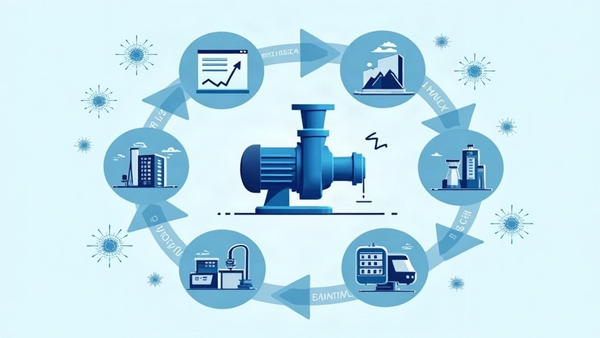
Failure Analysis → Maintenance Strategy → Sensors & Meters → Monitoring → Health Scoring → Alerts → Work Execution → Feedback into Reliability Improvement
Each step in this flow corresponds to a specific Maximo capability:
| Step | Capability | What It Does |
|---|---|---|
| Failure Analysis | Reliability Strategies | RCM studies, FMEA, failure modes, criticality analysis |
| Maintenance Strategy | Reliability Strategies + Manage | PM definitions, condition monitoring points, mitigation strategies |
| Sensors & Meters | Maximo Monitor + IoT | Real-time sensor data ingestion, meter association |
| Monitoring | Maximo Monitor | Anomaly detection, threshold monitoring, trend analysis |
| Health Scoring | Maximo Health | Asset health indices, risk scoring, replacement planning |
| Alerts | Maximo Health + Monitor | Alert generation, enrichment, prioritization |
| Work Execution | Maximo Manage | Work order generation, planning, scheduling, execution |
| Feedback | Condition Insight + AI Service | Analysis of outcomes, strategy refinement, learning |
The key word is "connected." In the old model, each step was a handoff between different teams using different tools. The reliability engineer completed an RCM study and handed a PDF to the maintenance planner. The condition monitoring engineer saw a vibration trend and sent an email. The planner created a work order based on a calendar schedule that had nothing to do with either the RCM study or the vibration trend.
In the connected model, the RCM study defines the failure modes, the failure modes define the condition monitoring points, the monitoring data feeds the health score, the health score generates an alert, the alert creates a work order, and the work order completion data feeds back into the reliability analysis. The digital thread is not a metaphor. It is a data flow.
Condition Insight: Agentic AI Enters APM
The most significant recent addition to this digital thread is Maximo Condition Insight, announced in late 2025 and now being integrated into MAS 9.2 workflows. Condition Insight is an agentic AI capability within Maximo APM that interprets asset data to explain asset condition, highlight emerging trends, and recommend corrective actions.
What makes Condition Insight different from traditional APM analytics is the "agentic" part. Traditional APM tools generate dashboards and alerts. A human must interpret the dashboard, decide what the alert means, and determine what action to take. Condition Insight does the interpretation and recommendation itself.
Specifically, Condition Insight evaluates:
- Work order history
- Asset metrics and meter readings
- Time-series sensor data
- Failure Mode and Effects Analysis (FMEA) records
- Active and historical alerts
- Maintenance strategy definitions
It then produces a plain-language summary of the asset's condition, identifies performance patterns, and recommends specific corrective actions. The output is not a chart or a score. It is an explanation: "This pump is showing early signs of bearing wear based on increasing vibration at 3x running speed. Historical failure data indicates a 70% probability of failure within 90 days if not addressed. Recommended action: Replace bearing set during next scheduled outage."
This is a fundamentally different interaction model. Instead of requiring a reliability engineer to interpret data, Condition Insight brings the interpretation to the maintenance planner, the supervisor, or even the technician. It democratizes reliability analysis.
The technology stack behind Condition Insight is IBM watsonx, IBM's enterprise AI platform. This is significant because it means Condition Insight is not a black box. It provides explainable recommendations with traceable reasoning. In regulated industries where maintenance decisions must be defensible, this explainability is essential.
RCM Advisor: The Next Frontier
On the MAS 9.2 roadmap, RCM Advisor extends the agentic AI concept into the reliability strategy domain. Where Condition Insight analyzes current asset condition, RCM Advisor helps define the strategies that prevent degradation in the first place.
The capabilities announced for RCM Advisor include:
- AI-driven strategy recommendations: Based on asset type, operating context, and industry benchmarks, RCM Advisor suggests failure modes, effects, and mitigation strategies.
- Reliability gap identification: RCM Advisor analyzes existing maintenance strategies against known failure modes and identifies gaps where no mitigation is defined.
- Boundary condition suggestions: For each failure mode, RCM Advisor suggests the operating conditions under which the failure mode is relevant.
- Automated component and failure mechanism generation: Starting from an asset type, RCM Advisor can generate a draft FMEA including components, functions, functional failures, failure modes, and failure effects.
This is not a replacement for reliability engineers. It is an accelerator. An RCM study that might take a reliability engineer six weeks to complete can be drafted by RCM Advisor in hours, leaving the engineer to review, validate, and refine rather than start from a blank page.
The foundation for RCM Advisor is the extensive RCM library IBM acquired, which includes studies across 800 asset types, 58,000 failure modes, and over 5,000 recommended preventive maintenance activities with step-by-step task instructions. This library provides the training data and reference patterns that make AI-driven strategy recommendations possible.
Maximo Reliability Strategies: The RCM Engine
Maximo Reliability Strategies, introduced in MAS 8.11 and significantly enhanced in MAS 9.0 and 9.1, is the application where RCM studies are created, managed, and linked to operational maintenance.
Key capabilities:
Failure Mode and Effects Analysis (FMEA). Reliability Strategies provides a structured FMEA module that captures functions, functional failures, failure modes, failure effects, and failure consequences. Each failure mode can be linked to recommended maintenance tasks, condition monitoring points, and operating context definitions.
Custom strategy support. In MAS 9.0, IBM added support for custom reliability strategies beyond the standard RCM and FMEA templates. In MAS 9.1, those custom strategies can be stored directly in the Maximo database, and AI has been added to suggest boundary conditions and generate components, failure mechanisms, and influences.
Integration with Manage. Failure modes defined in Reliability Strategies can be linked to failure codes in Maximo Manage. When a work order is completed with a failure report, the failure code maps back to the RCM study, creating a feedback loop that validates or challenges the original analysis.
Integration with Monitor and Health. Condition monitoring points defined in Reliability Strategies can be linked to sensor data in Maximo Monitor. Health scoring in Maximo Health can incorporate failure mode criticality from Reliability Strategies, so the health score reflects not just current condition but also the consequence of failure.
Preventive maintenance generation. Reliability Strategies can generate PM records in Maximo Manage based on the recommended maintenance tasks from the RCM study. This closes the loop from analysis to execution.
Building a Condition-Based Maintenance Workflow
With the digital thread components in place, organizations can build a true condition-based maintenance workflow. Here is a practical implementation path:
Step 1: Define Asset Criticality
Not every asset needs condition-based maintenance. The first step is a criticality analysis that identifies which assets justify the investment in sensors, monitoring, and analysis.
Use Reliability Strategies to document the criticality assessment. For each asset, define:
- Safety consequences of failure
- Environmental consequences of failure
- Production/operational consequences of failure
- Maintenance cost consequences of failure
- Redundancy and sparing philosophy
Assets with high safety, environmental, or production consequences and low redundancy are candidates for condition-based maintenance. Assets with low consequences or high redundancy may be adequately served by run-to-failure or time-based preventive maintenance.
Step 2: Identify Failure Modes and Monitoring Points
For each critical asset, conduct an FMEA in Reliability Strategies. For each failure mode, identify:
- The failure mechanism (what physically degrades)
- The leading indicators (what you can measure before failure occurs)
- The P-F interval (the time between detectable indication and functional failure)
- The recommended condition monitoring technique (vibration, temperature, oil analysis, ultrasonic, etc.)
The monitoring points defined in the FMEA become the configuration for Maximo Monitor. Each monitoring point is associated with a sensor, a meter in Maximo Manage, and an alert threshold.
Step 3: Configure Monitoring and Alerting
In Maximo Monitor, configure:
- Sensor data ingestion (MQTT, OPC-UA, REST APIs, or file-based)
- Data quality rules (range checks, freeze detection, rate-of-change limits)
- Alert thresholds (high, high-high, low, low-low, rate-of-change)
- Alert enrichment (associate alerts with failure modes from Reliability Strategies)
The alert enrichment step is critical. An alert that says "Vibration exceeded 4.5 mm/s" is less useful than an alert that says "Vibration exceeded 4.5 mm/s on Pump P-101, consistent with bearing degradation failure mode FM-003. Recommended action: Inspect bearings within 14 days."
Step 4: Define Health Scoring Logic
In Maximo Health, define health score calculations that incorporate:
- Current condition data from Monitor
- Alert history and severity
- Failure mode criticality from Reliability Strategies
- Age and usage metrics from Manage
- Work order history (frequency of corrective maintenance)
The health score should be a single number that answers the question: "How healthy is this asset right now, and how urgently does it need attention?" A score of 0-20 might mean "critical, immediate action required." A score of 80-100 might mean "healthy, no action required."
Step 5: Automate Work Order Generation
The final step is closing the loop: when an alert fires or a health score drops below a threshold, automatically generate a work order in Maximo Manage.
This can be implemented through:
- Escalations: A scheduled escalation that queries Health for assets below a threshold and creates work orders
- Automation scripts: An object launch point on the alert object that creates a work order when a high-severity alert is generated
- Condition Insight: The agentic AI capability that not only generates alerts but also recommends and can create work orders
The work order should include:
- The asset and location
- The failure mode context from Reliability Strategies
- The recommended corrective action
- The priority based on health score and criticality
- Links to the alert and health score that triggered it
Step 6: Close the Feedback Loop
When the work order is completed, the failure report data feeds back into the reliability analysis:
- Was the failure mode correctly identified?
- Was the P-F interval accurate?
- Did the corrective action resolve the issue?
- Should the monitoring thresholds be adjusted?
This feedback loop is what transforms a static RCM study into a living reliability program. Without it, the RCM study is a snapshot that becomes less accurate over time. With it, the study improves with every work order.
The Maturity Spectrum
Not every organization is ready for the full digital thread. The asset management maturity spectrum provides a useful framework for understanding where you are and where you are going:
| Level | Description | Maximo Capabilities Used |
|---|---|---|
| Reactive | Run-to-failure. Fix it when it breaks. | Maximo Manage (work orders only) |
| Preventive | Time-based or meter-based PM schedules. | Manage (PM module) |
| Condition-Based | Maintenance triggered by actual asset condition. | Manage + Monitor + Health |
| Predictive | AI/ML models forecast failures before indicators appear. | Manage + Monitor + Health + Predict |
| Prescriptive | AI recommends specific actions with explainable reasoning. | Full suite + Condition Insight + RCM Advisor |
The goal is not to move every asset to the prescriptive level. The goal is to apply the right strategy to the right asset based on criticality. A lightbulb in a hallway does not need a vibration sensor and an AI model. A main feedwater pump in a power plant probably does.
Practical Implications
The digital thread requires data discipline. Every step in the flow depends on the quality of the data from the previous step. If your asset hierarchy in Manage is inconsistent, your health scores will be unreliable. If your failure codes are not mapped to RCM failure modes, the feedback loop breaks. Data governance is not a prerequisite for the digital thread. It is the digital thread.
Condition Insight changes the skill requirement. Traditional APM requires reliability engineers who can interpret vibration spectra, oil analysis reports, and thermography images. Condition Insight does not eliminate the need for these skills, but it reduces the volume of routine analysis, freeing engineers for the complex cases that genuinely require their expertise.
RCM Advisor will accelerate strategy development. Organizations that have been putting off RCM studies because of the time and cost should reconsider. RCM Advisor can produce a draft FMEA in hours, and the library of 58,000 failure modes provides a starting point that did not exist before.
The convergence is real, but it is not automatic. Having all the components in one suite does not mean they are integrated out of the box. Organizations must deliberately configure the connections: mapping failure modes to failure codes, linking monitoring points to meters, defining health score calculations, and building the work order generation logic. The platform provides the capabilities. The organization provides the integration.
Start with criticality. The most common mistake is trying to instrument everything. Start with the 20% of assets that represent 80% of your reliability risk. Build the digital thread for those assets end to end. Prove the value. Then expand.
Bottom Line
The RCM-EAM-APM convergence is the most significant architectural shift in Maximo's reliability capabilities since the introduction of MAS. It transforms reliability from a series of disconnected activities (study, monitor, maintain) into a continuous digital thread where each step feeds the next.
Condition Insight brings agentic AI into the workflow, interpreting asset data and recommending actions in plain language. RCM Advisor, on the MAS 9.2 roadmap, will extend that AI capability into strategy development. And the underlying platform, from Reliability Strategies through Monitor, Health, and Manage, provides the data infrastructure that makes the thread possible.
Organizations that embrace this convergence will move closer to true condition-based maintenance: anomalies are detected, asset health deteriorates, alerts are generated, and maintenance actions follow in a structured and traceable process. Those that treat reliability as a collection of separate tools will continue to operate with fragmented data and disconnected workflows.
The future of Asset Performance Management is not about adding more dashboards. It is about creating operational understanding that flows directly into action.