From Reactive to Prescriptive: Building a Reliability Practice with Maximo Health, Predict, and Condition Insight
A practical look at how Maximo Health, Predict, and the new Condition Insight capability combine into a modern APM practice that moves teams from reactive maintenance to prescriptive, AI-assisted decisions.


From Reactive to Prescriptive: Building a Reliability Practice with Maximo Health, Predict, and Condition Insight
Every asset-intensive organization wants the same thing: fewer unexpected failures, lower maintenance costs, and longer asset life. The challenge is that these goals often conflict in the short term. Cutting costs can increase risk. Extending intervals can lead to breakdowns. Responding to every alarm can drown technicians in noise. The promise of Asset Performance Management, or APM, is to break that tradeoff by using data to make maintenance decisions smarter instead of simply cheaper. In the IBM Maximo ecosystem, that promise is delivered through a connected set of applications: Maximo Health, Maximo Predict, Maximo Monitor, and, more recently, Maximo Condition Insight powered by IBM watsonx.
This article is for reliability engineers, asset managers, and maintenance leaders who are trying to move from reactive firefighting to a structured APM practice. We will look at how Maximo Health scores asset condition and risk, how Maximo Predict uses machine learning to forecast failure, how Condition Insight turns those signals into plain-language recommendations, how the pieces fit together into a continuous reliability loop, and the practical requirements for getting value from these tools. The best AI in the world will not help an organization that lacks clean data, clear processes, and people who trust the output.
The shift from reactive to prescriptive maintenance is not a technology upgrade alone. It is a change in how decisions are made. In a reactive organization, the work order is the center of gravity. In a prescriptive organization, the asset is the center of gravity, and the work order is one of several possible responses to what the data says. That shift requires integration between engineering knowledge, operational data, maintenance execution, and feedback loops. MAS provides the platform for that integration, but the organization still has to build the practice around it.
Maximo Health: Scoring Asset Condition and Risk
Maximo Health is the foundation of the APM stack. It provides a consolidated view of asset health, criticality, and risk by combining data from multiple sources. Those sources include work history from Maximo Manage, sensor data from Maximo Monitor, inspection results, meter readings, and direct user input. The result is a health score and supporting indicators that help reliability engineers and maintenance planners prioritize which assets need attention and when.
The scoring methodology in Maximo Health is flexible. Organizations can configure scoring rules based on their own asset strategies, risk tolerances, and industry requirements. A health score might combine failure frequency, overdue preventive maintenance, abnormal sensor readings, regulatory compliance status, and the financial impact of failure. The exact formula is less important than the fact that it is explicit and auditable. Everyone looking at the score can understand what went into it, which builds trust and enables continuous refinement.
Criticality is the other side of the health coin. An asset in poor health may not be urgent if it is non-critical and redundant. An asset in moderate health may be urgent if it protects a production line or a safety system. Maximo Health brings health and criticality together so that decisions are based on risk, not just condition. This is the core of risk-based maintenance. It is also where many organizations struggle, because criticality ratings require input from operations, engineering, finance, and safety stakeholders, not just the maintenance department.
One of the practical strengths of Maximo Health is that it connects directly to the rest of the MAS suite. A low health score can trigger an alert, which can generate a work order in Maximo Manage, which can be dispatched to a technician through Maximo Mobile. The data flows in both directions. Maintenance history from completed work orders feeds back into health calculations, and inspection results from the field update health scores in near real time. This closed loop is what makes APM operational rather than theoretical.
Maximo Monitor: Turning Sensor Data into Actionable Signals
Maximo Monitor sits between the physical asset and the analytical applications. It ingests operational data from SCADA systems, PLCs, IoT devices, and other industrial data sources, then processes that data through analytics pipelines and anomaly detection models. The output is a unified view of asset behavior that can drive dashboards, alerts, and downstream automation.
The value of Monitor depends heavily on data quality and integration design. A sensor stream that arrives late, with missing values, or in the wrong unit of measure will produce unreliable signals. Similarly, a pipeline that generates alerts for every small deviation will quickly be ignored by operations. Successful Monitor deployments invest upfront in data engineering: normalizing tags, validating timestamps, handling gaps, and calibrating thresholds against actual operating conditions.
Monitor also supports anomaly detection models that learn normal behavior and flag deviations. These models are useful for assets where static thresholds are too rigid. A pump that normally runs at a variable load may have no single "normal" vibration level. An anomaly model can adapt to operating context and only raise concerns when behavior is unusual for the current mode. The model still needs validation by domain experts, but it can catch patterns that simple rules miss.
A key integration point between Monitor and Health is the asset meter. Sensor data can flow into Maximo Manage as meter readings, which then become inputs to health scoring. This bridges the gap between time-series operational data and transactional asset records. It also means that technicians using Maximo Mobile can see recent meter trends alongside work order details, giving them context before they arrive at the asset.
Maximo Predict: Forecasting Failure with Machine Learning
Maximo Predict extends the APM stack from monitoring and scoring into prediction. Using machine learning models built in IBM Watson Machine Learning, Predict forecasts asset degradation, probability of failure, and estimated time to failure. It analyzes time-series data from Monitor alongside failure history from Manage, inspection reports, environmental conditions, and other relevant inputs.
A typical Predict workflow starts with asset grouping. Reliability engineers and data scientists work together to define groups of assets that share failure modes and operating contexts. A group might be all centrifugal pumps in a specific service, all transformers in a substation, or all HVAC units in a building. The group definition matters because a model trained on one population may not transfer to another.
Once groups are defined, data scientists use the default notebooks provided with Predict or create custom notebooks to build and train models. The trained models are deployed to Watson Machine Learning, and Predict calls them to generate predictions for each asset. Those predictions appear on asset records as indicators such as current failure probability, days until failure, or anomaly flags. Planners can use these indicators to decide whether to pull forward maintenance, order parts, or schedule a replacement.
The role of the data scientist is important but often misunderstood. Predict is not a black box that magically tells you what will break. It is a platform for building, deploying, and operationalizing models. Someone still needs to understand the assets, validate the data, choose appropriate algorithms, interpret the results, and maintain the models as conditions change. Organizations that treat Predict as a self-service tool without data science involvement usually get poor results. Organizations that integrate Predict into a reliability engineering workflow get much more value.
The following simplified example shows the conceptual flow a data scientist might use inside a Predict notebook to prepare time-series sensor data and failure labels for a binary classification model. This is illustrative of the workflow, not a drop-in production script:
# Conceptual Predict notebook snippet: prepare data for failure classification
import pandas as pd
from sklearn.model_selection import train_test_split

# Load sensor time series from Maximo Monitor export
sensor_df = pd.read_csv("pump_vibration_hourly.csv")
sensor_df["timestamp"] = pd.to_datetime(sensor_df["timestamp"])

# Aggregate to daily features: mean, max, std per asset
features = sensor_df.groupby(["assetid", pd.Grouper(key="timestamp", freq="D")]).agg(
    vibration_mean=("vibration", "mean"),
    vibration_max=("vibration", "max"),
    vibration_std=("vibration", "std")
).reset_index()

# Load failure history from Maximo Manage work orders
failures = pd.read_csv("pump_failures.csv")
failures["failure_date"] = pd.to_datetime(failures["failure_date"])

# Label samples within 14 days before a failure as "at risk"
features["at_risk"] = 0
for _, row in failures.iterrows():
    asset_id = row["assetid"]
    failure_date = row["failure_date"]
    mask = (features["assetid"] == asset_id) & \
           (features["timestamp"] >= failure_date - pd.Timedelta(days=14)) & \
           (features["timestamp"] < failure_date)
    features.loc[mask, "at_risk"] = 1

# Split into training and test sets by asset group
X = features[["vibration_mean", "vibration_max", "vibration_std"]]
y = features["at_risk"]
X_train, X_test, y_train, y_test = train_test_split(
    X, y, test_size=0.2, stratify=y, random_state=42
)
In a real Predict deployment, this notebook would be extended with feature engineering, model selection, hyperparameter tuning, and deployment to Watson Machine Learning. The value of the notebook is not the code itself but the structured collaboration it enables between reliability engineers, who know the assets, and data scientists, who know the models.
Maximo Condition Insight: Explainable AI for Maintenance Teams
The newest addition to the APM portfolio is Maximo Condition Insight, announced as an agentic AI capability within Maximo APM. Condition Insight is designed to lower the barrier to using AI in maintenance decisions by interpreting asset data and presenting clear, explainable recommendations in plain language. It draws on work orders, metrics, time-series data, meter readings, FMEA data, and alerts to summarize asset condition, highlight emerging trends, and suggest corrective actions.
What makes Condition Insight different from traditional dashboards is the focus on explanation. Instead of showing a technician or engineer a raw score and leaving them to interpret it, Condition Insight tells a story. It explains why an asset is flagged, what patterns were observed, and what actions are recommended. This is important because one of the biggest obstacles to AI adoption in maintenance is trust. Domain experts are rightfully skeptical of predictions they cannot understand. Explainable recommendations address that skepticism directly.
Condition Insight is powered by IBM watsonx, which means it benefits from the broader enterprise AI capabilities IBM has built around model governance, security, and scalability. Because it is native to the Maximo Application Suite, it integrates directly into maintenance workflows rather than requiring a separate analytics tool or custom integration. That integration is a significant advantage over niche predictive maintenance vendors that require organizations to build their own data pipelines and user interfaces.
For reliability teams, Condition Insight is best viewed as an augmentation tool, not a replacement for engineering judgment. It can surface insights faster than a human reviewing dashboards, and it can connect patterns across data sources that a person might miss. But the final decision about whether to act, and how, still belongs to the maintenance organization. The most effective implementations will use Condition Insight to prioritize attention and prepare recommendations, while keeping experienced engineers in the decision loop.
Building the Connected Reliability Loop
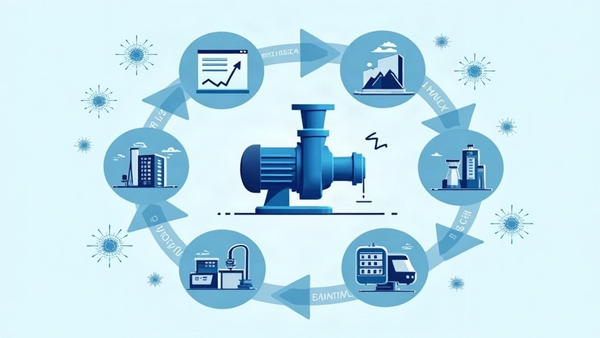
The real power of MAS APM comes not from any single application but from the connection between them. A modern reliability practice looks something like this. Reliability engineers define asset criticality and failure modes using Reliability Strategies or RCM methodology. Condition monitoring points are established and connected to Maximo Monitor. Sensor data and meter readings feed into Maximo Health to produce health scores. Predict models identify assets at risk of failure before the next scheduled maintenance. Condition Insight explains the risk and recommends actions. Maximo Manage generates and executes the work orders. The results feed back into the models and health scores, completing the loop.
This loop is aspirational for many organizations, and that is fine. Few companies will implement every piece on day one. The important thing is to start with a clear target state and build toward it incrementally. Begin with the assets that matter most, the data that is already available, and the decisions that are easiest to improve. Early wins build credibility, which makes it easier to fund the next phase.
A common mistake is to deploy Predict or Condition Insight without first getting the foundational data in order. If work order history is incomplete, asset hierarchies are inconsistent, and sensor data is unreliable, the AI will produce unreliable recommendations and the project will lose momentum. The first investment should usually be in data governance: standardizing asset master data, cleaning failure codes, ensuring meter readings are captured correctly, and documenting maintenance actions with enough detail to be useful later.
Another common mistake is building models and dashboards without closing the loop to work execution. A prediction that does not result in a maintenance action is just a report. The reliability practice must include clear rules for what happens when a health score drops, an anomaly is detected, or a failure probability crosses a threshold. Those rules should define who reviews the signal, what actions are considered, how urgency is assigned, and how the outcome is recorded. Without that operational backbone, the data science work floats above the maintenance process instead of driving it.
Practical Implications
For maintenance organizations, the practical implication of MAS APM is that reliability engineering becomes a cross-functional program rather than a siloed analysis exercise. Operations provides sensor data and context. Engineering provides asset knowledge and failure modes. Maintenance execution provides work history and feedback. IT provides the platform, data pipelines, and model infrastructure. Everyone has a role, and the value comes from connecting those roles.
There is also a cultural implication. Prescriptive maintenance asks people to trust data and models that may contradict their experience. A veteran technician may have a strong belief about what causes a particular pump to fail. If the model says something different, the organization needs a process for reconciling those views rather than simply overriding one with the other. The best reliability teams treat model recommendations as hypotheses to be validated, not orders to be followed blindly.
Data governance is the most urgent practical requirement. Before investing heavily in Predict or Condition Insight, audit the quality of your asset master data, work order history, failure codes, and sensor streams. Fix the data first. A small, clean dataset used by a simple model will usually outperform a large, messy dataset fed into a sophisticated algorithm. The organizations that succeed with APM are the ones that treat data quality as a maintenance discipline, not an IT afterthought.
Bottom Line
Maximo Health, Predict, Monitor, and Condition Insight give asset-intensive organizations a credible path from reactive maintenance to prescriptive, AI-assisted reliability. The platform is strong, but the value depends on data quality, integration discipline, and a culture that uses AI recommendations as inputs to expert decisions. Start with the assets that matter most, invest in clean data and connected workflows, close the loop between prediction and work execution, and build trust through explanation and early wins. The goal is not to replace maintenance judgment with algorithms. It is to give maintenance teams better information, faster, so they can make better decisions.