From Data to Action: How MAS 9.2 Closes the Reliability Loop with AI-Powered APM
From Data to Action: How MAS 9.2 Closes the Reliability Loop with AI-Powered APM

The promise of Asset Performance Management has always been compelling: use data to predict failures before they happen, optimize maintenance strategies, and extend asset life. The reality has often fallen short. Sensor data sits in separate systems. Reliability analyses are performed in spreadsheets. Work orders are generated manually. The loop from data to insight to action to improvement is broken at multiple points.
MAS 9.2 takes a significant step toward closing that loop. The release introduces Maximo Condition Insight, a new AI-powered capability that brings together work orders, inspections, meter readings, and reliability strategies to identify patterns in asset behavior and recommend actions. It also previews RCM Advisor, Smart Alerts, and agentic AI workflows that automate the generation and updating of work orders based on asset strategy and operational context.
This article covers the connected APM suite architecture, how each component contributes to the reliability lifecycle, and practical steps for building an AI-powered reliability program on MAS 9.2.
The Connected APM Suite: More Than the Sum of Its Parts
One of the most important conceptual shifts in how IBM positions MAS is the treatment of Manage, Monitor, Health, Predict, and Reliability Strategies as a connected operational capability rather than separate products. This was a key insight from the Reliability and Asset Performance Management workshop at the IBM Innovation Studio in Amsterdam, where Stefan Hoffmanns observed that without reliability context, sensor data remains just data.
Here is how the components fit together:
Maximo Manage is the system of record for assets, work orders, and maintenance history. Every reliability analysis starts and ends here. The asset registry, failure codes, work order history, and maintenance plans in Manage provide the foundational data that reliability analyses depend on.
Maximo Monitor collects and processes sensor data from IoT devices, SCADA systems, and other real-time data sources. It provides the condition data (temperature, vibration, pressure, flow rate) that indicates how an asset is performing right now.
Maximo Health scores and tracks asset health based on multiple inputs: sensor data from Monitor, work order history from Manage, inspection results, meter readings, and manual assessments. Health provides a unified view of asset condition that reliability engineers can use to prioritize attention.
Maximo Predict applies machine learning models to historical data to predict when failures are likely to occur. It uses the same data sources as Health but applies predictive algorithms rather than rule-based scoring.
Reliability Strategies defines the maintenance approach for each asset or asset class: run-to-failure, time-based, condition-based, or predictive. It includes FMEA (Failure Modes and Effects Analysis) and RCM (Reliability-Centered Maintenance) methodologies.
Maximo Condition Insight (new in 9.2) is the integration layer that brings all of these together. It analyzes data across work orders, inspections, meter readings, and reliability strategies to identify patterns and recommend actions. It is the "so what" layer that turns data into decisions.
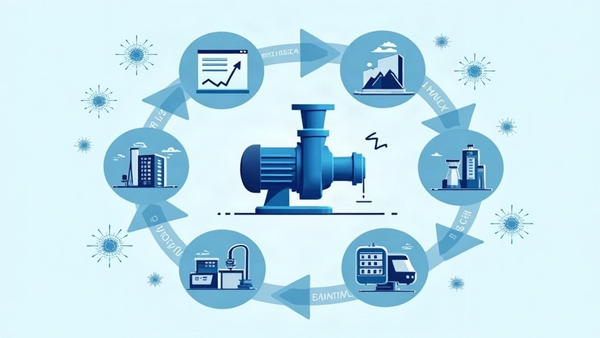
The closed-loop flow works like this:
- Monitor detects an anomaly in vibration data from a critical pump
- Health updates the pump's health score based on the anomaly
- Condition Insight correlates the anomaly with work order history, recent inspections, and the pump's reliability strategy
- Condition Insight recommends a specific action: create a condition-based work order with the relevant job plan and failure code
- Manage creates the work order and routes it to the appropriate technician
- The technician completes the work and records findings
- Condition Insight analyzes the findings and updates the reliability strategy if the failure mode was different from what was expected
- The loop repeats with improved data
This is not a theoretical architecture. It is the design intent of MAS 9.2, and each component has been incrementally improved across the 9.0, 9.1, and 9.2 releases to make this flow work in practice.
Maximo Condition Insight: The AI Layer That Connects Everything
Condition Insight is the most significant new APM capability in MAS 9.2. It is designed to solve a specific problem: reliability engineers spend too much time piecing together disconnected information from multiple systems, and not enough time acting on insights.
Condition Insight ingests data from:
- Work order history (failure codes, findings, parts used, downtime)
- Inspection results (condition ratings, observations, photos)
- Meter readings (runtime hours, cycles, throughput)
- Reliability strategies (FMEA, RCM, maintenance plans)
- Health scores and trends
- Predict model outputs
It then applies AI to identify patterns and recommend actions. The recommendations are not generic. They are specific to the asset, its operating context, and its maintenance history. For example:
- "Pump P-101 has shown increasing vibration in the last three readings. The last vibration-related failure on this pump class was bearing failure at 0.45 in/sec. Current reading is 0.38 in/sec. Recommend scheduling bearing inspection within 14 days."
- "Heat exchanger H-201 has exceeded its design fouling factor threshold. The last cleaning was 18 months ago. Similar exchangers in this service typically require cleaning every 12-14 months. Recommend scheduling cleaning within 30 days."
- "Motor M-301 has accumulated 8,500 runtime hours since last overhaul. The reliability strategy specifies overhaul at 10,000 hours. At current utilization rate, this will be reached in approximately 6 weeks. Recommend planning overhaul for week of August 10."
The key difference from traditional condition monitoring is that Condition Insight incorporates reliability strategy context. It does not just tell you that a parameter is out of range. It tells you what that means for this specific asset, based on its failure history and maintenance strategy, and what you should do about it.
How Condition Insight Differs from Health and Predict
This is a common question. Here is the distinction:
- Maximo Health scores asset health based on rules and thresholds. It tells you that an asset's health score has dropped from 85 to 62. It does not tell you why or what to do about it.
- Maximo Predict forecasts when a failure is likely to occur based on machine learning models. It tells you that a bearing has an 85 percent probability of failure within 30 days. It does not tell you what maintenance action to take.
- Maximo Condition Insight synthesizes Health scores, Predict outputs, work order history, inspection results, and reliability strategies to recommend specific actions. It tells you what is happening, why it matters, and what to do next.
Condition Insight is the layer that makes Health and Predict actionable. Without it, you have scores and probabilities but no clear path to action. With it, you have a recommendation that a planner or reliability engineer can review, approve, and execute.
RCM Advisor: AI-Assisted Reliability Strategy Development
RCM Advisor is previewed in MAS 9.2 as a coming capability. It applies AI to the Reliability-Centered Maintenance process, which has traditionally been a manual, document-heavy exercise requiring experienced reliability engineers and months of analysis.
RCM Advisor is designed to:
- Recommend asset strategies based on asset class, operating context, and failure history. Instead of starting from a blank FMEA template, reliability engineers start with AI-generated recommendations that they review and refine.
- Identify reliability gaps by comparing current maintenance plans against recommended strategies. If an asset has a time-based PM but its failure patterns suggest condition-based monitoring would be more effective, RCM Advisor flags the gap.
- Support RCM deployment by generating the documentation, maintenance plans, and monitoring configurations needed to implement the recommended strategy.
The goal is not to replace reliability engineers. It is to accelerate their work. An RCM analysis that might take six months of manual effort could be reduced to weeks, with the reliability engineer focusing on validation and refinement rather than data gathering and template completion.
RCM Advisor uses the same data foundation as Condition Insight: work order history, failure codes, inspection results, and meter readings. The difference is that RCM Advisor looks at asset classes and failure patterns across the entire fleet, while Condition Insight looks at individual assets and their current condition.
Smart Alerts and Work Order Automation
Two additional capabilities in MAS 9.2 move the APM suite closer to autonomous operations:
Smart Alerts enrich traditional threshold-based alerts with contextual insights and known failure modes. Instead of "Pump P-101 vibration high," a Smart Alert says "Pump P-101 vibration exceeds bearing wear threshold. Last bearing replacement: 18 months ago. Expected bearing life: 24 months. Recommended action: Schedule bearing inspection. Related failure codes: BEARING-WEAR, MISALIGNMENT."
The enrichment comes from the same data sources that feed Condition Insight. Smart Alerts are the real-time notification layer that triggers when immediate attention is needed, while Condition Insight provides the analytical layer for pattern detection and trend analysis.
Work Order Automation takes the next step: automatically generating and updating work orders based on asset strategy and operational context. When Condition Insight recommends an action, Work Order Automation can create the work order with the appropriate job plan, asset, location, priority, and scheduling constraints. It can also update existing work orders if conditions change (for example, increasing the priority of a planned maintenance work order if the asset's health score drops).
The automation includes a learning component. As work orders are completed and findings are recorded, the system refines its recommendations. If a recommended action consistently results in a "no fault found" finding, the system adjusts its thresholds. If a particular failure mode is more common than expected, the system adjusts its predictions.
This is what IBM means by "agentic AI" in the MAS 9.2 context. It is not a chatbot. It is an AI system that can analyze, recommend, act, and learn within the governed framework of the Maximo platform.
Building the Data Foundation for AI-Powered APM
AI-powered APM is only as good as the data that feeds it. Before you can benefit from Condition Insight, RCM Advisor, or Smart Alerts, you need a solid data foundation. Here are the prerequisites:
Standardized Failure Codes
Failure codes are the language that Condition Insight and RCM Advisor use to understand what went wrong and why. If your failure codes are inconsistent, incomplete, or missing, the AI cannot identify patterns.
A good failure code hierarchy includes:
- Problem: What was observed (leak, vibration, no output, overheating)
- Cause: Why it happened (wear, corrosion, misalignment, contamination)
- Remedy: What was done to fix it (replaced, repaired, adjusted, cleaned)
Standardize your failure code hierarchy across all asset classes. Enforce failure code entry on work order completion. Audit failure code quality regularly. The AI will only be as good as the failure data you feed it.
Complete Work Order History
Condition Insight needs work order history to identify patterns. The more history you have, the better the recommendations. At a minimum, you need:
- 2-3 years of work order history for common failure modes
- Complete failure code, finding, and resolution data
- Accurate downtime and labor hour records
- Parts usage data linked to work orders
If your work order history is incomplete, start improving data quality now. Every work order closed without proper failure data is a missed opportunity to train the AI.
Clean Asset Registry
The asset registry is the backbone of the APM data model. Assets must be:
- Uniquely identified with a consistent naming convention
- Properly classified by asset type and criticality
- Linked to the correct location hierarchy
- Associated with the correct reliability strategy
- Tagged with manufacturer, model, and serial number where relevant
Duplicate assets, orphaned records, and inconsistent naming will cause Condition Insight to produce unreliable recommendations. Clean your asset registry before enabling AI-powered APM.
Meter and Sensor Data
For condition-based and predictive maintenance, you need meter and sensor data. This includes:
- Runtime meters (hours, cycles, throughput) for time-based predictions
- Condition sensors (vibration, temperature, pressure) for condition-based monitoring
- Process data (flow rate, output, efficiency) for performance analysis
The Maximo Mobile 9.1 meter reading rearchitecture (covered in the Mobile article) is relevant here. If your meter data has integrity issues, your AI predictions will be unreliable. Ensure your meter data model is clean before feeding it into Predict or Condition Insight.
Reliability Strategies
Condition Insight and RCM Advisor need to know what your maintenance strategy is for each asset. This includes:
- Maintenance type (run-to-failure, time-based, condition-based, predictive)
- PM frequency and triggers
- Acceptable operating ranges for condition parameters
- Known failure modes and their indicators
- Criticality classification
If you have not formalized your reliability strategies, start with your most critical assets. Document the strategy for each one. Even a basic strategy is better than none. The AI can help refine it over time.
The APM Maturity Model: Where to Start
Not every organization is ready for full AI-powered APM. Here is a maturity model to help you assess where you are and what to focus on next:
| Level | Description | Prerequisites | MAS Capabilities |
|---|---|---|---|
| 1: Foundational | Basic work management, time-based PMs | Manage with work orders and PMs | Manage |
| 2: Informed | Standardized failure codes, asset criticality, basic KPIs | Level 1 + failure code hierarchy, asset registry | Manage + Health (basic) |
| 3: Condition-Based | Condition monitoring, meter-based PMs, health scoring | Level 2 + sensors/meters, condition thresholds | Manage + Health + Monitor |
| 4: Predictive | ML-based failure prediction, RCM analysis | Level 3 + 2+ years of quality data, reliability strategies | Manage + Health + Monitor + Predict + Reliability Strategies |
| 5: Prescriptive | AI-recommended actions, automated work generation, continuous learning | Level 4 + clean data foundation, governance process | Full MAS 9.2 APM suite including Condition Insight, Smart Alerts, Work Order Automation |
Most organizations are at Level 2 or 3. The jump to Level 4 and 5 requires investment in data quality, sensor infrastructure, and reliability engineering resources. The good news is that MAS 9.2 provides the tooling for all five levels. You can adopt capabilities incrementally as your maturity grows.
Practical Implications
Start with failure code standardization. This is the single highest-leverage activity for improving APM outcomes. Without standardized failure codes, none of the AI capabilities will produce reliable results. Audit your current failure codes. Identify gaps and inconsistencies. Implement a standardized hierarchy. Enforce compliance on work order completion.
Implement Health scoring before Predict. Health scoring is rule-based and easier to implement than machine learning. It gives you immediate visibility into asset condition and helps you build the data discipline needed for Predict. Once Health is working well, add Predict for assets where ML-based forecasting provides additional value.
Clean your asset registry and work order history. This is unglamorous work, but it is the foundation everything else depends on. Dedicate time this quarter to auditing and cleaning your asset registry. Review work order closure practices. Ensure failure codes, findings, and parts usage are being recorded consistently.
Evaluate Condition Insight in a sandbox environment. If you are on MAS 9.2, enable Condition Insight in a non-production environment with a copy of your production data. See what patterns it identifies. Evaluate the quality of its recommendations. Use this to identify gaps in your data foundation before rolling it out to production.
Plan your sensor strategy. Condition-based and predictive maintenance require sensor data. Identify your most critical assets and determine what condition data you need. Prioritize assets where sensor installation is feasible and the reliability impact is high. Do not try to instrument everything at once.
Invest in reliability engineering resources. AI-powered APM augments reliability engineers. It does not replace them. You still need people who understand asset failure modes, can validate AI recommendations, and can refine reliability strategies based on operational experience. The AI makes them more productive. It does not eliminate the need for their expertise.
Bottom Line
MAS 9.2 represents a meaningful step toward closing the reliability loop. Maximo Condition Insight is the integration layer that turns data from Manage, Monitor, Health, and Predict into actionable recommendations. RCM Advisor promises to accelerate reliability strategy development. Smart Alerts and Work Order Automation move the suite toward autonomous operations.
But the technology is only half the equation. The other half is data quality. AI-powered APM requires standardized failure codes, complete work order history, a clean asset registry, reliable meter data, and documented reliability strategies. Organizations that invest in this data foundation will get value from the AI capabilities. Organizations that skip it will get unreliable recommendations and frustrated users.
The APM maturity model provides a roadmap. Start where you are. Standardize your failure codes. Implement Health scoring. Clean your data. Add Predict for high-value assets. Then enable Condition Insight to close the loop. The technology is ready. The question is whether your data is ready for it.