From Reactive to Predictive: Building a Reliability Program with Maximo APM
Maximo Application Suite now combines EAM, APM, and RCM in a single connected platform. With Reliability Strategies, Health, Predict, and Monitor working as integrated capabilities, organizations can move from reactive maintenance to predictive maintenance faster than ever. Here is how the piec

From Reactive to Predictive: Building a Reliability Program with Maximo APM
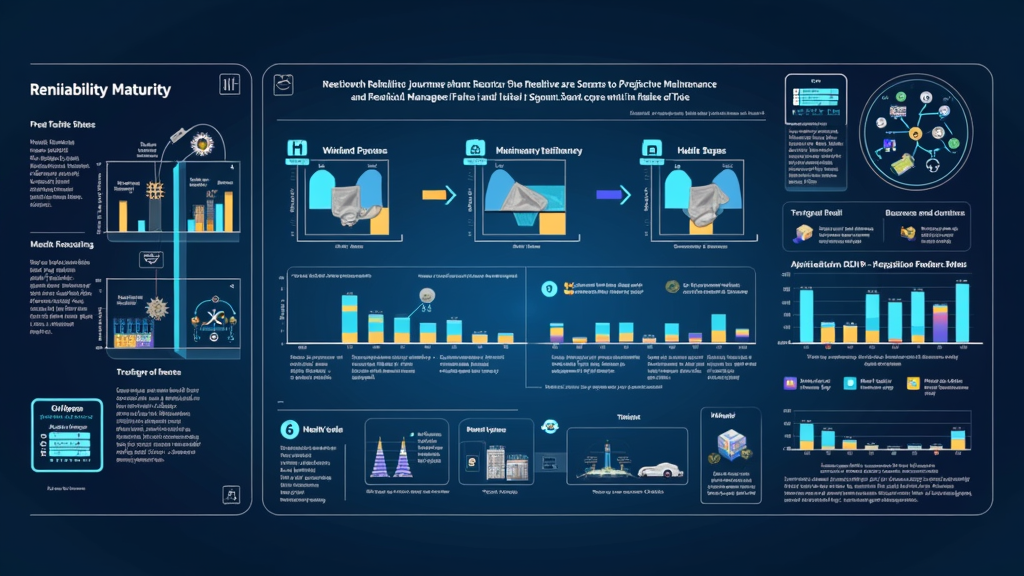
The maintenance maturity journey is a well-known framework in reliability engineering. It describes the progression from reactive maintenance (fix it when it breaks) through preventive maintenance (service it on a schedule), condition-based maintenance (monitor it and act on changes), risk-based maintenance (prioritize by criticality), and finally to predictive maintenance (use AI to forecast failures). Most organizations sit somewhere in the middle, with a mix of strategies applied to different asset classes. The challenge is moving up the maturity ladder without disrupting operations.
IBM Maximo Application Suite is designed to support this entire journey within a single platform. The combination of Maximo Manage (EAM), Maximo Health (asset health scoring), Maximo Monitor (condition monitoring), Maximo Predict (AI-driven failure prediction), and Maximo Reliability Strategies (RCM library and tools) creates a connected workflow from reliability analysis through maintenance execution and back. This is not a collection of point products glued together with integration code. It is a single platform with shared data, shared security, and a connected operational flow.
This article examines how these capabilities work together in practice, based on the latest information from IBM, the Maximo community, and technical workshops held in 2026. We will cover the maturity model, the role of each Maximo application in the reliability program, the Reliability Strategies library and its GenAI capabilities, the integration of sensor data into health scoring, and the practical steps for building a reliability program from scratch.
The Asset Management Maturity Model in Maximo
The maturity model that IBM uses to position Maximo's capabilities has six levels:
- Reactive Maintenance: Run-to-failure and corrective work. Maximo Manage handles this with work order management, failure reporting, and corrective job plans. This is the baseline. Every organization does this, but relying on it as the primary strategy means high downtime, high emergency repair costs, and shortened asset life.
- Preventive Maintenance: Calendar or meter-based schedules. Maximo Manage's PM module generates work orders on fixed intervals or meter readings. This reduces unplanned downtime but can result in over-maintenance (servicing assets that do not need it) and does not catch emerging failures between PM cycles.
- Condition-Based Maintenance: Using inspections and sensors to detect changes. Maximo Monitor ingests real-time data from PLCs, SCADA systems, and IoT sensors, processing it through analytics pipelines and anomaly detection models. Condition monitoring points in Maximo Manage can trigger work orders automatically when readings exceed action limits. This catches emerging failures earlier than PM but requires sensor infrastructure and analytics configuration.
- Risk-Based Maintenance: Assessing asset criticality and failure risk. Maximo Health calculates asset health scores using configurable scoring groups, queries, and weighted contributors. Assets are prioritized based on their health score and criticality, allowing maintenance teams to focus their effort where it matters most. This optimizes resource allocation but depends on accurate criticality ratings and scoring configuration.
- Predictive Maintenance: Leveraging AI models to forecast failures. Maximo Predict uses machine learning to predict days-to-failure, failure probability, and anomaly detection. Models are trained on historical failure data from Manage and time-series data from Monitor, then deployed in Watson Machine Learning. Predictions flow back into Manage as work queues and alerts. This is the most advanced maintenance strategy, reducing unplanned downtime by up to 47 percent according to IBM's published metrics.
- Financially Optimized Maintenance: Balancing cost, risk, and asset health. This is the emerging frontier, where maintenance decisions consider not just technical condition but financial impact, replacement timing, and total cost of ownership. Maximo's trajectory with AI Service and enhanced analytics is moving toward this level.
The key insight from the May 2026 Reliability and APM workshop at the IBM Innovation Studio in Amsterdam, documented by Stefan Hoffmanns, is that MAS is no longer positioning Manage, Monitor, Health, Predict, and Reliability Strategies as separate products. They are increasingly presented as connected operational capabilities in a single digital thread:
Failure analysis -> Maintenance strategy -> Sensors & meters -> Monitoring -> Health scoring -> Alerts -> Work execution -> Feedback into reliability improvement
This connected flow is what makes the maturity progression achievable. Instead of implementing each level as a separate project with separate data models and integration challenges, organizations can move up the maturity ladder within the same platform, reusing data and configurations established at previous levels.
Maximo Health: Scoring Assets for Action
Maximo Health is the bridge between EAM and APM. It takes the operational data from Manage (work order history, failure codes, meter readings, asset age, PM compliance) and enriches it with real-time data from Monitor (sensor readings, anomaly flags) to produce a comprehensive view of asset health, criticality, and risk.
Health Score Calculation: The health score is calculated using Scoring Groups, which define the contributors and their weights. Each contributor produces a sub-score from 0 to 100, and the weighted average produces the overall health score. Contributors can include:
- Remaining Useful Life: Based on asset age, expected lifespan, and historical replacement data
- Meter Readings: Current readings compared to manufacturer specifications or action limits
- Failure History: Frequency and severity of past failures
- PM Compliance: Percentage of PM work orders completed on time
- Condition Monitoring Data: Anomaly scores from Maximo Monitor, trend indicators
- Inspection Results: Latest inspection form results, particularly failure-relevant questions
The scoring configuration is flexible. Different asset types can use different scoring groups with different contributors and weights. A pump might weight vibration readings heavily, while a transformer might weight oil analysis results more heavily.
Criticality and Risk: Criticality is a separate score that reflects the business impact of an asset failure. It considers factors like production impact, safety risk, environmental risk, and replacement cost. Risk is the combination of health (likelihood of failure) and criticality (impact of failure). The risk matrix in Health provides a visual prioritization tool:
- High Health Risk + High Criticality = Priority 1 (act now)
- High Health Risk + Low Criticality = Priority 2 (plan corrective action)
- Low Health Risk + High Criticality = Priority 3 (monitor closely)
- Low Health Risk + Low Criticality = Priority 4 (maintain current strategy)
Work Queues: Health generates work queues for assets that need attention. These queues can be configured to show assets with health scores below a threshold, assets with declining health trends, or assets predicted to fail before the next PM cycle. The work queues integrate directly with Manage, allowing maintenance planners to generate corrective work orders from the Health interface.
Asset Timeline: The Asset Timeline provides a chronological view of all events in an asset's lifecycle: work orders, inspections, meter readings, failures, PMs, sensor alerts, and health score changes. This is the "digital thread" for each asset, giving reliability engineers the context they need to understand why an asset's health score is declining and what interventions have been attempted.
Maximo Predict: AI-Driven Failure Forecasting
Maximo Predict is where AI and machine learning enter the reliability program. It builds on the data foundation established by Manage and Monitor and the scoring framework provided by Health to deliver forward-looking predictions.
Prediction Types: Predict supports several types of predictions, each answering a different question:
- Days to Failure: How many days until the asset is likely to fail? This is the most actionable prediction for maintenance planning, as it allows work to be scheduled before the failure occurs.
- Failure Probability: What is the probability that the asset will fail within a given time window? This supports risk-based decision making when combined with criticality scores.
- Anomaly Detection: Are current operating patterns anomalous compared to historical norms? This is the earliest indicator of potential problems, often detectable before any other signal.
- Failure Mode Prediction: Which specific failure mode is most likely to occur? This helps ensure the right parts, tools, and skills are dispatched for the corrective work.
- Root Cause Analysis: The Failure Analysis Tree shows the AI's logic for identifying the root cause of a potential failure, providing transparency into the prediction.
Model Development: Predict includes default notebooks that data scientists can use to build and train predictive models. The process:
- Create asset groups: Group assets by type, criticality, or operational context
- Select a default notebook: Choose the prediction type (days-to-failure, anomaly detection, etc.)
- Configure data inputs: Select the time-series data from Monitor, failure data from Manage, and any external data sources
- Train the model: Run the notebook in Watson Machine Learning
- Deploy the model: Make it available for inference
- Generate predictions: The deployed model runs on a schedule, populating prediction data for each asset in the group
Data scientists can also configure custom notebooks that extend the default notebooks or take a completely custom approach. The key requirement is that models must be deployed in Watson Machine Learning for Predict to consume them.
Operational Integration: Predictions from Predict flow into Health's work queues and into Manage's work order generation process. An asset with a predicted failure in 14 days can automatically generate a corrective work order with a target completion date 10 days out, giving the maintenance team a window to act before the failure occurs.
The five key predictive questions that a reliability engineer can answer using Health and Predict together: 1. When will this asset fail? (Days to failure) 2. What is the probability of failure in the next 30 days? (Failure probability) 3. Are there anomalous operating patterns? (Anomaly detection) 4. What failure mode is most likely? (Failure mode prediction) 5. What is the root cause? (Failure analysis tree)
Reliability Strategies: The RCM Library and GenAI
Maximo Reliability Strategies, introduced with MAS 8.11, is the RCM capability that accelerates the transition from reactive to preventive and condition-based maintenance. It provides a pre-built library of equipment types, failure modes, and recommended maintenance tasks that reliability engineers can use to construct maintenance strategies in a fraction of the time required for traditional RCM analysis.
The Reliability Content Library: The library contains: - 800+ equipment types covering common industrial assets across multiple industries - 58,000+ failure modes documenting how each equipment type fails and why - 5,000+ recommended preventive maintenance tasks with suggested frequencies, required skills, and tool requirements
This library was built by reliability engineers for reliability engineers. It represents decades of accumulated knowledge about equipment failure patterns and maintenance best practices. Instead of conducting a full FMEA (Failure Mode and Effects Analysis) from scratch for each asset class, engineers can start with the library's recommendations and customize them for their specific operational context.
IBM reports a 90 percent reduction in the time required to implement reliability strategies using this library. What previously took three weeks of senior engineers' time (taking five or more top engineers off the line) can now be accomplished in minutes by selecting the equipment type, reviewing the recommended failure modes and tasks, and deploying the strategy into Maximo.
The 5-Step Reliability-Driven Lifecycle: The process supported by Reliability Strategies follows a defined lifecycle:
- Define: Establish master data in Maximo Manage (asset hierarchy, classifications, work order history, materials usage)
- Develop: Create maintenance strategies using the Reliability Strategies library and GenAI (FMEA, PM optimization, condition monitoring techniques, predictive monitoring, spare parts strategies)
- Execute: Deploy strategies into Maximo Manage as PMs, job plans, condition monitoring points, and inspection forms
- Monitor: Use Maximo Monitor to ingest real-time data and Maximo Health to calculate health scores
- Improve: Analyze results, adjust strategies, optimize PM frequencies, and feed learnings back into the strategy
GenAI for Custom Strategies: For equipment types not covered by the library, or for organizations that want to create strategies from scratch, MAS includes Generative AI capabilities. The GenAI feature can recommend: - Potential failure modes for a given equipment type - Sub-assemblies and components to track - Root causes and mitigation activities - Preventive maintenance tasks and frequencies
The demo from IBM's June 2025 video shows the GenAI creating a strategy for an HVAC system. The user enters the equipment type, and GenAI produces recommended sub-assemblies and failure modes within seconds. The user can then review, accept, modify, or reject each recommendation before deploying the strategy.
This is particularly valuable for organizations with specialized equipment that falls outside the standard library coverage. Instead of engaging external reliability consultants for a multi-week FMEA study, the internal reliability engineer can generate a starting point with GenAI and refine it based on operational knowledge.
Connecting Sensor Data to Maintenance Action
The integration between Maximo Monitor and Maximo Manage is where condition-based maintenance becomes operational. The workshop in Amsterdam demonstrated how sensor data can now flow into asset meters and become directly visible within Health scoring and operational dashboards.
Data Flow: The connected data flow looks like this:
Sensors (vibration, temperature, pressure, flow) -> PLCs / SCADA / Historians -> Maximo Monitor (ingestion, analytics, anomaly detection) -> Asset Meters in Maximo Manage (meter readings) -> Maximo Health (health score calculation) -> Work Queues (prioritized action list) -> Work Order Generation in Maximo Manage -> Maximo Mobile (technician execution) -> Feedback into Health (score improvement)
This flow means that when a vibration sensor on a conveyor belt detects an anomaly, the following chain of events occurs automatically:
- Monitor detects the anomaly and generates an alert
- The alert triggers a meter reading update in Manage
- Health recalculates the asset's health score, which declines
- The asset appears in the high-priority work queue
- A work order is generated (either automatically or via planner review)
- The work order is dispatched to a technician via Maximo Mobile
- The technician performs the inspection or repair and records the results
- The results flow back into Health, and the score improves
Hands-On Lab Scenario: IBM's end-to-end reliability lab demonstrates this scenario using a conveyor belt with three personas (Reliability Engineer, Supervisor, Technician):
- Reliability Engineer: Creates the asset in Manage, sets up the vibration meter, configures condition monitoring with action limits, links a vibration analysis job plan, builds a digital inspection form with conditional questions, and configures Health scoring with weighted contributors
- Supervisor: Reviews the automatically generated work order, approves it, and assigns it
- Technician: Receives the work order on Maximo Mobile, performs the inspection, takes vibration readings, completes the inspection form, reports failure codes, and closes the work order
- Verification: Returning to Health, the asset score improves in real time as the work is completed
This scenario demonstrates the full digital thread from sensor to action to feedback. It is the operationalization of the maturity model within a single platform.
Practical Implications
Building a reliability program with Maximo APM is not a technology project. It is an organizational change project enabled by technology. The technology is capable and integrated. The limiting factors are typically data quality, sensor infrastructure, and organizational readiness.
Data Quality: Health scoring and Predictive models depend on accurate, complete data. If failure codes are not consistently applied, if asset hierarchies are shallow or incorrect, or if meter readings are missing, the health scores and predictions will be unreliable. Before implementing Health or Predict, invest in data cleansing:
- Verify asset hierarchies reflect physical relationships
- Standardize failure code usage across the organization
- Ensure meter readings are being captured consistently
- Validate that PM compliance data is accurate
Sensor Infrastructure: Condition-based and predictive maintenance require sensor data. Not every asset needs sensors. Start with critical assets where failure has the highest business impact. The Reliability Strategies library can help identify which failure modes are detectable by which sensor types, guiding the sensor investment plan.
Organizational Readiness: The reliability engineer role becomes central in this model. This person defines asset criticality, failure modes, scoring logic, monitoring strategy, and the operational meaning behind asset data. Ensure this role is staffed with someone who has both engineering knowledge and the authority to drive change in maintenance practices.
Implementation Sequence: A practical sequence for building the program:
- Start with Reliability Strategies to establish PMs and job plans for your top 20 critical asset types
- Configure Health scoring for those same asset types
- Deploy condition monitoring points for assets where sensor data is available
- Implement Monitor for real-time data ingestion on the highest-criticality assets
- Begin Predict model development once you have 12-18 months of clean failure and sensor data
- Use the feedback loop to continuously refine strategies and scoring
Bottom Line
Maximo Application Suite has evolved from an EAM platform into a connected asset lifecycle management platform that spans EAM, APM, and RCM. The integration between Manage, Health, Monitor, Predict, and Reliability Strategies creates a digital thread from reliability analysis through maintenance execution and back. The Reliability Strategies library with 800 equipment types and 58,000 failure modes accelerates RCM implementation by 90 percent. The GenAI capabilities fill gaps for non-standard equipment. Health scoring prioritizes action, and Predict's AI models forecast failures before they happen. The organizations that succeed in building a reliability program are the ones that treat it as a maturity journey: start with the fundamentals, get the data right, deploy incrementally, and let each level of maturity build on the data and processes established at the previous level. The platform is ready. The question is whether your organization is ready to use it.