From EAM to APM: Building the Closed Loop in Maximo
Maximo is evolving from a work execution system into an asset lifecycle platform. This article explains how Reliability Strategies, Health, Predict, and Monitor form a closed loop that connects failure analysis to maintenance strategy and work execution.

From EAM to APM: Building the Closed Loop in Maximo
For years, many organizations treated IBM Maximo as an enterprise asset management system focused on work orders, preventive maintenance schedules, inventory, and procurement. That view is becoming outdated. With the release of MAS 9.1 and the ongoing evolution of the 9.2 feature channels, Maximo is repositioning itself as an asset lifecycle management platform where reliability engineering, condition monitoring, health scoring, and AI-driven prediction are part of one continuous process. The boundary between EAM and asset performance management is dissolving inside the suite.
This article explores the closed loop that IBM describes across Maximo Manage, Monitor, Health, Predict, and Reliability Strategies. We cover how failure analysis feeds maintenance strategy, how sensors and meters feed condition monitoring, how health scoring and anomaly detection feed predictive models, and how work execution feeds results back into reliability improvement. The goal is to give reliability engineers, asset managers, and APM practitioners a practical understanding of how the pieces connect and where the integration work actually lives. The loop sounds elegant in diagrams; making it work in production requires attention to data architecture, model lifecycle, and operational process design.
The Digital Thread Across MAS Components
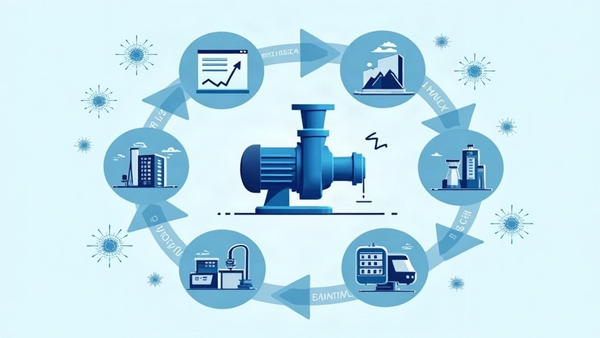
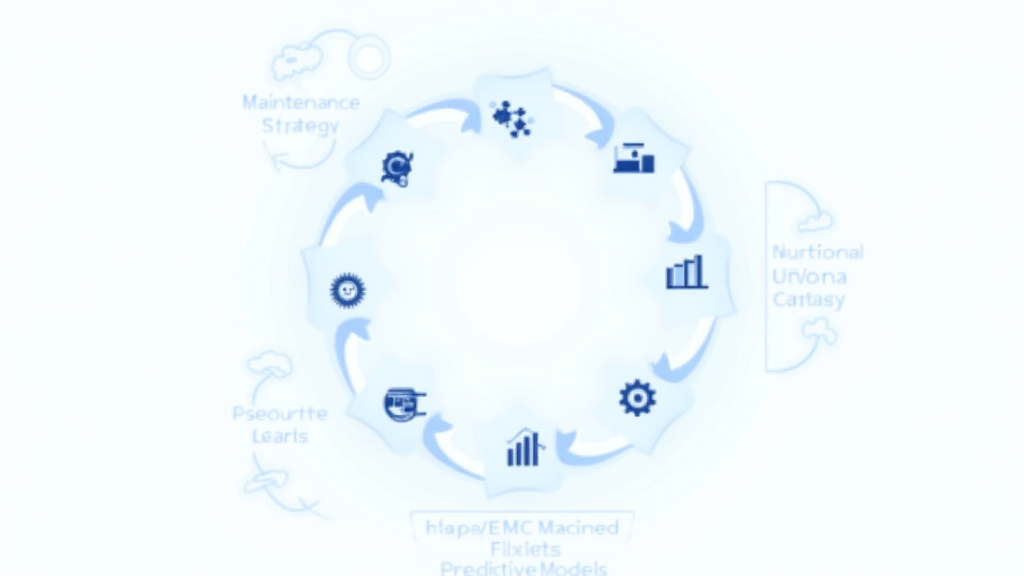
The central idea is that Manage, Monitor, Health, Predict, and Reliability Strategies should not be operated as separate products. Instead, they form a connected operational capability. The flow is straightforward in concept: failure analysis leads to a maintenance strategy, the strategy identifies condition monitoring points, sensors and meters generate operational data, health scoring and anomaly detection interpret that data, predictive models forecast degradation, alerts generate work orders, and the work execution results feed back into failure analysis and strategy refinement.
In practice, the digital thread depends on the consistency of the asset registry. The same asset identifier must exist in Manage, Monitor, Health, and Predict. The same location hierarchy must be respected. The same criticality, failure modes, and maintenance policies must be visible to all components. If each component maintains its own copy of asset metadata, the thread breaks. This is why the asset master data model in Maximo Manage remains foundational even as the APM capabilities expand. Organizations that want the closed loop must first clean and govern their asset master data.
Reliability Strategies is the newest explicit member of this thread. It provides a dedicated RCM and FMEA application with an included content library. Reliability engineers can define failure modes, criticality rankings, mitigation strategies, condition monitoring points, and maintenance strategies in one place. With WatsonX support for FMEA creation, the application can also assist in generating reliability content. The output of Reliability Strategies is not a static document; it becomes input to monitoring configuration, health scoring, and work planning.
Reliability Strategies as the Starting Point
A reliability-centered maintenance program starts with understanding what can fail, how it fails, and what the consequences are. Reliability Strategies supports this by providing failure mode and effects analysis tools directly inside MAS. Instead of maintaining spreadsheets or external RCM software, reliability engineers can work in the same environment where maintenance plans are executed. The linkage from FMEA to maintenance strategy means that the recommended tasks can be turned into actual preventive maintenance records or condition monitoring points.
The content library reduces the time to value. New strategies can be created from templates rather than from blank pages. For organizations with large asset populations, such as utilities, rail, or oil and gas, the ability to start from industry-relevant content accelerates the RCM process. The library also helps maintain consistency across similar asset classes, which improves the quality of aggregated reliability metrics later.
WatsonX integration for FMEA creation is a notable addition. It does not replace reliability engineering judgment, but it can generate draft failure modes, effects, and mitigation options that engineers then review and refine. The practical benefit is speed for the initial drafting phase. The risk is over-reliance on generated content without domain validation. Treat generated FMEA content as a starting point, not a final signed document. Engineers must still apply local operating context, regulatory requirements, and historical failure data before the strategy is approved.
Monitor, Health, and the Operational Data Layer
Maximo Monitor provides AI-powered remote monitoring that ingests operational data from PLCs, SCADA systems, sensors, and IoT devices. Historically, Monitor sometimes felt like a separate IoT platform sitting next to Maximo. Integrations required synchronization layers and additional architecture to connect operational data back into maintenance processes. That is changing. Monitor is becoming more directly integrated into the operational maintenance flow.
Sensor data can now flow into asset meters and become visible within Health scoring and operational dashboards. This is a significant shift because it makes condition data a first-class citizen in the asset record, not an external telemetry stream. When a vibration sensor, temperature probe, or pressure transducer reports anomalous values, those values can update asset meters and contribute to health scores. Maintenance planners and supervisors can see asset condition alongside work history and safety information.
Maximo Health provides the scoring layer. It combines asset health, criticality, and risk into a comprehensive view. The scoring methodology analyzes operational data from sources such as Maximo Manage and IoT devices. Health scores help teams prioritize maintenance, allocate resources, and make better operational decisions. The key insight is that without reliability context, sensor data is just data. Health scoring gives it meaning by relating current condition to asset criticality and known failure modes.
Predictive Models and the AI Service Connection
Maximo Predict uses AI and machine learning to forecast asset performance and maintenance needs. It analyzes time-series data from Maximo Monitor and failure data from Maximo Manage to build models that predict days to failure, probability of failure, and related indicators. The model training and inference lifecycle is coordinated through the Maximo Manage AI configuration framework, which connects to the Maximo AI Service.
For predictive maintenance to work, the training data must be representative. This means the organization needs enough historical examples of both normal operation and failure. It also means the asset metadata, operating context, and failure codes must be clean enough for a model to learn meaningful patterns. A common mistake is to deploy Predict expecting magic from sparse or inconsistently coded work order history. The closed loop helps here: Reliability Strategies defines the failure modes, Manage captures the failures with consistent codes, Monitor captures the preceding telemetry, and Predict learns from the combination.
The AI configuration framework in Maximo Manage defines object structures, saved queries, query templates, system properties, endpoints, and invocation channels that move data between Manage and the AI Service. Default configurations are provided for some templates, such as the Problem Code Classification model, but custom use cases require careful configuration. Cron jobs schedule training and inference tasks. By default, the training job runs every five minutes and the inference job runs every hour, but these can be tuned or scoped to specific configurations. Administrators should monitor these jobs and the model status after deployment.
Closing the Loop with Work Execution and Feedback
The final step in the loop is the most often neglected. Alerts from Health or Predict must generate work orders, inspections, or condition assessments that technicians actually execute. The work completion data, including what was found, what was replaced, and whether the prediction was accurate, must feed back into the reliability model. Without this feedback, the system never learns. Predictions stay static. Failure modes remain theoretical. Maintenance strategies drift away from reality.
Closing the loop requires process discipline. When a predictive alert creates a work order, the work order should include the predicted failure mode and the recommended task. The technician should record the actual condition found. After the work is complete, reliability engineers should review whether the prediction was correct and whether the strategy needs adjustment. This review can happen through regular reliability meetings or automated dashboards, but it must happen. Technology enables the loop; people and process close it.
The MAS Dashboard updates support this by providing cross-suite views that include data from Monitor, Health, and Manage. Instead of switching between applications, reliability and maintenance leaders can see asset condition, operational status, and maintenance backlog in one place. This consolidated view makes it easier to spot trends and take action before small anomalies become major failures.
Practical Implications
Building the EAM-to-APM closed loop is not a single project. It is a program that spans data governance, reliability engineering, IoT integration, data science, and maintenance operations. The practical implications are significant. First, clean the asset master data before adding sensors or models. A model trained on inconsistent asset hierarchies will produce unreliable results. Second, align failure codes and problem codes across Manage, Health, and Predict. The language of failure must be consistent for the loop to learn. Third, start with a scoped pilot on a single asset class rather than attempting to model the entire fleet at once.
Fourth, assign ownership for each part of the loop. Reliability Strategies needs reliability engineers. Monitor needs OT and IoT expertise. Predict needs data science support. Work execution needs maintenance supervisors and technicians. If any layer lacks ownership, the loop degrades into a set of disconnected dashboards. Finally, measure outcomes, not activity. Track reduced unplanned downtime, improved first-time fix rates, or deferred maintenance costs, not just the number of models deployed.
Bottom Line
Maximo is becoming a unified asset lifecycle platform where EAM and APM are not separate disciplines but parts of the same workflow. Reliability Strategies defines the strategy, Monitor captures the condition, Health scores the risk, Predict forecasts the failure, and Manage executes the work. The loop is powerful, but only if the data, ownership, and feedback mechanisms are in place. Start small, govern the asset master data, align failure language, and measure real operational outcomes. The technology is ready; the work is in making the loop operational.