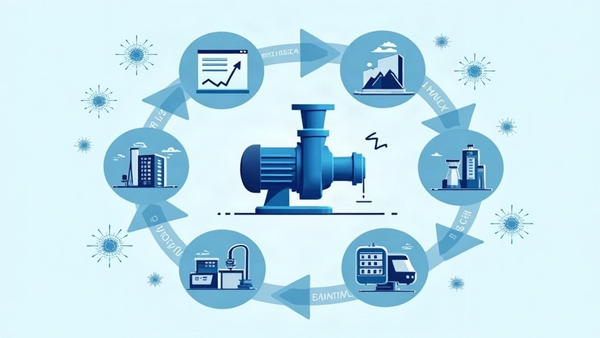
AI in Maximo: From Predictive Maintenance to Agentic Asset Management
A deep dive into the AI capabilities embedded in IBM Maximo Application Suite, from Maximo Predict and Health to the new Condition Insight agentic AI, Maximo Assistant, and AI-powered visual inspections.


AI in Maximo: From Predictive Maintenance to Agentic Asset Management
Introduction
Artificial intelligence is transforming enterprise asset management, and IBM Maximo Application Suite is at the forefront of this transformation. Over the past several release cycles, IBM has embedded AI capabilities across the entire Maximo platform, moving from basic condition monitoring to sophisticated predictive models and, most recently, to agentic AI that can analyze asset data, explain conditions, and recommend corrective actions in plain language. This evolution represents a fundamental shift in how maintenance teams interact with their assets and data.
The AI capabilities in Maximo are not standalone features bolted onto the platform. They are deeply integrated into the core workflows of asset management -- work order management, reliability analysis, visual inspections, and maintenance planning. This integration is the key differentiator between Maximo's approach and that of niche AI vendors. When an AI model in Maximo Predict identifies an asset at risk of failure, it does not just generate an alert. It creates a work order, updates the asset record, and notifies the appropriate technician, all within the same platform that manages the entire maintenance lifecycle.
The AI stack in Maximo spans several distinct capabilities, each serving a different purpose in the asset management workflow. Maximo Health provides condition-based monitoring with health scoring and dashboards. Maximo Predict delivers machine learning models for failure prediction and remaining useful life estimation. Maximo Condition Insight, announced in December 2025, brings agentic AI that interprets asset data and provides explainable recommendations. Maximo Assistant provides conversational AI for natural language interaction with the system. And Maximo Visual Inspection uses computer vision to detect defects and anomalies from images and video.
This article provides a comprehensive technical examination of each of these AI capabilities. We will cover how they work, what problems they solve, how to implement them, and what the roadmap looks like for AI in Maximo. Whether you are a reliability engineer looking to implement predictive maintenance, a data scientist building custom models, or a maintenance manager evaluating the ROI of AI, this guide will give you the technical depth you need to make informed decisions.
Maximo Health: The Foundation of Condition-Based Maintenance
Maximo Health is the entry point for AI-driven asset management in the Maximo Application Suite. It provides a consolidated, global view of asset health by aggregating data from IoT sensors, maintenance records, inspection reports, and environmental sources. The core function of Maximo Health is to answer a deceptively simple question: how healthy is each of my assets right now?
The health scoring methodology in Maximo Health is where the AI begins. Each asset is assigned a health score based on multiple factors, including current condition data, maintenance history, age, criticality, and environmental conditions. The scoring is not a simple average of these factors -- it uses weighted algorithms that can be customized for different asset types and operational contexts. A transformer in a substation, for example, might weight oil analysis results more heavily than operating hours, while a pump in a water treatment plant might weight vibration data and run time equally.
The health scores are displayed in customizable dashboards that give maintenance teams an at-a-glance view of which assets need attention. Assets are color-coded by health status -- green for healthy, yellow for warning, red for critical -- allowing teams to prioritize their work based on risk rather than schedule. The dashboards can be configured for different roles, from the plant manager who needs a high-level view of overall fleet health to the reliability engineer who needs detailed trend data for specific asset classes.
One of the most powerful features of Maximo Health is its ability to trigger condition-based actions. When an asset's health score drops below a configurable threshold, the system can automatically generate a work order, send a notification to the responsible maintenance team, or escalate to management. This automation is what transforms health monitoring from a passive reporting tool into an active maintenance management system.
Maximo Health also supports capital replacement planning. By combining health scores with financial data, the system can help organizations make data-driven decisions about whether to repair, overhaul, or replace aging assets. The health trend data provides a clear picture of how an asset's condition is changing over time, enabling more accurate forecasting of when replacement will be necessary and more informed budgeting for capital expenditures.
Maximo Predict: Machine Learning for Failure Prediction
Maximo Predict builds on the foundation of Maximo Health by adding machine learning models that can predict future failures before they occur. While Maximo Health tells you the current condition of an asset, Maximo Predict tells you what is likely to happen to that asset in the future -- the probability of failure, the estimated time to failure, and the most likely failure mode.
The machine learning workflow in Maximo Predict follows a structured process. First, assets are grouped into logical groups based on similar characteristics -- same asset type, similar operating conditions, comparable maintenance history. A data scientist then works with these asset groups to build and train predictive models using Jupyter notebooks that are integrated into the Maximo environment. IBM provides default notebooks for common asset types and failure modes, but data scientists can also create custom notebooks for specialized scenarios.
The models are trained on historical data that includes both operational parameters (temperature, vibration, pressure, run hours) and failure events. The training process identifies patterns in the operational data that correlate with past failures, then uses those patterns to predict future failures. For example, a model trained on pump data might learn that a specific combination of vibration frequency shift and temperature increase reliably precedes a bearing failure by 72 hours, allowing maintenance to be scheduled before the failure occurs.
Once a model is trained and deployed in Watson Machine Learning, it generates predictions for each asset in the group. These predictions appear in the asset record and include the current probability of different failure modes, the estimated number of days until a specific failure mode might occur, and any detected anomalies that signal a probable failure. The predictions are updated continuously as new operational data flows in, providing a dynamic view of asset risk.
Maximo Predict also includes work queue functionality that helps maintenance teams prioritize their work. Assets with a high probability of failure or assets that are predicted to fail before the next scheduled preventive maintenance window are automatically added to a work queue. This ensures that the assets at highest risk receive attention first, rather than being serviced on a fixed schedule that may not align with actual need.
The key technical consideration for Maximo Predict is data quality and quantity. Predictive models require sufficient historical data to identify meaningful patterns. Organizations with clean, well-structured maintenance records spanning several years will see better results than those with sparse or inconsistent data. IBM recommends a minimum of 12 to 24 months of historical data for most asset types, with more data generally producing more accurate models.
Maximo Condition Insight: Agentic AI for Asset Performance Management
Announced in December 2025, Maximo Condition Insight represents the next generation of AI in the Maximo platform. It is an agentic AI capability within Maximo Asset Performance Management (APM) that works in concert with other applications and AI capabilities in the broader Maximo Application Suite. Condition Insight is powered by IBM watsonx and is designed to make proactive maintenance effortless by providing instant, explainable insights.
The term "agentic AI" is important here. Unlike traditional AI models that simply generate predictions or classifications, agentic AI can take initiative -- it can analyze data, draw conclusions, and recommend actions without waiting for a human to ask the right question. Condition Insight evaluates work orders, metrics, time-series data, meter readings, Failure Mode and Effects Analysis (FMEA), and alerts to evaluate an asset's condition, uncover performance patterns, and provide clear, actionable recommendations.
The key innovation in Condition Insight is explainability. Traditional predictive maintenance systems often function as black boxes -- they flag an asset as "at risk" without explaining why. Condition Insight returns a clear, explainable summary of the asset's condition, the trends that led to that assessment, and the recommended actions. This is communicated in plain, understandable language, making AI practical for every maintenance team, not just data scientists.
For example, a reliability engineer using Condition Insight might see a notification that a cooling tower fan is showing early signs of bearing degradation. The system would explain that vibration levels on the fan's drive end bearing have increased 15 percent over the past 30 days, that this pattern matches the failure signature for bearing wear, and that the recommended action is to schedule bearing replacement within the next two weeks. The engineer can then review the supporting data, approve the recommendation, and have the system automatically generate the work order.
Condition Insight removes the barrier that has historically prevented many organizations from adopting predictive maintenance: the need for specialized data science skills. By embedding AI directly into the maintenance workflow and communicating results in natural language, Condition Insight makes predictive maintenance accessible to organizations that do not have dedicated data science teams. This democratization of AI is perhaps the most significant aspect of the Condition Insight announcement.
Maximo Assistant: Conversational AI for Maintenance Teams
Maximo Assistant is IBM's conversational AI interface for the Maximo Application Suite. It is designed to integrate naturally into the maintenance workflow, allowing users to interact with Maximo data and processes through natural language rather than navigating through menus and screens.
The assistant can answer questions about asset status, work order progress, and inventory availability. A maintenance planner might ask, "How many open work orders do we have for the boiler house?" and receive an immediate answer with the count, priority breakdown, and links to the individual work orders. A technician in the field might ask, "What is the torque specification for the pump coupling on unit 3?" and receive the specification along with the relevant procedure document.
Beyond answering questions, Maximo Assistant can take action. It can create work orders, update status, and assign tasks based on natural language commands. "Create a corrective work order for the chiller in building 4 -- high discharge pressure" would result in a properly formatted work order with the correct asset, problem code, and priority. This capability reduces the administrative burden on maintenance teams and speeds up the process of getting work started.
The assistant also supports proactive notifications. It can surface patterns across asset types and maintenance history, alerting users to emerging trends that might otherwise go unnoticed. For example, the assistant might notify a reliability engineer that three similar pumps in different locations have all experienced seal failures in the past month, suggesting a systemic issue that warrants investigation.
Maximo Assistant is built on IBM watsonx and leverages the same AI infrastructure as Condition Insight. It is designed to be continuously learning, improving its understanding of the organization's specific assets, terminology, and workflows over time. The more it is used, the better it becomes at anticipating needs and providing relevant information.
Visual Inspection and Visual Prompting: AI for the Physical World
Maximo Visual Inspection brings computer vision AI to the asset management workflow. It analyzes images and video from cameras, drones, and mobile devices to detect defects, anomalies, and critical conditions earlier than human inspection alone could achieve.
The system can be trained to recognize specific types of defects -- cracks in concrete structures, corrosion on pipelines, wear patterns on conveyor belts, leaks in hydraulic systems. Once trained, it can process thousands of images per hour, flagging only those that show potential issues for human review. This dramatically scales the capacity of inspection programs without requiring proportional increases in inspector headcount.
Maximo Visual Prompting, introduced more recently, takes this capability a step further. With Visual Prompting, a user can simply highlight a specific component in an image -- such as a particular bolt on a production line or a specific section of a turbine blade -- and the AI will learn to isolate and analyze that component in future images. This eliminates the need for complex data labeling or extensive AI training, making computer vision accessible to teams without machine learning expertise.
The integration of visual inspection with the broader Maximo workflow is what makes it powerful. When the AI detects a defect, it does not just generate an alert. It creates an inspection record linked to the specific asset, attaches the image as evidence, and can automatically generate a work order if the defect exceeds severity thresholds. This end-to-end automation ensures that visual inspection findings are captured, tracked, and acted upon within the same system that manages all other maintenance activities.
Implementing AI in Maximo: A Practical Roadmap
Organizations looking to adopt AI in Maximo should follow a phased approach that builds capability incrementally. The first phase is establishing the data foundation. Before any AI model can deliver value, the underlying asset data must be accurate, complete, and consistently structured. This means cleaning up the asset registry, standardizing failure codes, ensuring complete maintenance history records, and establishing data governance processes to maintain quality going forward. Organizations that skip this phase will find that their AI models produce unreliable results regardless of how sophisticated the algorithms are.
The second phase is deploying Maximo Health for condition-based monitoring. This is the lowest-risk entry point for AI because it does not require predictive models -- it simply aggregates and visualizes existing data. Most organizations can implement Maximo Health within a few weeks and begin seeing value immediately through improved visibility into asset condition. The health dashboards also help identify data quality issues that need to be addressed before moving to predictive models.
The third phase is implementing Maximo Predict for specific high-value asset classes. Rather than trying to build predictive models for every asset at once, focus on the assets that have the highest failure impact and the best historical data. Critical pumps, compressors, turbines, and transformers are good candidates because they typically have rich operational data and clear failure consequences. Start with one or two asset classes, prove the value, and then expand.
The fourth phase is adopting Maximo Condition Insight and Maximo Assistant. These capabilities build on the data foundation and predictive models established in earlier phases. Condition Insight adds the agentic layer that makes AI insights accessible to the entire maintenance team, not just data scientists. Maximo Assistant adds the conversational interface that makes the system easier to use for technicians and planners who may not be familiar with Maximo's traditional navigation.
The fifth phase is integrating visual inspection for assets where physical condition is the primary failure indicator. This is most valuable for infrastructure assets such as buildings, bridges, pipelines, and transmission lines, where visual defects are the leading indicator of deterioration. Drones equipped with cameras can inspect large areas quickly, with Maximo Visual Inspection processing the images and flagging anomalies for human review.
Practical Implications
The AI capabilities in Maximo Application Suite have significant practical implications for maintenance and reliability organizations. The most immediate impact is on maintenance strategy. Organizations that have been running purely preventive (time-based) maintenance programs can now transition to condition-based and predictive strategies, servicing equipment only when the data indicates it is needed. This reduces unnecessary maintenance, extends asset life, and lowers total maintenance costs.
The second practical implication is on workforce skills. The introduction of AI does not eliminate the need for skilled maintenance technicians and reliability engineers, but it does change what they do. Instead of spending time analyzing data manually or searching for information across multiple systems, they can focus on acting on the insights that AI provides. The role of the reliability engineer shifts from data analyst to decision-maker, interpreting AI recommendations and making judgment calls about when and how to intervene.
The third implication is on data strategy. Organizations that want to take full advantage of Maximo's AI capabilities need to invest in data quality, data integration, and data governance. AI models are only as good as the data they are trained on, and the quality of predictions depends directly on the quality of the underlying asset data, maintenance records, and operational data streams.
The Bottom Line
IBM Maximo Application Suite has evolved from a traditional enterprise asset management system into an AI-powered platform that can predict failures, explain asset conditions, recommend actions, and automate maintenance workflows. The AI capabilities span the full spectrum from basic health monitoring to advanced predictive models to agentic AI that can take initiative and communicate in natural language.
For organizations that are serious about improving asset reliability, reducing maintenance costs, and extending asset life, the AI capabilities in Maximo are not optional enhancements -- they are becoming the standard way of doing asset management. The organizations that invest in data quality, adopt AI-driven maintenance strategies, and develop their teams' skills to work with AI will be best positioned to achieve the full value of their Maximo investment.