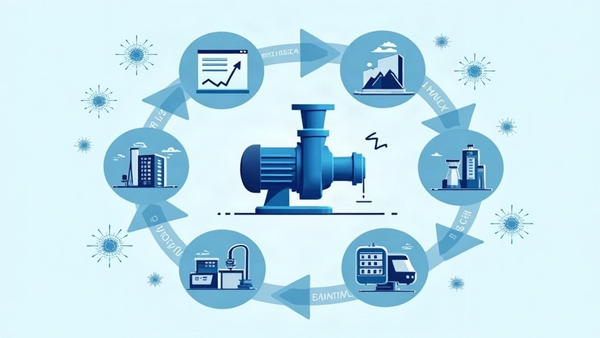
AI in Maximo: From Predictive Maintenance to Agentic Condition Insight
An overview of how artificial intelligence is being applied inside Maximo, from predictive failure forecasting and condition-based decision support to agentic assistants, MCP-driven tools, visual inspection, and conversational scheduling.


AI in Maximo: From Predictive Maintenance to Agentic Condition Insight
Artificial intelligence has moved from experiment to operational requirement in enterprise asset management. Organizations that manage large physical asset portfolios are under constant pressure to reduce downtime, extend asset life, and control maintenance costs. Traditional preventive maintenance based on fixed calendars can be wasteful. Reactive maintenance is expensive. The middle ground, condition-based and predictive maintenance, depends on turning data into decisions faster than human analysis alone allows.
IBM Maximo has been building AI capabilities for years through modules such as Maximo Predict and Maximo Monitor. With the June 2026 general availability of Maximo Application Suite 9.2, the platform has added agentic AI, the Maximo MCP server, the Maximo Assistant as an orchestrator, deeper mobile natural language support, and conversational scheduling with what-if analysis. These newer tools do not replace human judgment. They augment it by summarizing asset condition, recommending actions, optimizing schedules, and helping technicians and engineers focus on what matters most.
This article reviews the AI landscape inside Maximo. It covers predictive maintenance with Maximo Predict, the move toward agentic condition insight, generative AI for work order intelligence, the new MCP server and external agent integration, visual inspection using computer vision, and the emerging role of conversational scheduling. The goal is to give practitioners a clear picture of what these tools can do, how they fit together, and what it takes to use them responsibly in production.
The Foundation: Predictive Maintenance with Maximo Predict
Predictive maintenance is the most mature AI application in the Maximo portfolio. Maximo Predict uses machine learning models trained on historical work order, failure, and sensor data to estimate the probability that an asset will fail within a future time window. Instead of replacing a pump every six months because the schedule says so, a maintenance team can replace it when the model indicates rising failure risk.
The models in Maximo Predict are designed for common asset classes such as pumps, motors, valves, compressors, and transformers. They can use both tabular data, such as age, run hours, and failure history, and time-series data from sensors such as vibration, temperature, and pressure. The notebooks that come with the product guide data scientists through data preparation, feature engineering, model training, and deployment.
A typical workflow begins with data quality. The model is only as good as the historical records it learns from. Organizations must ensure that work orders are coded correctly, that failure modes are documented consistently, and that sensor data is aligned with asset identifiers. Data preparation often consumes more effort than model tuning.
Once trained, the model produces failure probability scores that feed into Maximo Health and Maximo Manage. A high score may trigger a condition-based work order, alert a reliability engineer, or adjust an asset health index. The model output is not a replacement for engineering judgment. It is an input that helps teams prioritize inspections and plan interventions before failure occurs.
The June 2026 MAS 9.2 release also decouples the Predict component from the IoT service layer. Predict now operates independently, with IoT-related functionality accessed through Monitor or the appropriate integration layer. This improves modularity and simplifies the deployment architecture for customers running predictive models without a full IoT footprint.
Monitoring model performance over time is essential. Asset behavior changes as equipment ages, as operating conditions shift, and as maintenance practices improve. A model trained three years ago may no longer be accurate. Retraining should be triggered by drift detection, not by calendar dates alone. Teams that treat predictive models as static assets are often disappointed.
Maximo Condition Insight: Agentic AI for Maintenance Decisions
Maximo Condition Insight represents the next direction in Maximo AI: using AI not just to predict failures, but to reason about asset condition and recommend next steps. The agentic approach combines data from multiple sources, such as sensor readings, inspection results, work history, and operating context, to produce a concise assessment and suggested actions.
The practical effect is that a reliability engineer can ask the system about a specific asset and receive a summarized condition report rather than a spreadsheet of raw metrics. The system can highlight anomalies, compare current readings to baselines, and suggest whether to inspect, repair, or continue operating. This reduces the time spent compiling information from multiple screens.
IBM's MAS 9.2 announcement describes Condition Insight as fusing work orders, inspections, meter readings, key performance indicators, failure mode analysis, and reliability strategies. The output is not a raw alert; it is a contextual recommendation that teams can act on or override. For example, Condition Insight might identify that a motor's vibration trend, recent bearing work, and elevated temperature readings together point to an imminent seal issue, then recommend a prioritized inspection and a parts check.
The technology behind Condition Insight typically involves large language models or retrieval-augmented generation pipelines that draw on structured Maximo data. The model does not invent data. It retrieves facts from the asset record and presents them in natural language. This distinction matters for trust. Maintenance decisions are high-stakes, and any AI tool used in this space must be transparent about what it knows and what it does not.
Condition Insight also supports workflow integration. A recommended action can be converted into a work order with a single click, or routed to a supervisor for approval. This moves the system from passive reporting to active assistance. The goal is to reduce the gap between insight and action, which is where many analytics projects fail.
Organizations piloting Condition Insight should start with a limited scope. Choose one asset class with good data, define the decisions the system should support, and validate its recommendations against expert judgment before broad rollout. Trust builds through repeated correct recommendations, not through ambitious early claims.
Generative AI: Work Order Intelligence and the Maximo Assistant
Generative AI in Maximo is currently focused on practical productivity tasks. One of the most promising is work order summarization. A technician or planner opening a long work order history can get a concise summary of what has been done, what parts were used, and what the current status is. This saves time and reduces the risk of missing important context.
Another application is the Maximo Assistant, which allows users to ask questions in natural language. Instead of navigating menus to find an asset's last inspection date, a user can type a question and receive a direct answer. The assistant interprets the request, queries the appropriate Maximo data, and returns a response. This lowers the barrier for users who are not deep experts in Maximo navigation.
MAS 9.2 expands the Maximo Assistant into a single agentic orchestrator. It supports multi-turn conversations, natural language queries across more than ten business objects, and AI-generated asset and alert insights. For technicians in the field, Maximo Assistant on Mobile provides natural language access to asset information, work history, and task completion guidance.
Generative AI also appears in reliability-centered maintenance and failure mode analysis. A user can describe an asset or a failure pattern, and the system can suggest failure modes, effects, and recommended actions based on known libraries. This is useful during RCM workshops, root cause analysis, and the design of preventive maintenance plans. The output is a starting point for human review, not a final answer.
The following interaction illustrates the ideal behavior of a grounded assistant:
User: "What is the failure history for pump P-101 this year?" Assistant: "Pump P-101 has had three work orders in the last 12 months: a seal replacement in March, a vibration check in June, and a bearing adjustment in September. The most recent health score is 78, down from 89 in January. Condition Insight recommends scheduling a follow-up inspection within 10 days."
The assistant grounds its response in actual work order and health data. It does not fabricate events or provide unsupported recommendations. Keeping generated responses tied to real records is the key to safe deployment.
The MCP Server: Connecting External Agents to Maximo
One of the most architecturally significant additions in MAS 9.2 is the Maximo MCP server. MCP, or Model Context Protocol, is an open standard that allows AI agents to discover and call tools in a consistent way. In Maximo, the MCP server exposes Maximo Manage data and functionality as a set of tools that the Maximo Assistant or external agents can invoke.
The Maximo MCP server runs as a pod in Red Hat OpenShift. It synchronizes with Maximo Manage to maintain an up-to-date list of available tools. By default it supports the agentic Maximo Assistant, custom tools built from Maximo automation scripts, object structures, or workflows, and external AI agent connections. External agents connect using a public-facing OpenShift route URL and authenticate via an API key or JSON web token.
This architecture matters because it lets organizations bring their own AI agents into Maximo-driven workflows without rebuilding integrations for each new model. Instead of writing point-to-point connectors between Maximo and every AI tool, teams can expose a consistent set of capabilities through the MCP server. An external agent can query work orders, create service requests, check inventory, or trigger workflows through standardized tool calls.
A typical integration pattern looks like this:
- Define the business process the agent should support, such as work order triage or parts procurement escalation.
- Identify the Maximo Manage operations required, such as reading work orders, updating statuses, or checking stock.
- Expose those operations as MCP tools through automation scripts or object structures.
- Connect the external agent to the MCP server route and authenticate with an API key.
- Test tool calls in the MCP Inspector before enabling the agent in production.
The MCP server does not remove the need for governance. Every tool call is an action against Maximo data, and access controls, audit logging, and approval workflows still apply. Organizations should treat AI agents like any other integration client: authenticate them, limit their scope, and review their activity.
MAS 9.2 also introduces an AI configuration application that centralizes activation and management of AI features, including model status, one-click capability enablement, and AppPoint usage dashboards. This gives administrators visibility into which AI capabilities are active and how they consume license entitlement.
Visual Inspection and Computer Vision
Maximo Visual Inspection uses computer vision to analyze images and video for defects, anomalies, or quality issues. Technicians can capture photos with a mobile device during inspections, and the model can classify them in real time or near real time. Applications include identifying corrosion, detecting cracks, reading gauges, spotting missing components, and assessing wear.
The value is twofold. First, visual inspection reduces the time experts spend on repetitive image review. A human still validates flagged anomalies, but the model filters out the obvious negatives. Second, it enables inspections in situations where expert availability is limited. A junior technician with a camera can collect images that a remote expert or model reviews later.
Training a visual inspection model requires labeled images. The organization must collect examples of the defects it wants to detect and annotate them. The quality of the training set determines the quality of the model. Poor lighting, inconsistent angles, and unrepresentative defects all reduce accuracy. Teams should plan a data collection phase before expecting production-grade results.
MAS 9.2 strengthens visual inspection in several ways. The Maximo Mobile app now supports Maximo Visual Inspection with local inference directly on the device, including offline operation on iOS. This means a technician can take a photo, run the model, and receive an immediate defect assessment without waiting for a network round trip. For remote or hazardous sites, this reduces latency and dependency on connectivity.
Deploying visual inspection also requires thinking about workflow. The camera is usually a mobile device used by a technician in the field. The model may run on the device for speed, on an edge server for better performance, or in the cloud for centralized management. The choice depends on network availability, latency requirements, and security constraints. A refinery with limited wireless coverage may prefer edge inference, while a distributed utility with strong connectivity may use the cloud.
Best practices include starting with a single defect type, defining clear acceptance thresholds, and maintaining a human-in-the-loop review process. Computer vision models can produce false positives, especially when deployed in new environments with different lighting or backgrounds. Gradual rollout and continuous feedback improve accuracy over time.
Conversational Scheduling and What-If Analysis
MAS 9.2 extends AI from asset diagnosis into planning and scheduling. Conversational scheduling allows planners, schedulers, and field service managers to explore changes using plain language. A user might ask what would happen if they increased capacity for a specific crew, prioritized critical work, or shifted a set of jobs to the next shift. The system responds with an optimized or adjusted schedule based on real-time conditions, constraints, and resource availability.
This capability reduces the time spent building and comparing schedules manually. Traditional scheduling optimization tools require users to navigate many parameters. Conversational scheduling wraps that complexity behind a natural language interface. The user describes the goal, and the system translates it into constraints and optimization logic.
What-if analysis complements this by letting teams simulate decisions before committing to them. For example, a maintenance supervisor could ask whether moving a planned outage one week earlier would reduce overall risk, or whether assigning a senior technician to a critical job would leave other work uncovered. The system evaluates the scenario and returns an assessment. The assessment may include resource conflicts, cost shifts, or risk changes.
The underlying logic usually combines optimization engines, rule-based constraints, and generative interfaces. The AI does not replace the scheduler. It accelerates exploration. The final decision remains with the human, who understands labor agreements, site realities, and business priorities that may not be encoded in the system.
For organizations with complex maintenance schedules, this capability can reduce planning cycle time and improve responsiveness. The key is to validate that the constraints modeled in the system match reality. A schedule that looks optimal on screen but ignores travel time, parts availability, or permit windows will fail in the field.
Practical Implications
For operations leaders, the practical implication is to treat AI as a decision-support layer, not an autopilot. Predictive models, condition summaries, visual inspection results, and optimized schedules should feed into human workflows where they can be reviewed, approved, or overridden. Removing humans from high-stakes maintenance decisions is neither safe nor practical.
For data teams, the implication is that data readiness is the dominant success factor. AI projects in Maximo often stall not because the algorithms fail, but because asset records, work order history, and sensor data are incomplete or inconsistent. Investing in data governance before modeling will pay more than tuning the latest algorithm on dirty data.
For IT and security teams, the implication is to establish governance for AI outputs and agent connections. Generated text, visual inspection flags, predictive scores, MCP tool calls, and scheduling recommendations should be logged, auditable, and subject to the same access controls as other Maximo data. If an AI recommendation leads to a maintenance action, the recommendation should be traceable.
For platform administrators, the MAS 9.2 AI configuration application and AppPoint usage dashboards provide new operational visibility. Use them to track which AI capabilities are enabled, which models are healthy, and how license consumption is trending. Treat AI services as first-class components of the MAS platform, with their own monitoring, patching, and capacity planning.
For planners and schedulers, conversational scheduling and what-if analysis can shorten planning cycles and surface better trade-offs. The value depends on how well the modeled constraints reflect real-world operations. Teams should pilot these tools on one planning area before expanding.
Bottom Line
AI in Maximo is moving from narrow prediction toward broader operational intelligence. Predictive maintenance remains the proven application. Condition Insight adds reasoning and recommendation. The Maximo Assistant and MCP server bring agentic workflows into the platform. Generative AI reduces friction for users. Visual inspection extends human expertise into the field. Conversational scheduling and what-if analysis bring AI into planning and resource decisions.
Each capability has a role, but none replace the fundamentals of good asset data, sound maintenance practices, and experienced engineering judgment. The organizations that benefit most will be those that start with clear use cases, clean data, and realistic expectations. AI in Maximo is a powerful amplifier of maintenance competence, not a substitute for it.