Agentic AI Comes to Asset Performance Management: Condition Insight, RCM Advisor, and the End of Reactive Maintenance
MAS 9.2 embeds agentic AI directly into Asset Performance Management with Condition Insight, RCM Advisor, Smart Alerts, and automated work order generation. Here's how these capabilities connect Manage, Monitor, Health, and Predict into a closed loop.

Agentic AI Comes to Asset Performance Management: Condition Insight, RCM Advisor, and the End of Reactive Maintenance
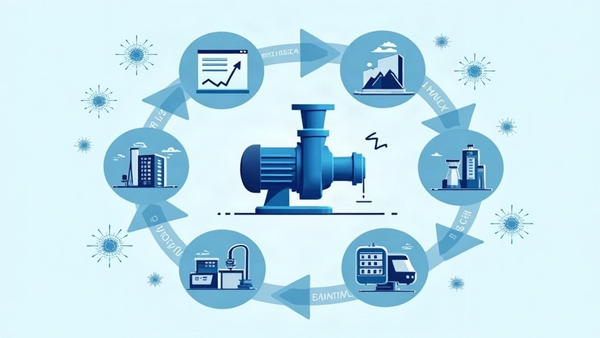
The most consequential change in MAS 9.2 is not a UI refresh or a platform upgrade. It is the embedding of agentic AI directly into the Asset Performance Management workflow. Condition Insight, RCM Advisor, Smart Alerts, and automated work order generation are not bolt-on AI features. They are deeply integrated capabilities that connect Maximo Manage, Monitor, Health, and Predict into a closed loop: detect, diagnose, recommend, act, and learn.
Austin Ford's June 2026 post on IBM Maximo APM with Agentic AI captured the significance: "The real value isn't just automation. It's augmenting reliability engineers, planners, and maintenance teams with AI that can analyze, recommend, and eventually act autonomously." This article examines what each capability does, how it works technically, and what reliability teams need to know to deploy it effectively.
The context for this shift is important. For years, the APM conversation has been about connecting sensors, collecting data, and building dashboards. The unspoken problem: sensor data without reliability context is just data. A vibration spike on a pump means something different depending on the pump's failure history, its criticality, the current production schedule, and the availability of spare parts. Condition Insight is IBM's answer to that problem. It does not just detect anomalies. It contextualizes them against the full asset record.
Condition Insight: From Anomaly Detection to Actionable Diagnosis
Condition Insight is the centerpiece of the MAS 9.2 APM AI capabilities. It rapidly analyzes asset data, maintenance history, alerts, reliability strategies, and meter readings to explain asset health, identify trends, and recommend actions.
The technical architecture is worth understanding. Condition Insight is not a standalone application. It is a capability of the AI Service that sits across Manage, Monitor, Health, and Predict. It ingests data from all four sources and applies multiple AI models to produce a unified assessment.
The data sources Condition Insight consumes:
- Monitor: Real-time sensor data (vibration, temperature, pressure, flow rates, electrical signatures)
- Health: Asset health scores, failure risk indicators, remaining useful life estimates, replacement planning data
- Manage: Work order history, failure reports, inspection results, meter readings, asset specifications
- Predict: AI-powered failure forecasts, anomaly detection results, pattern recognition outputs
The output is not a dashboard widget. It is a contextual diagnosis that answers the questions a reliability engineer actually asks:
- "Why is this asset's health score declining?"
- "Is this vibration pattern consistent with a known failure mode?"
- "What work orders have been done on this asset in the last 90 days, and did they address the root cause?"
- "Based on the current trend, when is this asset likely to fail, and what is the recommended intervention?"
The AI models behind Condition Insight are not generic. They are trained on asset-specific failure patterns, industry-standard failure modes (aligned with ISO 14224 and OREDA where applicable), and the organization's own maintenance history. This means Condition Insight gets more accurate over time as it learns from the specific assets and failure patterns in your environment.
RCM Advisor: AI-Driven Reliability Strategy Development
RCM Advisor is listed as "Coming Soon" in the MAS 9.2 announcement, but it is worth examining now because it represents a fundamental shift in how reliability strategies are developed.
Reliability-Centered Maintenance (RCM) is one of the most powerful methodologies in asset management. It is also one of the most resource-intensive. A proper RCM analysis requires cross-functional teams, facilitated workshops, failure mode identification, consequence analysis, and strategy selection. For organizations with thousands of assets, full RCM analysis is often limited to the most critical equipment.
RCM Advisor uses AI to accelerate this process. It can:
- Recommend asset strategies based on similar assets, industry standards, and historical failure data
- Identify reliability gaps by comparing current maintenance plans against recommended strategies
- Support RCM deployment by generating draft FMEAs (Failure Mode and Effects Analyses) for review by reliability engineers
- Prioritize assets for RCM analysis based on criticality, failure history, and strategy gaps
The key word is "advisor." RCM Advisor does not replace reliability engineers. It gives them a starting point that would otherwise take weeks of manual analysis to produce. The engineer reviews, validates, and adjusts the AI-generated recommendations. The AI learns from those adjustments and improves its future recommendations.
This is the agentic AI pattern: the AI proposes, the human decides, and the system learns from the decision. Over time, the AI's proposals get better, and the human's review gets faster. The goal is not to automate RCM. It is to make RCM feasible for a broader set of assets than most organizations can currently cover.
Smart Alerts: Contextual, Not Just Noisy
Anyone who has deployed condition monitoring at scale knows the problem: alert fatigue. When every vibration spike, temperature excursion, and pressure deviation generates an alert, the alerts become noise. Technicians and engineers learn to ignore them. The genuinely critical alerts get lost in the flood.
Smart Alerts in MAS 9.2 address this by enriching alerts with contextual insights and known failure modes. A Smart Alert does not just say "Pump P-101 vibration exceeded threshold." It says:
- "Pump P-101 vibration at 8.2 mm/s (threshold: 7.0 mm/s)"
- "This pattern matches bearing degradation failure mode F-104"
- "Similar pattern preceded failure on P-102 by 14 days (March 2025)"
- "Recommended action: Schedule bearing replacement within 7 days"
- "Spare bearing available in Storeroom A-3 (qty: 2)"
The alert is prioritized based on the combination of severity, failure mode criticality, and time-to-failure estimate. A high-severity alert on a low-criticality asset with a long lead time may be lower priority than a moderate-severity alert on a high-criticality asset with a short lead time.
The Smart Alert engine uses the same AI Service backend as Condition Insight. It correlates the alert with the asset's health score, failure history, reliability strategy, and current work order status. If a work order already exists for the recommended action, the alert is suppressed or downgraded. If the alert is for a known transient condition (startup vibration, for example), it is filtered based on operating context.
Work Order Automation: Closing the Loop
The final piece of the agentic APM puzzle is automated work order generation. When Condition Insight identifies a recommended action and Smart Alerts confirm the priority, the system can automatically generate and update work orders based on asset strategy and operational context.
This is not a simple "create a work order when an alert fires" rule. The work order automation engine considers:
- Asset strategy: What does the reliability strategy say about this failure mode? Is the recommended action aligned with the strategy?
- Operational context: Is the asset currently in operation? Is there a production window for maintenance? Are there conflicting work orders?
- Resource availability: Are the required crafts, parts, and tools available? If not, can the work order be scheduled for a future window?
- Regulatory requirements: Does the work require a permit? Is there a regulatory notification requirement?
The work order is created with the full context: asset, location, failure mode, recommended action, priority, required parts, estimated labor, and scheduling constraints. The planner reviews and approves, or the system can be configured to auto-approve for certain categories of work.
The learning loop is critical. When a work order is completed, the results feed back into Condition Insight and Health. If the recommended action resolved the issue, the AI's confidence in that recommendation increases. If it did not, the AI adjusts its model. Over time, the system gets better at predicting what actions will actually resolve which conditions.
The Connected APM Stack: Manage, Monitor, Health, Predict
Stefan Hoffmann's observations from the Reliability and APM workshop at the IBM Innovation Studio in Amsterdam (June 2026) captured an important insight: IBM is positioning Manage, Monitor, Health, Predict, and Reliability Strategies as a connected operational capability, not separate products. The flow is:
1. Monitor collects real-time sensor data and detects anomalies
2. Health aggregates condition data into asset health scores and risk indicators
3. Predict applies AI models to forecast failures and estimate remaining useful life
4. Condition Insight (new in 9.2) contextualizes all of the above against maintenance history and reliability strategies
5. Smart Alerts (new in 9.2) prioritizes and enriches alerts with failure mode context
6. Manage receives the recommended action as a work order
7. Work Order Automation (new in 9.2) generates and updates work orders
8. The completed work order feeds back into Health and Condition Insight
This is the closed loop that APM has been promising for years. The difference in 9.2 is that the AI capabilities (Condition Insight, Smart Alerts, Work Order Automation) are the connective tissue that makes the loop actually close without manual intervention at every step.
Practical Implications
For reliability teams, the deployment of agentic APM capabilities is not a technology project. It is a change management project. The technology works. The challenge is trust.
Condition Insight will recommend actions that a reliability engineer might not have considered. Smart Alerts will prioritize work differently than the planner's intuition. Work Order Automation will generate work orders that bypass the normal planning process. Each of these requires a level of trust in the AI that does not develop overnight.
The recommended deployment approach:
1. Start with Condition Insight in advisory mode. Let the AI generate recommendations, but do not act on them automatically. Have reliability engineers review the recommendations and compare them against their own assessments. Track agreement rates.
2. Calibrate Smart Alerts gradually. Start with a small set of assets and failure modes. Tune the alert thresholds and prioritization rules based on feedback. Expand to more assets as confidence grows.
3. Enable Work Order Automation for low-risk categories first. Routine inspections, minor adjustments, and well-understood failure modes are good candidates. Leave high-consequence decisions for human review.
4. Measure outcomes, not just adoption. Track mean time between failures (MTBF), mean time to repair (MTTR), maintenance cost per asset, and unplanned downtime. If the AI is making good recommendations, these metrics will improve.
Bottom Line
MAS 9.2's agentic APM capabilities are not a science project. They are production-ready AI that connects the dots between condition monitoring, health scoring, failure prediction, and work execution. The organizations that deploy them effectively will have a reliability advantage that compounds over time as the AI learns from their specific assets and failure patterns. The organizations that wait will find themselves competing against competitors whose maintenance teams are augmented by AI that gets smarter every day.
Sources
- Austin Ford: IBM Maximo APM with Agentic AI (June 2026): https://www.linkedin.com/posts/austin-ford_assetmanagement-apm-ibmmaximo-activity-7467625511721009152-47qW
- IBM MAS 9.2 Announcement (June 25, 2026): https://www.ibm.com/new/announcements/introducing-maximo-application-suite-9-2
- Stefan Hoffmann: Reliability & APM Workshop at IBM Innovation Studio Amsterdam (June 2026)
- Biplab Das Choudhury: All Things Maximo June 2026: https://www.linkedin.com/pulse/all-things-maximo-june-2026-biplab-das-choudhury-ghmrc
- IBM Maximo Application Suite Releases Information: https://www.ibm.com/support/pages/maximo-application-suite-releases-information-0
- IBM Maximo Product Page: https://www.ibm.com/products/maximo