Agentic AI Comes to APM: Condition Insight, RCM Advisor, and the End of Reactive Reliability
>

Agentic AI Comes to APM: Condition Insight, RCM Advisor, and the End of Reactive Reliability
For decades, asset performance management has followed the same pattern: collect data, analyze it, make a decision, and execute. The bottleneck was never the data collection. It was the analysis and decision-making. Reliability engineers spend hours pulling work order histories, reviewing inspection reports, correlating meter readings, and cross-referencing failure modes before they can recommend an action. By the time the recommendation reaches the maintenance team, the asset may have already degraded further, or the operational window may have closed.
MAS 9.2 changes this equation. IBM has embedded agentic AI directly into the APM workflow, not as a separate analytics layer but as an active participant in the reliability process. Condition Insight analyzes asset data and recommends actions. RCM Advisor (coming soon) guides reliability strategy development. Smart Alerts enrich notifications with failure mode context. And work order automation generates and updates work orders based on asset strategy and operational context, with the ability to continuously learn and improve.
This is not predictive maintenance in the traditional sense. It is agentic reliability: AI that does not just predict failures but recommends, prioritizes, and in some cases initiates the response. This article covers the architecture, the deployment patterns, and what it means for reliability teams.
The Connected APM Stack: Manage, Monitor, Health, Predict, and Reliability Strategies
Before diving into the agentic AI capabilities, it is worth understanding how the APM components fit together in MAS 9.2. Stefan Hoffmanns, writing after the Reliability and APM workshop at the IBM Innovation Studio in Amsterdam, captured the key insight: without reliability context, sensor data remains just data. IBM positions Manage, Monitor, Health, Predict, and Reliability Strategies as a connected operational capability, not separate products.
The flow works like this:
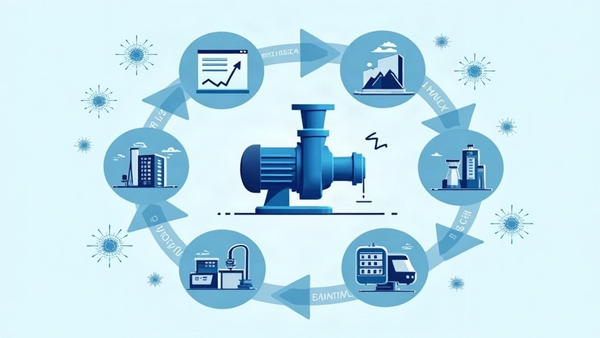
Monitor collects real-time sensor and meter data from assets. It is the data ingestion layer, handling IoT device connectivity, data normalization, and threshold-based alerting. Monitor 9.2.0 shipped on June 25, alongside Monitor 9.1.12 and Monitor 9.0.22 for organizations on earlier tracks. Health consumes Monitor data plus work order history, inspection results, and failure data to compute asset health scores. Health 9.0.27 shipped on June 25. Health scoring enables organizations to move beyond calendar-based maintenance toward data-driven intervention strategies. Instead of "service this pump every 90 days," the system says "this pump has a health score of 62/100 and is trending downward; inspect the bearings within the next two weeks." Predict applies machine learning models to forecast failure probability and remaining useful life. Predict 9.2.0, 9.1.9, and 9.0.16 all shipped on June 25. Predict models can be trained on historical failure data, sensor readings, and maintenance records to identify patterns that precede failures. Reliability Strategies provides the RCM framework: failure mode analysis, criticality assessment, and maintenance strategy recommendations. It is the bridge between "this asset might fail" and "here is what we should do about it." Manage is where the work gets executed. Work orders, PM schedules, inventory, and resource assignments all flow through Manage. The APM stack feeds recommendations into Manage, and Manage feeds execution data back into the APM stack, creating a closed loop.
The connected flow: failure analysis identifies failure modes, Reliability Strategies recommends maintenance approaches, Health and Predict monitor for those failure modes, and when thresholds are crossed, Manage generates work orders. The work execution data then feeds back into the analysis, improving future predictions.
Condition Insight: The First Agentic APM Capability
Condition Insight is the first agentic AI capability in the MAS 9.2 APM stack. It brings together work orders, inspections, meter readings, and reliability strategies to identify patterns in asset behavior and recommend what to do next.
The key word is "recommend." Condition Insight does not just surface data. It analyzes it and produces actionable recommendations. A reliability engineer reviewing a pump with declining vibration readings does not just see the trend line. They see: "Vibration on Pump P-104 has increased 23% over the last 14 days. This pattern matches the early-stage bearing failure mode documented in the RCM analysis for this asset class. Recommended action: schedule vibration analysis inspection within 7 days and verify bearing lubrication. Historical MTBF for this failure mode is 18 months; current asset age is 14 months."
This is a fundamentally different interaction model from traditional APM dashboards. The AI is not just visualizing data. It is interpreting it through the lens of reliability engineering, applying failure mode knowledge, and producing a recommendation that a reliability engineer can review, refine, and act on.
In IBM's internal pilot with Global Real Estate, the Condition Insights Agent reduced physical asset analysis time from 15-20 minutes to 15-30 seconds. Review coverage expanded from 1% to 30% across 6,000 assets. The agent was running on a GPT OSS 120B model, demonstrating that production-grade agentic AI for APM is viable on current-generation models.
RCM Advisor: AI-Guided Reliability Strategy Development
RCM Advisor is listed as "coming soon" in the MAS 9.2 announcement, but the capability is significant enough to warrant early attention. It represents AI-driven workflows that recommend asset strategies, identify reliability gaps, and support RCM deployment.
Traditional RCM is a labor-intensive process. A cross-functional team analyzes each asset class, identifies failure modes, assesses criticality, and defines maintenance strategies. For an organization with hundreds of asset classes, this can take months or years. RCM Advisor aims to accelerate this process by:
1. Analyzing existing maintenance data to identify failure patterns that may not have been captured in the original RCM analysis
2. Recommending maintenance strategies based on similar asset classes in other organizations (anonymized, aggregated data)
3. Identifying gaps where assets have no defined reliability strategy or where the existing strategy does not match observed failure patterns
4. Generating draft FMEA (Failure Mode and Effects Analysis) documents that reliability engineers can review and refine
RCM Advisor does not replace reliability engineers. It augments them. The AI handles the data correlation and pattern recognition that would take a human weeks. The engineer handles the judgment calls: is this failure mode credible? Is this maintenance strategy practical given our operational constraints? Does this criticality assessment align with our business risk tolerance?
Smart Alerts: Context-Rich Notifications
Smart Alerts is the third agentic APM capability in MAS 9.2. It enriches alerts with contextual insights and known failure modes, helping teams prioritize the right work at the right time.
Traditional alerting in Monitor is threshold-based: if vibration exceeds X, send an alert. Smart Alerts adds layers of context:
- What failure mode does this alert pattern match?
- What is the asset's current health score and trend?
- What work orders are currently open on this asset?
- What is the recommended response based on the reliability strategy?
- What is the operational impact if this alert is not addressed?
The result is that a dispatcher or maintenance planner receiving a Smart Alert does not just see "High vibration on P-104." They see a prioritized, contextualized recommendation that includes the likely failure mode, the recommended response, and the operational impact of delay. This reduces the cognitive load on the people making maintenance decisions and improves the consistency of those decisions.
Work Order Automation: Closing the Loop
The fourth agentic APM capability is work order automation. When Condition Insight identifies a recommended action, or when a Smart Alert crosses a threshold that triggers a defined response, the system can automatically generate and update work orders based on asset strategy and operational context.
This is not simple auto-generation of work orders from alerts. The system considers:
- The asset's reliability strategy: what is the prescribed response for this failure mode?
- The operational context: is the asset currently in service? Is there a maintenance window available?
- Resource availability: are qualified technicians available? Are required parts in inventory?
- Existing work: is there already a work order open on this asset that could incorporate this work?
The system can also learn from outcomes. If a generated work order is rejected or modified by a planner, the system captures that feedback and adjusts future recommendations. This is the "agentic" part of agentic AI: the system does not just execute rules. It learns from results.
Deployment Architecture for Agentic APM
Deploying agentic APM in MAS 9.2 requires several components working together:
Prerequisites: - MAS Core 9.2.0 with AI Service 9.2.0 - Maximo Manage 9.2.0 - Maximo Monitor 9.2.0 (for sensor data ingestion) - Maximo Health 9.2.0 (for health scoring) - Maximo Predict 9.2.0 (for ML-based failure prediction) - Reliability Strategies configured for target asset classes Configuration steps: 1. Configure Monitor to ingest sensor data from target assets 2. Define health scoring criteria in Health for each asset class 3. Train Predict models on historical failure data (minimum 12 months of data recommended) 4. Define reliability strategies (failure modes, criticality, recommended responses) for each asset class 5. Enable Condition Insight and configure the data sources it should analyze 6. Configure Smart Alerts with failure mode mappings 7. Define work order automation rules, including approval workflows for auto-generated work orders Model considerations: Condition Insight in MAS 9.2 runs on the AI Service infrastructure. IBM's internal pilot used GPT OSS 120B, but the production deployment supports multiple model backends. The key requirement is that the model understands Maximo data structures: asset hierarchies, work order lifecycles, failure codes, and reliability terminology.
Practical Implications
If you are running Maximo Health and Monitor today: the jump to agentic APM is not a rip-and-replace. It is an evolution. Your existing health scores, Monitor alerts, and Predict models are the foundation that Condition Insight and Smart Alerts build on. The prerequisite is that your data is clean and your reliability strategies are defined. Agentic AI cannot compensate for bad data or missing failure mode analysis.
If you are considering APM for the first time: start with Health and Monitor. Get sensor data flowing, establish health scores, and build a baseline of asset performance data. Then add Predict for failure forecasting. Only then enable the agentic capabilities. The agentic AI is the top of the pyramid, not the foundation.
If you are a reliability engineer: your role is changing. The AI will handle the data correlation and pattern recognition that currently consumes most of your analysis time. Your value will shift toward strategy: defining failure modes, assessing criticality, validating AI recommendations, and making the judgment calls that AI cannot make. This is not a threat. It is an opportunity to spend more time on the work that actually requires engineering judgment.
Bottom Line
Agentic AI in APM is not a future concept. It shipped in MAS 9.2 on June 25, 2026. Condition Insight is GA. Smart Alerts are GA. Work order automation is GA. RCM Advisor is coming soon. The connected APM stack (Manage, Monitor, Health, Predict, Reliability Strategies) provides the data foundation, and the agentic AI layer provides the intelligence that turns data into action.
The organizations that benefit most will be those that have already invested in the APM foundation: clean sensor data, defined health scores, trained Predict models, and documented reliability strategies. For those organizations, agentic AI is a force multiplier that lets reliability engineers cover more assets, identify issues earlier, and respond faster. For organizations that have not invested in the foundation, the agentic AI capabilities will still work, but the recommendations will be only as good as the data they are based on.
The era of reactive reliability is ending. The era of agentic reliability has begun.
Sources
- IBM MAS 9.2 Announcement: https://www.ibm.com/new/announcements/introducing-maximo-application-suite-9-2
- IBM Maximo APM with Agentic AI: https://www.linkedin.com/posts/austin-ford_assetmanagement-apm-ibmmaximo-activity-7467625511721009152-47qW
- All Things Maximo - June 2026: https://www.linkedin.com/pulse/all-things-maximo-june-2026-biplab-das-choudhury-ghmrc
- IBM MAS Releases Information: https://www.ibm.com/support/pages/maximo-application-suite-releases-information-0
- IBM Maximo Health Overview: https://www.ibm.com/products/maximo