Reliability and APM in MAS 9.2: Turning Condition Data into Action

# Reliability and APM in MAS 9.2: Turning Condition Data into Action
Asset performance management has always been about connecting what an asset is doing with what should be done about it. The gap between condition data and maintenance action is where organizations lose uptime, spend money on unnecessary work, or miss the warning signs of failure. IBM Maximo Application Suite 9.2 addresses this gap directly through Maximo Condition Insight, an AI-powered capability that brings together work orders, inspections, meter readings, and reliability strategies to identify patterns and recommend next steps.
Condition Insight is not a standalone product. It sits on top of the broader MAS APM portfolio, which includes Monitor for sensor and meter data, Health for asset health scoring, Predict for failure prediction, and Reliability Strategies for failure mode and maintenance strategy management. MAS 9.2 knits these components into a more coherent workflow, so reliability teams can move from anomaly detection to work execution without switching contexts.
This article explores the APM and reliability changes in MAS 9.2. It covers the role of Condition Insight, the integration of Monitor, Health, Predict, and Reliability Strategies, the removal of the Predict IoT dependency, the renewed emphasis on RCM-EAM-APM convergence, the data readiness requirements for AI-driven reliability, and how teams should operationalize recommendations.
Maximo Condition Insight: From Data to Decision
Maximo Condition Insight is the headline reliability capability in MAS 9.2. Its purpose is to unify disparate data sources and surface actionable patterns. It consumes work order history, inspection results, meter readings, and reliability strategies, then uses AI to identify behavior patterns and recommend what to do next. The goal is not to replace the reliability engineer but to make the engineer more consistent, faster, and better informed.
The value proposition is straightforward. In most organizations, condition data lives in multiple systems. Vibration data might be in one tool, oil analysis in another, work orders in Maximo, and inspection photos on a network share. The reliability engineer spends significant time stitching this information together before deciding whether to schedule maintenance. Condition Insight reduces that stitching time by presenting a synthesized view.
Recommendations are grounded in the operation's own history and strategy. Because Condition Insight respects Maximo security and permissions, the recommendations are role-aware. A reliability engineer sees different detail than a technician, and both see only what they are authorized to see. This is important for adoption: field teams are more likely to trust recommendations that are based on their own asset history and that do not expose information outside their scope.
The capability also helps newer reliability staff act with the confidence of experienced peers. By surfacing patterns that previously required years of asset-specific knowledge, Condition Insight reduces the organization's dependence on a small number of experts. This is a workforce planning benefit as much as a technical one.
A Condition Insight recommendation workflow might look like this:
| Input Source | Data Example | Insight Generated |
|---|---|---|
| Work order history | Repeated bearing replacements on pump P-101 | Pattern of premature bearing wear |
| Inspection results | Recent inspection noted shaft misalignment | Contributing condition identified |
| Meter readings | Vibration trend rising over 30 days | Degradation trajectory confirmed |
| Reliability strategies | Strategy calls for alignment check at this threshold | Recommended action aligns with policy |
| Output | Recommended work order for alignment and bearing inspection | Action assigned to planner |
The APM Portfolio in One Workflow
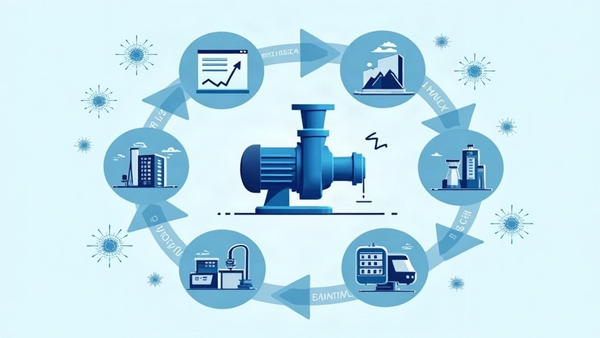
MAS 9.2 continues IBM's push to position Manage, Monitor, Health, Predict, and Reliability Strategies as a connected operational capability, not separate products. The closed-loop flow begins with failure analysis, continues through work execution in Manage, and feeds results back into reliability improvement. This is the RCM-EAM-APM convergence that has been debated in the Maximo community and that IBM highlighted in a recent Amsterdam workshop.
Monitor provides the real-time and near-real-time data stream. Sensors, meters, and edge devices feed telemetry that Monitor aggregates and analyzes. Health scores assets based on the telemetry and configured rules, giving operations a simple red-yellow-green view of asset condition. Predict uses machine learning to estimate the probability of failure over a horizon, helping planners decide which assets to address first. Reliability Strategies encode the organization's chosen maintenance strategies, including failure modes, effects, and criticality analysis.
In MAS 9.2, these layers are more tightly integrated. Condition Insight draws from all of them. Dashboards can combine Manage work orders with Monitor telemetry and Health scores. Predictions can trigger work orders. Inspection results can update Health scores. The result is a feedback loop where each maintenance event improves the model of the asset.
Achieving this integration requires data discipline. Asset hierarchies, naming conventions, meter points, and work order classifications must be consistent across the portfolio. Organizations that have allowed each application to evolve its own data model will need to invest in alignment before the closed-loop vision becomes reality.
The table below maps each APM component to its primary data responsibility and the handoff to the next layer.
| Component | Primary Responsibility | Handoff to Next Layer |
|---|---|---|
| Monitor | Telemetry ingestion, thresholds, event detection | Alarm or health score to Health |
| Health | Asset health scoring, degradation trends | Health index and trend to Predict and dashboards |
| Predict | Failure probability over a time horizon | Prediction and confidence to Condition Insight |
| Reliability Strategies | Maintenance policy, failure modes, task recommendations | Strategy context to Condition Insight |
| Condition Insight | Synthesized recommendations | Actionable work order request to Manage |
| Manage | Work order creation, scheduling, execution, feedback | Completion data back to Health, Predict, and strategies |
Predict 9.2.0: Decoupled from IoT, More Modular
A notable technical change in MAS 9.2 is that the Predict component has removed its direct dependency on the IoT module. This change improves modularity and simplifies deployment architecture. IoT-related functionality is now expected to flow through the Monitor component or appropriate integration layers.
For platform and reliability teams, this is mostly good news. It reduces the number of services that must be running to support Predict, which simplifies upgrades, patching, and troubleshooting. It also clarifies responsibilities: Monitor owns the telemetry ingestion path, and Predict owns the modeling and prediction path.
The change does require a review of existing integrations. Any custom solution that relied on Predict directly reaching IoT services will need to be rerouted through Monitor or a supported integration pattern. This is a migration task, not a major redesign, but it should be planned rather than discovered during testing.
Predict 9.2.0 also includes stability improvements. The release notes cite better service startup resilience, improved error handling and logging, optimized request lifecycle handling, and updated Python libraries. These are the kinds of changes that do not make marketing headlines but that improve production reliability for teams running predictive models at scale.
Organizations using Predict should plan a review of their model deployment pipeline. With the IoT dependency removed, the assumptions that underlie data feeds may have changed. Confirm that training data, scoring jobs, and model refresh schedules still produce the expected outputs after the upgrade.
RCM-EAM-APM Convergence and Strategic Maintenance
The convergence of reliability-centered maintenance, enterprise asset management, and asset performance management is more than a naming exercise. It reflects a shift in how organizations think about maintenance. RCM provides the analytical framework for deciding what should be maintained and how. EAM provides the execution platform for work orders, inventory, and labor. APM adds the data-driven layer that detects degradation and predicts failure. Together, they form a continuous improvement system.
IBM's positioning of these capabilities as a connected suite in MAS 9.2 supports this convergence. Reliability Strategies can define the maintenance policy. Condition Insight can detect deviations from expected behavior. Manage can execute the resulting work. The outcome of that work can then refine the strategy.
For reliability engineers, the practical benefit is fewer swivel-chair workflows. Instead of exporting data from one tool, analyzing it in another, and creating work orders in a third, the workflow can remain within MAS. The barrier to this workflow is data quality. If the asset hierarchy in Manage does not match the hierarchy in Monitor, or if work order codes are inconsistent, the closed loop will not close.
Organizations should also revisit their reliability strategies. Many RCM programs produced excellent studies that were never fully implemented in the EAM system. MAS 9.2 creates an opportunity to load those strategies into Reliability Strategies, link them to assets, and measure whether the predicted outcomes match actual performance.
A practical convergence roadmap has three phases:
1. Align the data model. Standardize asset hierarchies, naming conventions, and failure codes across Manage, Monitor, Health, and Predict.
2. Digitize the strategies. Load RCM and maintenance strategies into Reliability Strategies and link them to asset classes.
3. Close the loop. Configure Condition Insight to compare actual behavior against strategy, generate recommendations, and feed outcomes back into strategy refinement.
Data Readiness for Condition Insight and Predict
AI-driven reliability capabilities depend on data quality more than algorithm sophistication. Before deploying Condition Insight or retraining Predict models, organizations should assess their data foundations.
Asset master data is the starting point. Each physical asset should have a single, accurate record in Manage with correct classification, location, and parent-child relationships. Duplicate or ambiguous asset records create noise in both condition monitoring and work order analysis.
Work order history is the next foundation. Complete, consistently coded work orders with correct failure codes, cause codes, and remediation codes are essential for pattern recognition. If historical work orders are missing failure codes or use free-text descriptions inconsistently, the AI will struggle to learn from them.
Meter readings and condition monitoring data need to be mapped to the correct asset and point. Monitor telemetry should align with the asset hierarchy and the measurement points defined in Manage. Gaps or misalignments will produce false signals.
Finally, reliability strategies must be digitized. Paper-based RCM studies or spreadsheet strategies need to be loaded into Reliability Strategies so that Condition Insight can compare actual behavior against expected behavior. This is often the most labor-intensive part of the readiness effort, but it is also the part that captures the organization's specific operating context.
A data readiness checklist for reliability AI is:
| Area | Minimum Standard | Verification Method |
|---|---|---|
| Asset master data | One record per installed asset, consistent classification | Duplicate and orphan record report |
| Work order history | Failure, cause, and remediation codes populated | Coding completeness dashboard |
| Meter points | Each telemetry point mapped to asset and measurement type | Point-to-asset mapping report |
| Inspection data | Standardized checklists with coded results | Inspection template audit |
| Reliability strategies | Digitized and linked to asset classes | Strategy coverage report |
Operationalizing Recommendations
Even the best recommendation is useless if it does not result in action. Reliability teams should design the workflow that converts Condition Insight output into scheduled work. This includes defining who reviews recommendations, how they are approved, how they are converted into work orders, and how the outcome is fed back.
Recommendations should be triaged. Some can be auto-approved because they align with existing maintenance policy. Some require engineering review because they represent an unusual pattern. Some should be escalated because they affect safety or regulatory compliance. Defining these tiers before go-live prevents the system from becoming a recommendation black hole.
The feedback loop is equally important. After a recommendation is executed, the result must be captured. Was the asset actually failing? Was the repair effective? Did the intervention prevent a more costly failure? This feedback improves both the AI model and the reliability strategy. Organizations that close the feedback loop will see compounding value. Organizations that do not will see diminishing returns.
A recommendation triage matrix might look like this:
| Tier | Condition | Reviewer | Action |
|---|---|---|---|
| Auto-approve | Matches existing maintenance policy and low risk | System | Create work order in approved status |
| Engineer review | Unusual pattern or moderate consequence | Reliability engineer | Review and approve, modify, or reject |
| Escalate | Safety, environmental, or regulatory consequence | Maintenance manager + reliability lead | Immediate assessment and prioritization |
Practical Implications
MAS 9.2 makes reliability and APM more connected and more actionable, but it does not remove the need for good data and clear processes. Condition Insight and Predict can accelerate pattern recognition, but their output is only as trustworthy as the data they consume. Reliability teams should use the MAS 9.2 upgrade as a trigger to audit asset data, standardize work order coding, d
...