How Asset-Intensive Industries Use IBM Maximo Across the Asset Lifecycle

# How Asset-Intensive Industries Use IBM Maximo Across the Asset Lifecycle
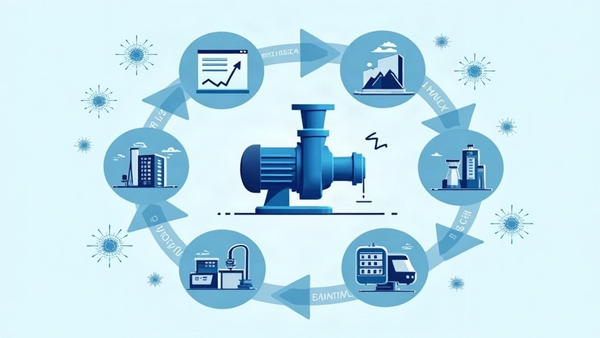
Every asset-intensive industry faces the same underlying challenge: physical assets are expensive to acquire, costly to maintain, and painful to replace. The difference between organizations that thrive and those that merely survive often comes down to how well they manage the asset lifecycle. IBM Maximo, now delivered through the Maximo Application Suite (MAS), is one of the most widely deployed enterprise asset management platforms for organizations that operate at scale across multiple industries.
This article examines how four major sectors use Maximo: utilities, oil and gas, manufacturing, and facilities. It draws on publicly available IBM case studies, product documentation, and regional user group presentations. The goal is not to claim universal outcomes but to show the patterns that successful organizations apply when they implement Maximo as a strategic asset management platform rather than a maintenance work order system.
Utilities: Keeping the Lights On and the Water Flowing
Utilities operate some of the most geographically distributed and regulated asset bases in the world. Electric utilities manage generation plants, transmission lines, substations, transformers, and distribution networks. Water utilities manage treatment plants, pipelines, pumps, valves, and meters. Gas utilities manage pipelines, compressors, regulators, and storage facilities. In every case, reliability and compliance are non-negotiable.
IBM Maximo for Utilities is a purpose-built industry solution that runs on the Maximo platform. It includes preconfigured data models, workflows, and reports aligned with utility operations. Compatible Unit Estimating supports construction and replacement cost estimation. Crew management helps dispatch the right teams with the right skills. GIS integration through Maximo Spatial allows assets to be viewed and managed on maps, which is critical for linear assets such as pipelines and transmission lines.
A common pattern among utility Maximo implementations is the consolidation of multiple legacy systems. Many utilities grew through acquisition, ending up with separate work management systems for generation, transmission, and distribution. Running Maximo as a single platform lets them standardize processes, share inventory, and benchmark performance across business units. IBM has reported that hundreds of utilities worldwide have used Maximo for generation, transmission, distribution, and water operations.
The practical benefits utilities report include:
- A single view of asset history across the enterprise
- Better coordination of planned outages and inspections
- Improved regulatory compliance through structured work records
- Reduced maintenance inventory through shared catalogs
- Faster mobilization of crews during storms and emergencies
Utilities also face unique pressures around grid modernization, renewable integration, and aging infrastructure. Maximo supports these initiatives by providing a centralized asset data foundation. When smart meters, sensors, and SCADA systems feed data into Maximo Monitor and Maximo Predict, utilities can shift from time-based maintenance to condition-based and predictive strategies.
Oil and Gas: Safety, Compliance, and Remote Operations
The oil and gas industry manages assets that are often dangerous, remote, and heavily regulated. Rigs, wells, pipelines, storage terminals, refineries, and fleets all require rigorous maintenance, safety, and environmental management. IBM Maximo for Oil and Gas provides industry-specific applications for asset management, health and safety, and environmental compliance.
A key requirement in this sector is HSE integration. Incidents, permits to work, safety observations, and environmental events cannot be managed in a silo separate from maintenance. Maximo for Oil and Gas embeds HSE workflows into the same platform that manages work orders, inspections, and asset history. This makes it easier to correlate maintenance activity with safety performance and to demonstrate compliance during audits.
Remote operations are another defining characteristic. Offshore platforms, remote wells, and pipeline segments create logistical challenges for technicians and inspectors. Mobile solutions that extend Maximo to the field allow workers to capture data, complete work orders, and report incidents without returning to a control room. Offline capability is important because connectivity is not guaranteed in remote locations.
IBM case studies in the oil and gas sector emphasize the value of a unified platform for extraction, distribution, and refining operations. Rather than maintaining separate systems for upstream, midstream, and downstream assets, organizations can manage the full lifecycle in one environment. This supports better capital planning, more consistent maintenance standards, and stronger audit trails.
Practical patterns for oil and gas Maximo implementations include:
- Aligning asset hierarchies with production systems and process flow diagrams
- Integrating with condition monitoring systems and historian databases
- Using Maximo Visual Inspection for automated defect detection on equipment photos
- Enforcing permit-to-work and isolation procedures through workflow
- Tracking contractor qualifications and safety performance
The downstream sector also faces pressure around sustainability and emissions. IBM has highlighted Maximo's role in asset lifecycle management for refining and distribution, including capabilities that help operators maintain compliance, reduce costs, and improve efficiency.
Manufacturing: Uptime, Quality, and Digital Factories
Manufacturing organizations run assets that directly affect revenue. A stopped production line can cost millions. Quality defects can trigger recalls. Late deliveries can damage customer relationships. For these reasons, manufacturers use Maximo to connect asset performance with production outcomes.
One of the most referenced IBM manufacturing case studies is Toyota's Indiana Assembly plant, which uses IBM Maximo Health and Predict to support a smarter, more digital factory. The implementation enables real-time monitoring of assembly equipment, helping to reduce downtime and defects. The underlying pattern is representative of modern manufacturing: connect machines, collect operational data, score asset health, and use predictive models to intervene before failures disrupt production.
Manufacturers also manage complex asset classes. Assembly lines include robots, conveyors, presses, tooling, and inspection equipment. Pharma and food manufacturers add strict regulatory and cleanliness requirements. Automotive manufacturers manage high-volume, high-variability production with tight quality standards. Maximo supports these environments with work management, inventory, procurement, calibration, and mobile execution capabilities.
Industry accelerators and partner solutions help speed time to value. Preconfigured content for manufacturing includes asset classes, job plans, preventive maintenance templates, and KPIs. Organizations can customize this content rather than starting from a blank slate.
Common manufacturing Maximo patterns include:
- Integrating Maximo with MES, ERP, and SCADA systems
- Using health scores and failure probability to schedule work during planned downtime
- Tracking spare parts consumption and optimizing inventory levels
- Supporting operator rounds and inspections with mobile devices
- Connecting maintenance history to quality management systems
Sandvik, another IBM case study, highlights how manufacturers connect assets and teams both online and offline to streamline maintenance, reduce waste, and support digital transformation. This reflects a broader trend: the boundary between operational technology and enterprise IT is blurring, and Maximo is positioned as the bridge between the two.
Facilities and Higher Education: Managing Complexity at Scale
Facilities management might seem less hazardous than oil and gas or less revenue-critical than manufacturing, but it presents its own complexity. Universities, hospitals, government buildings, and commercial real estate portfolios manage thousands of assets across many locations. The assets include HVAC systems, elevators, electrical systems, plumbing, roofs, lighting, and IT equipment. The workforce includes internal staff, contractors, and specialists. The budget pressure is constant.
Cornell University is a frequently cited IBM case study in this space. The university uses IBM Maximo to manage 180 million square feet of facilities, gaining real-time visibility, improving maintenance efficiency, and supporting long-term sustainability. That scale is unusual, but the underlying challenges are common: distributed teams, diverse asset types, deferred maintenance backlogs, and sustainability reporting requirements.
IBM Maximo Real Estate and Facilities, powered by TRIRIGA, extends Maximo into space management, lease administration, capital projects, and workplace services. In MAS 9.2, lease abstraction uses retrieval-augmented generation to extract key clauses and obligations from lease documents, reducing manual processing time. This is a practical example of how AI is being applied to facility management workflows.
Facilities Maximo implementations often focus on:
- Standardizing work order intake and triage across locations
- Planning preventive maintenance for mechanical and electrical systems
- Tracking capital projects and deferred maintenance backlogs
- Supporting sustainability and energy management initiatives
- Managing space allocation and lease obligations
The move toward smart buildings and digital twins is also relevant. When building management systems, IoT sensors, and Maximo are integrated, facilities teams can monitor conditions in real time, detect anomalies, and automate service requests.
Cross-Industry Patterns That Drive Success
Despite the differences between industries, successful Maximo implementations share common traits. These patterns are worth highlighting because they explain why some organizations extract significant value while others struggle.
Data Quality Comes First
Maximo is only as useful as the data inside it. Organizations that succeed invest in asset hierarchies, classifications, attributes, and location structures before worrying about advanced analytics. Bad data produces bad recommendations, no matter how sophisticated the AI.
Process Standardization Beats Customization
Every industry has unique requirements, but excessive customization creates maintenance debt. Strong implementations standardize core processes such as work order lifecycle, approval workflows, and procurement rules. Customization is reserved for genuine competitive differentiation.
Integration Is a Core Competency
Maximo rarely operates alone. The most effective implementations connect Maximo to ERP, finance, GIS, IoT, mobile, and HR systems through well-defined APIs and object structures. Integration architecture is planned, not improvised.
Mobile and Field Execution Matter
Work happens in the field, not in the office. Mobile solutions that let technicians access work orders, capture labor and materials, report conditions, and complete inspections improve data quality and productivity.
Analytics and AI Require a Foundation
Predictive maintenance, condition insight, and AI assistants are powerful, but they require clean historical data, reliable sensor feeds, and defined failure modes. Organizations that skip the fou
...