From MIF to API-First: Modern Integration Architecture for IBM Maximo Application Suite
IBM Maximo Application Suite has replaced the MIF-centric, XML-driven integration model with an API-first architecture built on REST, OSLC, GraphQL, and Kafka. This article explains how to design, secure, and scale modern Maximo integrations in 2026.

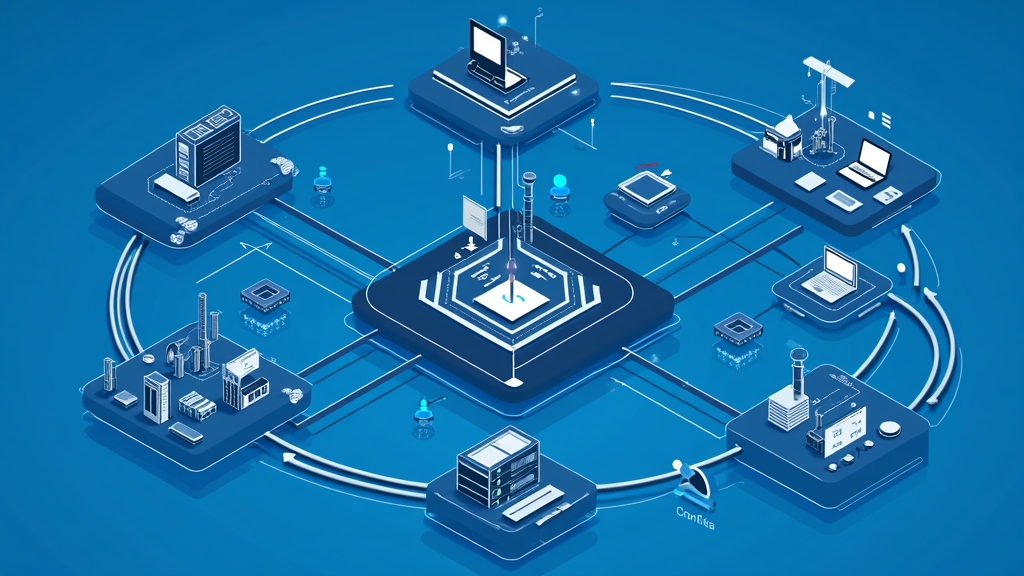
From MIF to API-First: Modern Integration Architecture for IBM Maximo Application Suite
For more than a decade, IBM Maximo integrations meant one thing: the Maximo Integration Framework, or MIF. MIF is powerful, but it is also heavy. It leans on object structures, publish channels, enterprise services, XML envelopes, SOAP endpoints, JMS queues, and carefully scheduled CRON tasks. Getting data into or out of Maximo required middleware expertise, admin assistance, and patience. In many organizations, the MIF layer became a choke point. Every new integration needed a custom object structure, mapping work, and regression testing across the whole stack.
That model is being replaced. IBM Maximo Application Suite, or MAS, is built as an API-first platform. The suite runs on Red Hat OpenShift, exposes each application through its own API surface, and treats synchronous REST and GraphQL calls plus asynchronous Kafka events as first-class citizens. The goal is simple: any developer with standard HTTP skills should be able to discover, authenticate, and call Maximo services in minutes, not weeks.
This shift matters because asset data no longer lives in one monolith. MAS Manage still holds the work order and asset registry, but MAS Monitor ingests IoT telemetry, MAS Health scores reliability, MAS Predict runs machine learning models, and MAS Assist surfaces knowledge articles. Each application can scale independently, update independently, and integrate independently. A modern integration architecture must therefore be loose, observable, secure, and tolerant of change.
In this article we walk through the MAS integration model from the ingress layer down to individual API calls. We compare the legacy MIF approach with the new REST, OSLC, GraphQL, and Kafka options, show concrete request patterns, and discuss how to secure traffic at scale. The target audience is integration architects, EAM technical leads, and enterprise developers who are moving from Maximo 7.6 to MAS or who are designing new connections around an existing MAS estate.
Why MAS Changes the Integration Model
The architectural difference between Maximo 7.6 and MAS is the difference between a single application server and a microservices platform. In 7.6, most custom logic, business objects, integrations, and user interfaces ran inside one WebSphere or WebLogic process. MIF was the sanctioned front door for external data. It worked, but it also created tight coupling. An inbound enterprise service change could ripple into object structures, automation scripts, and reporting. Scaling meant a bigger server, not more services.
MAS is deployed on OpenShift as a set of containers. Each MAS application, such as Manage, Monitor, Health, Predict, Assist, Visual Inspection, and the MAS core administration layer, has its own container footprint, database needs, and API surface. OpenShift handles service discovery, TLS termination at the ingress controller, route-based load balancing, and horizontal scaling. External traffic enters through a single ingress front door and is routed to the correct service.
This design brings two big integration consequences. First, each application can be upgraded or scaled without touching the others. If Monitor needs more ingestion capacity during a plant rollout, operators can scale the Monitor pods while Manage stays unchanged. Second, the integration surface is no longer one MIF endpoint. It is a collection of REST, GraphQL, and event interfaces, each documented in Swagger or GraphQL schemas and protected by API keys or OAuth tokens.
The MAS communication model supports both synchronous and asynchronous patterns. Synchronous request-response works well when a caller needs an immediate answer: query a work order, create a purchase order, validate an asset status. Asynchronous event streaming works when the system needs to react to changes without blocking: a work order completed, an asset status changed, an alert generated by Monitor. Choosing the right model for each integration is now a standard design decision rather than a workaround.
A practical example makes the contrast clear. In 7.6, an ERP system that needed to create a work order in Maximo typically sent an XML message through an enterprise service. The message was queued, mapped to an object structure, processed by a queue handler, and confirmed asynchronously. In MAS, the same ERP can POST a JSON payload to a REST endpoint and receive a response in under a second. If the ERP only needs to announce that a work order was created, it can publish an event to a Kafka topic and let MAS consume it when ready.
The skills profile also changes. MIF integrations often required a Maximo specialist who understood object structures, processing rules, and the integration module. MAS integrations can be built by any developer who understands HTTP, JSON, and OpenAPI. That does not make Maximo specialists obsolete. It shifts their role toward data model governance, security policy, API lifecycle management, and troubleshooting distributed systems.
REST and OSLC: The Dual API Surface
MAS exposes two related HTTP API families: the OSLC API and the newer REST JSON API. Both run over HTTPS, both support CRUD operations, and both are documented, but they serve slightly different audiences.
The OSLC API follows the Open Services for Lifecycle Collaboration standard. It has existed in Maximo since 7.6 and is a natural fit for integrations that must comply with OSLC or that were already built against it. OSLC organizes Maximo data into resource sets and member resources. A resource set is like a database table; a member resource is like a row. The base URL pattern is https://mas-host/maximo/oslc/os/{objectstructure}. For example, work orders are available at /maximo/oslc/os/mxwo and assets at /maximo/oslc/os/mxasset.
A typical OSLC GET request looks like this:
GET /maximo/oslc/os/mxwo?oslc.select=wonum,description,status,assetnum&_lid=user&_lpwd=pass HTTP/1.1
Host: mas-host
Accept: application/json
The response contains the selected fields in JSON format, plus OSLC metadata links. OSLC supports related object expansion, saved queries, action invocations, and attachments. It is a capable, standard-compliant surface.
The newer REST JSON API removes the requirement to use OSLC namespaces and provides a cleaner JSON experience. IBM documentation refers to it as the REST JSON API or simply the new REST API. It supports related object queries, multi-attribute text search, custom queries, bookmarks, notifications, image association, JSON schema metadata, dynamic query views, GROUP BY queries, custom JSON elements, Swagger documentation, integration with the Manage cache framework, and API keys for native machine-to-machine authentication.
The REST JSON API base URL is https://mas-host/maximo/api/os/{objectstructure}. A GET request for a work order looks similar but returns a more compact JSON shape:
GET /maximo/api/os/mxwo?wonum=1234 HTTP/1.1
Host: mas-host
Accept: application/json
apikey: <your-api-key>
A POST to create a work order through the new REST API is straightforward:
POST /maximo/api/os/mxwo HTTP/1.1
Host: mas-host
Content-Type: application/json
apikey: <your-api-key>

{
  "wonum": "WO-2026-1001",
  "description": "Replace leaking seal on pump P-101",
  "status": "WAPPR",
  "assetnum": "PUMP-101",
  "worktype": "CM",
  "location": "PLANT-A-FLOOR-2"
}
IBM supports both APIs in MAS, so existing OSLC integrations continue to work while new integrations can adopt the cleaner REST JSON style. The coexistence strategy protects migration investment and gives teams time to standardize on the newer surface.
API keys are the recommended authentication mechanism for machine-to-machine integrations. An administrator creates an API key for an external client, ties it to a Maximo user and group, and the client sends the key in the apikey header. This avoids embedding user passwords in integration code and makes key rotation easier. For human or web application access, OAuth2 and SAML flows remain available through the MAS core identity layer.
GraphQL for Complex Queries
When an integration needs to traverse multiple related objects in one call, REST can become chatty. A mobile app that displays a work order, its asset, the asset's location, the asset's classification, and the last three meter readings might need five or six REST requests. Each round trip adds latency, load, and failure modes. GraphQL solves this by letting the caller declare exactly which fields and relationships are needed in a single query.
MAS supports GraphQL as an advanced query option. The caller sends a POST to the GraphQL endpoint with a query body, and the server returns only the requested structure. For the mobile work order scenario, a single GraphQL query can replace multiple REST calls:
query {
  workorder(wonum: "WO-2026-1001") {
    wonum
    description
    status
    asset {
      assetnum
      description
      location
      classification {
        classificationid
        description
      }
      meters(readingsLimit: 3) {
        metername
        reading
        readingdate
      }
    }
  }
}
The response contains the work order, the asset, the classification, and the last three meter readings in one payload. The server still executes joins and security checks, but the network chatter disappears. For high-volume mobile or portal integrations, the difference is significant. One consolidated call is easier to cache, easier to debug, and easier to version than a chain of REST calls.
GraphQL mutations are also available for create, update, and delete operations. A mutation to create a work order looks like this:
mutation {
  createWorkOrder(input: {
    wonum: "WO-2026-1002"
    description: "Lubricate motor M-202"
    status: "WAPPR"
    assetnum: "MOTOR-202"
    worktype: "PM"
  }) {
    wonum
    status
    workorderid
  }
}
GraphQL is not a replacement for every REST call. Simple point queries and bulk imports are often still easier in REST or through the integration framework's data import capabilities. GraphQL shines when the integration has a complex object graph, when bandwidth is constrained, or when the caller needs precise control over the returned shape.
Schema discovery is another advantage. GraphQL exposes its type system through introspection, so client developers can explore fields, types, and relationships with tools such as GraphiQL or Apollo Sandbox. Combined with Swagger for REST, MAS offers self-service API discovery that reduces the need for middleware specialists and ad hoc documentation.
Event-Driven Integration with Kafka
Not every integration needs an immediate response. In fact, many of the most valuable integration patterns are better when they are decoupled. A manufacturing execution system does not need to wait for Maximo to acknowledge every asset status change. A condition monitoring system does not need to block while Maximo processes a batch of alerts. For these cases, MAS supports event-driven integration using Apache Kafka.
Kafka acts as a durable message bus between producers and consumers. A producer publishes an event to a topic. One or more consumers subscribe to that topic and process the event at their own pace. Topics can be partitioned for scale, and consumers can be grouped so that each event is handled exactly once within a group. This model replaces the scheduled batch jobs and point-to-point queues that were common in 7.6 MIF integrations.
In MAS, events can flow in two directions. MAS applications can publish events when data changes. For example, when a work order status moves to COMP, MAS can publish an event with the work order number, asset, completion date, and labor hours. External ERP, data warehouse, or BI systems can consume that event to update their own records. Conversely, external systems can publish events to Kafka topics that MAS consumes. A supply chain system might announce that a part has shipped, and MAS can update the related purchase order or work order automatically.
A typical Kafka event payload is JSON and includes both the new state and, where relevant, the previous state. A work order status change event might look like this:
{
  "eventType": "WORKORDER_STATUS_CHANGED",
  "eventId": "evt-20260712-0001",
  "timestamp": "2026-07-12T10:15:30Z",
  "data": {
    "wonum": "WO-2026-1001",
    "status": "COMP",
    "previousStatus": "INPRG",
    "assetnum": "PUMP-101",
    "completedate": "2026-07-12T10:12:00Z"
  }
}
The consumer reads the event, validates the schema, maps the fields to its own data model, and processes the change. If processing fails, the event can be retried, sent to a dead-letter queue, or replayed from the Kafka log. Replay is a powerful feature for debugging and recovery that traditional message queues do not provide.
Event-driven integration also improves resilience. If Maximo is temporarily unavailable for maintenance, events accumulate in Kafka. When Maximo returns, consumption resumes from the last committed offset. This is much safer than synchronous integrations that fail completely when the downstream system is down.
Designing event schemas well is critical. Teams should agree on topic naming conventions, event schemas, versioning rules, and error handling policies. Without discipline, Kafka can become a distributed spaghetti layer. With discipline, it becomes the backbone of a resilient, observable integration architecture.
Securing and Scaling API Traffic
API-first architecture only works if it is secure and performant. MAS sits behind an OpenShift ingress controller that terminates TLS, routes traffic, and can enforce rate limits. All external traffic should enter through that front door. Direct access to individual pods or services should be blocked by network policies. This layer is the first line of defense.
Authentication should use API keys for machine clients and OAuth2 or SAML for human users. API keys are scoped to a Maximo person record, which means they inherit group and application security. If the person record is disabled, the key stops working. Rotate keys periodically and store them in a secrets manager, never in source code. For high-sensitivity integrations, consider mutual TLS or additional network restrictions at the ingress level.
Authorization follows the same Maximo security model that administrators already know. A REST or GraphQL call can only return data that the caller's user and groups are allowed to see. Object structures, application security, conditional expressions, and site organizations all apply. This means security policy is centralized in Maximo rather than duplicated in every integration client.
Scaling starts with understanding traffic patterns. Read-heavy integrations, such as dashboards or mobile field apps, benefit from caching and query optimization. The new REST API integrates with the Manage cache framework, so frequently accessed reference data can be served without repeated database round trips. Write-heavy integrations should be throttled to avoid saturating transaction processing. Event-driven patterns naturally absorb spikes because Kafka buffers events before consumption.
Monitoring and observability are essential in a distributed architecture. OpenShift provides pod metrics, logs, and health checks. MAS APIs return standard HTTP status codes, and GraphQL errors are included in the response body. Centralize logs and metrics in a tool such as Prometheus, Grafana, or your existing enterprise observability stack. Set alerts for error rates, latency percentiles, and queue depth. An integration that fails silently is worse than one that fails loudly.
Rate limiting and circuit breakers protect both MAS and downstream systems. A misbehaving client that floods the API can degrade performance for every other integration. Configure rate limits at the ingress or API gateway layer, and use circuit breakers in client code so that a temporary MAS slowdown does not cascade into the calling application.
Practical Implications
Moving to an API-first MAS architecture changes how integration projects are planned, staffed, and governed. First, treat APIs as products. Each integration should have an owner, a documented contract, a deprecation policy, and a lifecycle. Ad hoc point-to-point connections create technical debt that is hard to untangle later.
Second, invest in API discovery and developer onboarding. Swagger, GraphQL introspection, and API key self-service reduce the barrier to entry. Run internal workshops so that ERP, IoT, and mobile developers understand the Maximo data model and security model. The easier it is to consume an API correctly, the fewer broken integrations you will support.
Third, choose the right pattern for each job. Use REST for simple CRUD and bulk import, GraphQL for complex object graphs, and Kafka for event-driven decoupling. Do not force every integration into one style. A hybrid architecture is normal and healthy.
Finally, plan for production operations from day one. Logging, rate limiting, secrets management, and replayability are not afterthoughts. They are part of the architecture. A well-designed MAS integration should fail gracefully, recover automatically, and be observable at every layer.
Bottom Line
IBM Maximo Application Suite has replaced the MIF-centric integration model with an API-first platform built on REST, OSLC, GraphQL, and Kafka. This shift gives organizations more flexibility, faster development cycles, and independent scaling of MAS applications. The dual REST and OSLC surfaces protect existing investments, GraphQL reduces network chatter for complex queries, and Kafka enables resilient event-driven patterns.
Success in this new model requires more than technical knowledge. It requires disciplined API governance, clear security policies, and operational observability. Teams that treat MAS APIs as first-class products will integrate faster and maintain less. Teams that treat integrations as one-off scripts will inherit the same fragility they had under MIF. The tools have changed. The principles of good architecture remain the same.