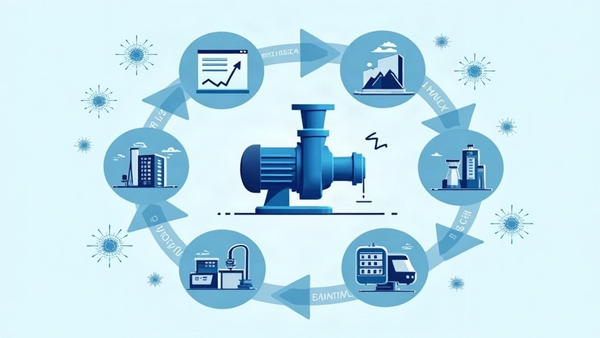
AI in Maximo: From Watsonx to Condition Insight and Predictive Maintenance
An end-to-end look at how IBM embeds AI into Maximo Application Suite through watsonx, Condition Insight, Maximo Predict, Maximo Assistant, and Visual Inspection.


The AI Landscape in Maximo Application Suite
IBM Maximo Application Suite (MAS) has accumulated a broad set of AI capabilities across its components. From the health scoring engine in Maximo Health to the machine learning models in Maximo Predict, from the computer vision of Maximo Visual Inspection to the agentic reasoning of Condition Insight and the natural language interface of Maximo Assistant, the platform now offers multiple entry points for organizations looking to move from reactive to predictive and prescriptive maintenance.
This article provides an end-to-end look at how IBM embeds AI into Maximo, covering the role of watsonx as the foundation, the Condition Insight agent and its agentic capabilities, the predictive maintenance model library in Maximo Predict, the Maximo Assistant for natural language operations, and Maximo Visual Inspection for defect detection. We examine how these components work together, what data they require, and what practical patterns organizations can use to deploy them effectively.
watsonx: The AI Foundation Underneath Maximo
IBM watsonx is the enterprise AI platform that powers the AI capabilities in Maximo Application Suite. It consists of three primary components: watsonx.ai for model training and inference, watsonx.data for data storage and governance, and watsonx.governance for monitoring and compliance. For Maximo, the most relevant component is watsonx.ai, which provides the machine learning runtime and the large language model capabilities that underpin Condition Insight and Maximo Assistant.
The integration between Maximo and watsonx is not a loose coupling. Maximo Predict's models are deployed and scored in Watson Machine Learning, which is part of the watsonx.ai stack. Maximo Assistant's natural language processing runs on watsonx large language models. Condition Insight's agentic reasoning is powered by watsonx orchestration capabilities. This means that when you deploy MAS with AI features enabled, you are deploying watsonx infrastructure alongside it.
watsonx.ai and Model Serving. The Watson Machine Learning service in watsonx.ai hosts the predictive models built in Maximo Predict. When a data scientist trains a failure probability model using the pmlib SDK, the trained model is registered in Watson Machine Learning and deployed as a scoring endpoint. Maximo Predict calls this endpoint on a schedule to generate predictions for assets in the configured asset group.
watsonx Large Language Models. The Maximo AI Assistant and Condition Insight agent use large language models hosted on watsonx.ai. IBM's GPT OSS 120B model, deployed internally for enterprise customers, powers the Condition Insight agent's reasoning capabilities. The model is not accessed directly by users; it is invoked by the agent framework, which grounds the model's responses in Maximo data through retrieval-augmented generation and tool-calling patterns.
watsonx Orchestrate. For organizations building custom agentic workflows, watsonx Orchestrate provides the platform to compose, schedule, and govern AI agents. The June 2026 release of watsonx Orchestrate added agent catalog publishing, agent scheduling, Python toolkits in agentic workflows, and loop controls with retries. This is the infrastructure that supports the agentic AI patterns now available in MAS 9.2.
Condition Insight: Agentic AI for Asset Health
Maximo Condition Insights, announced in December 2025 and significantly expanded in MAS 9.2 (June 2026), represents a step change in how AI operates within the platform. Unlike traditional AI features that produce a score and wait for a human to act, Condition Insight actively reasons across multiple data sources, forms conclusions, and recommends specific actions.
What Condition Insight Analyzes
The Condition Insight agent aggregates and analyzes data from across the Maximo platform:
- Work order history: Corrective and preventive maintenance records, failure codes, resolution actions
- Time-series sensor data: Vibration, temperature, pressure, flow, and other condition indicators from Maximo Monitor
- Meter readings: Runtime hours, cycle counts, and degradation indicators stored in asset meters
- FMEA records: Failure Mode and Effects Analysis data from the Reliability Strategies library
- Alert history: Anomaly detections and threshold breaches from Maximo Monitor
- Asset specification data: Manufacturer, model, rated capacity, install date, and classification
The agent correlates these data sources to identify patterns that would be difficult or impossible for a human analyst to detect manually. A vibration trend that looks benign in isolation might be significant when combined with a subtle change in lubricant consumption and a specific failure mode from the FMEA library.
What Condition Insight Produces
The outputs from Condition Insight go beyond simple alerts:
- Trend and anomaly detection: The agent identifies patterns across data sources that individual monitoring tools would miss, such as a correlation between temperature rise and specific failure modes
- Condition-to-failure-mode mapping: The agent connects observed conditions to known failure modes from the FMEA library, providing a diagnosis rather than just a symptom
- Corrective action recommendations: Based on the identified failure mode, the agent recommends specific maintenance actions, including suggested job plans, required parts, and priority levels
- Conversational queries: Through the Maximo AI Assistant, users can ask questions about asset conditions and receive structured answers with supporting evidence
The key distinction from previous AI capabilities in Maximo is the agentic nature of the analysis. Instead of a single model producing a single score, the agent chains multiple analytical steps together: detect an anomaly, correlate it with historical patterns, identify the likely failure mode, and recommend a specific corrective action. This is the pattern that Matt Boehne of IBM described when he said AI in Maximo is about data and algorithms working together, not magic.
Condition Insight in Production
IBM's internal pilot with its Global Real Estate division demonstrated the operational impact of Condition Insight. Before the agent, physical asset analysis took 15-20 minutes per asset, meaning that only about 1 percent of 6,000 assets could be reviewed regularly. With Condition Insight, analysis time dropped to 15-30 seconds per asset, expanding review coverage to 30 percent of the asset base. This is not a marginal improvement; it is a step change in the scale at which reliability engineering can operate.
The agent runs on a GPT OSS 120B model and is designed to work within governed boundaries. It can recommend actions and, when configured for it, generate work orders. But consequential decisions—approving high-risk work, modifying safety-critical configurations—require human approval. The agent is a force multiplier for the reliability engineering team, not a replacement for it.
Maximo Predict: The Predictive Maintenance Engine
Maximo Predict is the application where machine learning models are built, trained, and deployed to forecast asset failures. It is the component that most organizations think of when they hear "predictive maintenance," and it has been part of MAS since the early releases. As of mid-2026, Predict includes five prebuilt model templates that cover the most common predictive maintenance use cases.
The Five Prediction Models
Each model template answers a different question about asset health and failure risk:
- Failure Probability: What is the probability that the asset will fail within a given time window (typically 30, 60, or 90 days)? This is the most actionable model for maintenance planning, as it allows work to be scheduled before the failure occurs. It is the recommended starting point for most organizations.
- Time to Failure (Remaining Useful Life): How many days until the asset is likely to fail? This model supports end-of-life planning, capital budgeting, and replacement scheduling. It is particularly valuable for long-lived assets where replacement planning has budgetary lead times.
- Anomaly Detection: Are current operating patterns anomalous compared to historical norms? This model does not require labeled failure data, making it the easiest entry point for organizations with limited failure history. It catches novel failure modes that the other models cannot detect.
- End of Life Curve: What is the asset's degradation curve over time? This model produces a long-term view of asset health, useful for strategic planning and capital investment decisions.
- Failure Mode Specific: What is the probability of a specific failure mode occurring? This model requires labeled failure mode data and is the most sophisticated prediction. It enables targeted maintenance strategies: when you know which failure mode is developing, you can dispatch the right technician with the right parts.
The Two Prediction Paths
Predict works along two complementary paths that can operate simultaneously:
Path 1: Failure History-Based Prediction. This path analyzes historical failure data—corrective work orders, failure codes, root cause analyses, MTBF patterns—to identify statistical patterns. It learns how assets have failed in the past and projects those patterns forward. This works well for repetitive assets with known failure modes, such as pumps, motors, and conveyors. The limitation is that predictions are only as good as the failure data. If work orders lack failure codes, the model has nothing to learn from.
Path 2: Condition and Sensor-Based Prediction. This path learns from real-time condition indicators—vibration, temperature, pressure, runtime hours, degradation trends from health scores. Instead of asking "what failed before?", it asks "what behavior usually precedes a failure?" This enables early detection of degradation patterns long before thresholds are crossed. The limitation is that it requires sensor data. If assets are not instrumented, this path is not available.
The real power emerges when both paths operate together. A planner sees rising failure probability from the history-based model and declining health scores from the condition-based model—converging evidence from two independent analytical approaches that enables confident, explainable decisions.
The pmlib SDK
For data scientists, the pmlib Python SDK is the API through which predictive models are built, trained, and deployed. The SDK handles data ingestion from Maximo Manage and the Maximo Data Lake, model training using the prebuilt templates, model registration in Watson Machine Learning, and scheduling for continuous scoring.
The workflow is straightforward: create an asset group, load training data (asset features from Manage, time-series sensor data from the Data Lake), select a model template, fit the model, evaluate accuracy, and register the model for continuous scoring. Once registered, the model runs on a schedule (typically nightly) and produces predictions for every asset in the configured group.
Custom notebooks can extend the prebuilt templates or take a completely custom approach. The key requirement is that models must be deployed in Watson Machine Learning for Predict to consume them.
Maximo Assistant: Natural Language for Operations
The Maximo AI Assistant enables natural language queries against Maximo data. Instead of navigating menus, writing SQL, or constructing OSLC queries, users ask questions in plain language and receive structured answers. In MAS 9.2, the Assistant is available on both desktop and mobile, with context awareness that improves query relevance based on the user's role, location, and current work context.
What the Assistant Can Do
The Assistant handles a wide range of operational queries:
- "Show me all critical assets that require maintenance this week"
- "What is the maintenance history for Pump P-101?"
- "Which work orders are overdue and assigned to my team?"
- "What is the current stock level for bearing part number BRG-440?"
- "Show me the failure trends for HVAC assets in Building 12"
- "Create a priority 2 work order for TX-2014-087 to investigate the rising DGA hydrogen"
The Assistant translates these natural language queries into API calls against the Maximo data layer. It understands the Maximo data model—object structures, relationships, and business rules—and constructs queries that respect security and data access controls.
How the Assistant Works
The Assistant architecture follows a pipeline: intent recognition (NLP model identifies what the user wants), skill routing (maps intent to the appropriate skill), skill execution (calls OSLC APIs or runs queries), and response formatting (presents results in the UI). Skills are the building blocks. Each skill defines an intent (the user's goal), entities (the specific objects or values), actions (API calls or queries), and response format.
Pre-built skills cover common Maximo interactions. Custom skills can be defined for organization-specific workflows, extending the Assistant's capabilities without modifying the core platform.
In MAS 9.2, the Assistant on Mobile has context awareness: it knows which work order the technician is viewing, which asset is selected, and the technician's role and site. This context dramatically improves query relevance compared to a generic search. A technician in the field can ask "show me the last inspection results for this asset" and the Assistant knows which asset "this" refers to.
Maximo Visual Inspection: AI That Sees Defects
Maximo Visual Inspection (MVI) uses computer vision to analyze images and video from cameras, drones, and mobile devices. It detects defects, anomalies, and critical conditions that would be missed by human inspection or sensor-based monitoring alone. In MAS 9.2, MVI can run inference on the device, eliminating the dependency on cloud connectivity.
What MVI Detects
Visual Inspection models are trained on labeled images of assets in various conditions—normal operation, early degradation, and failure states. Once trained, the models can:
- Identify corrosion, cracks, leaks, and other visible defects
- Detect missing or damaged components
- Verify proper assembly or installation
- Monitor for safety compliance (PPE, clearances, barriers)
- Detect wear patterns on conveyor belts, wind turbine blades, solar panels
Where Visual Inspection Excels
MVI is particularly valuable for assets that are difficult to instrument with sensors, are visually inspected today, are safety-critical, or exist in high volumes where manual inspection cannot scale:
- Difficult to instrument: Overhead power lines, remote pipelines, offshore platforms
- Visually inspected today: Pressure vessels, storage tanks, structural steel
- Safety-critical: Where missed defects have catastrophic consequences
- High-volume: Thousands of solar panels, wind turbine blades, transmission line insulators
The integration with Maximo means that when Visual Inspection detects an anomaly, it can automatically create a work order, attach the relevant image with the defect highlighted, and route it to the appropriate maintenance team. This eliminates the gap between inspection and action that plagues many manual inspection processes.
On-Device Inference in MAS 9.2
The mobile MVI capability in MAS 9.2 represents a significant architectural shift: moving inference from the cloud to the edge. Models are optimized in TensorFlow Lite or ONNX format, typically 5-50 MB in size, and run directly on the mobile device. Inference takes 100-500ms for classification and 500-2000ms for object detection. Connectivity is not required for inference; results sync when the device reconnects.
This enables a class of use cases that were previously impractical. A technician inspecting a remote pipeline can capture an image, run defect detection locally, and get an immediate result. No waiting for upload. No dependency on cellular coverage. The AI works where the work happens.
The Data Foundation: Why AI Succeeds or Fails
Every AI capability in Maximo—Predict, Condition Insight, Visual Inspection, AI Assistant—depends on data quality. This is the uncomfortable truth that separates successful AI implementations from failed ones. Matt Boehne put it plainly: "AI is rooted in two things: data and algorithms. They're not magically figuring things out from nothing."
The Most Common Data Gaps
Missing or inconsistent failure codes. If technicians close work orders without recording what failed and why, Predict has nothing to learn from. This is the single most common barrier to effective predictive maintenance. The fix is process discipline: require failure codes before work order closure, validate code quality through supervisor review, and train technicians on the importance of accurate failure recording.
Incomplete asset hierarchies. If assets are not properly classified and related to their parent systems, the AI cannot understand failure propagation or aggregate insights at the right level. The fix is a one-time asset hierarchy cleanup followed by governance to prevent drift.
Sparse sensor data. Condition-based prediction requires continuous or near-continuous sensor data. Gaps in data collection create blind spots in the models. The fix is identifying critical assets for sensor instrumentation and ensuring data continuity through monitoring of data pipeline health.
Uncalibrated meters. If meter readings are inaccurate, condition-based predictions will be inaccurate. Garbage in, garbage out applies with full force to AI. The fix is a meter calibration program with regular verification.
The Mobilization Solution
The most effective path to better data is workforce mobilization—putting the full power of Maximo in every technician's hands through mobile devices. When technicians can record failure codes, enter meter readings, and document findings at the point of work, data quality improves dramatically. This requires process discipline, incentive alignment, fast and intuitive mobile interfaces, and leadership commitment to data quality as a management priority.
Organizations that invest in mobilization before or alongside AI deployment see dramatically better results than those that deploy AI on top of poor data and hope for the best.
How the Components Work Together
The AI capabilities in MAS are not isolated point products. They form a connected analytical pipeline:
Maximo Monitor ingests real-time sensor data and applies anomaly detection. Maximo Health takes data from Manage (work order history, failure codes, PM compliance) and Monitor (sensor readings, anomaly flags) to calculate health scores. Maximo Predict builds on this data foundation to train and deploy machine learning models that forecast failures. Condition Insight aggregates all of these outputs—work orders, sensor data, meter readings, FMEA records, health scores, prediction results—and applies agentic reasoning to identify patterns and recommend actions. Maximo Assistant provides the natural language interface through which humans interact with all of these capabilities. Maximo Visual Inspection adds a visual dimension, detecting defects that sensors and historical analysis cannot capture.
This connected pipeline means that each component amplifies the value of the others. A prediction from Predict is more actionable when Condition Insight can explain the reasoning behind it. A health score from Health is more useful when the Assistant can answer questions about it. A visual inspection from MVI is more valuable when the detected defect automatically creates a work order in Manage.
Practical Implications
For reliability engineers: Start with failure history-based prediction on your most critical assets. It requires no additional sensors and provides immediate value if your work order data is decent. Use the insights to build the business case for sensor instrumentation on assets where condition-based prediction would add the most value.
For maintenance managers: The AI Assistant is the lowest-friction entry point. It requires no model training, no sensor deployment, and no data science expertise. If your Maximo data is reasonably complete, the Assistant provides immediate productivity gains for technicians and planners.
For data teams: Your most important contribution to Maximo AI is not building models—it is improving data quality. Audit failure code completeness. Verify asset classification. Check meter calibration. Clean data beats clever algorithms every time.
For executives: AI in Maximo is not a future roadmap item. It is shipping today. The organizations that are getting value from it are not the ones with the biggest data science teams—they are the ones with the best data discipline. Invest in data quality and workforce mobilization before you invest in AI customization.
Bottom Line
AI in Maximo is not magic. It is a set of well-engineered applications built on a robust data platform, powered by watsonx, and designed to solve specific operational problems. The five prediction models in Maximo Predict, the agentic reasoning of Condition Insight, the natural language interface of Maximo Assistant, and the computer vision of Maximo Visual Inspection are production-ready capabilities that deliver value when deployed on a solid data foundation.
The path forward is clear: mobilize your workforce, clean your data, start with the 30-day failure probability model on a single critical asset class, deploy the AI Assistant for immediate productivity gains, and then layer in Condition Insight and Visual Inspection as your data maturity grows. The technology is ready. The question is whether your data is.