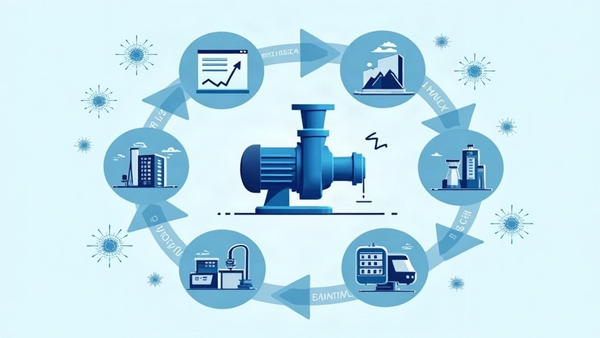
AI-Powered Asset Management: Machine Learning, Predictive Maintenance, and Generative AI in Maximo
>

AI-Powered Asset Management: Machine Learning, Predictive Maintenance, and Generative AI in Maximo
Artificial intelligence is reshaping enterprise asset management in ways that would have seemed like science fiction a decade ago. IBM Maximo, through its integration with watsonx and its own embedded AI capabilities, is at the center of this transformation. From machine learning models that predict equipment failure days before it happens, to generative AI that summarizes decades of maintenance history in seconds, the tools available to reliability engineers in 2026 are fundamentally different from what came before.
This article explores the current state of AI in Maximo, covering the practical applications that are delivering real value today, the architectural patterns that make them work, and the implementation considerations that determine success or failure.
The AI Landscape in Maximo: What Is Real and What Is Hype
Before diving into specific capabilities, it is worth establishing what AI in Maximo actually means in 2026. The term "AI" is used so broadly that it has become almost meaningless. In the context of Maximo, AI capabilities fall into four distinct categories:
| AI Category | What It Does | Maturity | Maximo Integration |
|---|---|---|---|
| Predictive Maintenance (ML) | Forecasts equipment failure using sensor data and historical patterns | Production-ready | Maximo Predict + watsonx |
| Anomaly Detection | Identifies unusual patterns in asset behavior without pre-labeled failure data | Production-ready | Maximo Monitor + watsonx |
| Generative AI (LLMs) | Summarizes work orders, generates job plans, answers natural language queries | Emerging (2024-2026) | watsonx.ai + Maximo APIs |
| Computer Vision | Analyzes images and video for defect detection, meter reading, safety compliance | Maturing | Maximo Visual Inspection |
Each of these categories has different data requirements, different implementation complexity, and different value propositions. Organizations that succeed with AI in Maximo are those that match the right AI capability to the right business problem, rather than pursuing AI for its own sake.
Predictive Maintenance: From Calendar-Based to Condition-Based to Predictive
The evolution of maintenance strategy follows a clear trajectory:
Reactive (Run to Failure)
  --> Preventive (Calendar/Usage-Based)
    --> Condition-Based (Sensor Thresholds)
      --> Predictive (ML-Based Failure Forecasting)
        --> Prescriptive (AI-Recommended Actions)
Most organizations using Maximo today operate somewhere between preventive and condition-based maintenance. Predictive maintenance represents the next frontier, and it is where machine learning delivers its most measurable ROI.
How Predictive Maintenance Works in Maximo
The predictive maintenance pipeline in Maximo follows a standard machine learning workflow:
- Data Collection: Sensor data (vibration, temperature, pressure, current) is collected from assets via IoT platforms and fed into Maximo Monitor
- Feature Engineering: Raw sensor data is transformed into features that capture asset degradation patterns (rolling averages, rate of change, frequency domain features)
- Model Training: Historical failure data is used to train ML models that learn the relationship between sensor patterns and failure events
- Inference: Trained models score live sensor data in real time, generating failure probability estimates and remaining useful life (RUL) predictions
- Action: When failure probability exceeds a threshold, Maximo automatically generates a work order with recommended actions
Here is a conceptual example of the data pipeline:
import pandas as pd
import numpy as np
from datetime import datetime, timedelta

def engineer_features(sensor_readings, window_sizes=[1, 6, 24, 168]):
    """Engineer features from raw sensor readings for ML model input."""
    features = pd.DataFrame()

    for window in window_sizes:
        # Rolling statistics
        features[f'vibration_mean_{window}h'] = sensor_readings['vibration'].rolling(window).mean()
        features[f'vibration_std_{window}h'] = sensor_readings['vibration'].rolling(window).std()
        features[f'vibration_max_{window}h'] = sensor_readings['vibration'].rolling(window).max()
        features[f'vibration_trend_{window}h'] = sensor_readings['vibration'].rolling(window).apply(
            lambda x: np.polyfit(range(len(x)), x, 1)[0] if len(x) == window else np.nan
        )

        features[f'temp_mean_{window}h'] = sensor_readings['temperature'].rolling(window).mean()
        features[f'temp_rate_{window}h'] = sensor_readings['temperature'].diff(window) / window

    # Frequency domain features (FFT)
    fft_values = np.fft.fft(sensor_readings['vibration'].dropna())
    features['fft_dominant_freq'] = np.argmax(np.abs(fft_values[1:len(fft_values)//2])) + 1
    features['fft_energy'] = np.sum(np.abs(fft_values) ** 2)

    return features
Model Selection for Different Asset Types
Not all assets benefit equally from predictive maintenance. The economics of prediction depend on the cost of failure, the predictability of the failure mode, and the availability of data:
| Asset Type | Failure Predictability | Data Availability | ML Approach | Typical ROI |
|---|---|---|---|---|
| Rotating equipment (pumps, motors, compressors) | High | High (vibration, temp) | Gradient boosting, LSTM | Very high |
| Heat exchangers | Medium | Medium (temp, pressure) | Random forest, XGBoost | High |
| Electrical transformers | Medium | Medium (DGA, temp, load) | Survival analysis | High |
| Piping and static equipment | Low-Medium | Low (thickness readings) | Regression, physics-based | Medium |
| Instrumentation and controls | Low | Low (drift, calibration) | Statistical process control | Low-Medium |
Integrating ML Predictions with Maximo Work Management
The value of a failure prediction is zero if it does not result in action. The integration between ML predictions and Maximo's work management engine is where the rubber meets the road:
POST /maximo/oslc/os/mxwo
{
  "description": "ML-PREDICTED: High probability of bearing failure on PUMP-007 within 72 hours",
  "siteid": "BEDFORD",
  "assetnum": "PUMP-007",
  "worktype": "CM",
  "priority": 2,
  "failurecode": "BEARING-WEAR",
  "ml_prediction": {
    "model_id": "pump-failure-v3",
    "failure_probability": 0.87,
    "predicted_failure_window_hours": 72,
    "confidence_interval": [0.79, 0.93],
    "top_contributing_features": [
      {"feature": "vibration_trend_24h", "importance": 0.34},
      {"feature": "temp_rate_6h", "importance": 0.28},
      {"feature": "fft_dominant_freq", "importance": 0.19}
    ],
    "recommended_actions": [
      "Inspect and replace drive-end bearing",
      "Check lubrication system for contamination",
      "Verify alignment with coupled equipment"
    ]
  }
}
Generative AI: Transforming How We Interact with Maintenance Data
The emergence of large language models (LLMs) has opened up entirely new possibilities for how maintenance teams interact with their data. IBM's watsonx.ai platform, integrated with Maximo, enables capabilities that were previously impossible.
Natural Language Work Order Summarization
A maintenance technician facing a complex asset with years of work order history can now ask a simple question and receive a coherent summary:
User: "Summarize the maintenance history of PUMP-007 over the last 2 years.
       What are the recurring issues?"

Maximo AI: "PUMP-007 has had 14 corrective work orders in the past 2 years.
The most common failure mode is bearing wear (6 occurrences), followed by
mechanical seal failure (4 occurrences). The mean time between bearing
failures has decreased from 8 months to 3 months, suggesting an accelerating
degradation pattern. The last vibration analysis (June 15, 2026) showed
elevated readings at 2x running speed, consistent with misalignment.
Recommendation: Schedule a full alignment check and consider replacing
both bearings and mechanical seal during the next planned outage."
Automated Job Plan Generation
Generative AI can analyze historical work orders, failure codes, and successful repair procedures to generate draft job plans:
{
  "jobplan_id": "JP-AI-GEN-001",
  "description": "AI-Generated: Bearing Replacement for Centrifugal Pump",
  "generated_from": "Analysis of 47 historical bearing replacement work orders",
  "confidence_score": 0.92,
  "steps": [
    {
      "step_number": 1,
      "description": "Isolate pump and lock out/tag out per LOTO procedure LOTO-PUMP-001",
      "estimated_duration_minutes": 15,
      "craft": "OPERATOR"
    },
    {
      "step_number": 2,
      "description": "Drain pump casing and remove coupling guard",
      "estimated_duration_minutes": 20,
      "craft": "MECHANIC"
    },
    {
      "step_number": 3,
      "description": "Disconnect coupling and remove pump backplate",
      "estimated_duration_minutes": 30,
      "craft": "MECHANIC"
    },
    {
      "step_number": 4,
      "description": "Remove old bearings using bearing puller (tool T-047)",
      "estimated_duration_minutes": 25,
      "craft": "MECHANIC"
    },
    {
      "step_number": 5,
      "description": "Install new bearings (SKF 6308-2RS1) using induction heater",
      "estimated_duration_minutes": 20,
      "craft": "MECHANIC"
    },
    {
      "step_number": 6,
      "description": "Reassemble pump, align coupling to within 0.05mm tolerance",
      "estimated_duration_minutes": 45,
      "craft": "MECHANIC"
    },
    {
      "step_number": 7,
      "description": "Remove LOTO, test run pump, verify vibration below 2.8 mm/s",
      "estimated_duration_minutes": 20,
      "craft": "OPERATOR"
    }
  ],
  "required_materials": [
    {"itemnum": "BRG-6308-2RS1", "description": "SKF Deep Groove Ball Bearing 6308-2RS1", "qty": 2},
    {"itemnum": "GASK-CASING", "description": "Casing Gasket", "qty": 1},
    {"itemnum": "OIL-GEAR-220", "description": "Gear Oil ISO VG 220", "qty": 2}
  ],
  "required_tools": [
    {"toolnum": "T-047", "description": "Hydraulic Bearing Puller Set"},
    {"toolnum": "T-012", "description": "Laser Alignment Tool"},
    {"toolnum": "T-089", "description": "Induction Bearing Heater"}
  ]
}
Failure Code Classification
One of the most persistent data quality problems in Maximo is inconsistent failure coding. Technicians often select the closest available code rather than the most accurate one, or they use generic codes like "OTHER" when they are unsure. Generative AI can analyze the free-text description of a work order and suggest the correct failure code hierarchy:
def classify_failure_code(work_description, failure_hierarchy):
    """Use LLM to classify work order description into failure code hierarchy."""
    prompt = f"""
    Given the following work order description, classify it into the
    appropriate failure code hierarchy.

    Work Description: {work_description}

    Available Failure Code Hierarchy:
    {failure_hierarchy}

    Return the most specific failure code that matches, along with a
    confidence score and brief justification.
    """

    # Call to watsonx.ai or equivalent LLM API
    response = llm.generate(prompt)

    return {
        "failure_code": response.failure_code,
        "confidence": response.confidence,
        "justification": response.justification
    }

# Example usage
result = classify_failure_code(
    "Pump making loud grinding noise, vibration high, found bearing cage broken",
    FAILURE_HIERARCHY
)
# Returns: failure_code="MECH-BRG-CAGE", confidence=0.95
Computer Vision: Automating Visual Inspection
Maximo Visual Inspection (MVI) brings computer vision capabilities to asset management. Trained on labeled images of equipment in various states of health, MVI models can detect defects, read gauges, and verify safety compliance automatically.
Use Cases for Computer Vision in Maximo
| Use Case | Input | Output | Integration Point |
|---|---|---|---|
| Corrosion detection | Photos of pipes/vessels | Corrosion severity score, affected area | Condition monitoring, work order generation |
| Gauge reading | Photos of analog/digital gauges | Numeric reading | Meter readings in Maximo |
| PPE compliance | Photos of workers | PPE compliance status | Safety observations |
| Component identification | Photos of equipment | Asset tag, component name | Asset identification |
| Leak detection | Thermal/infrared images | Leak location and severity | Work order generation |
Integration Pattern: Drone Inspection to Work Order
A practical end-to-end pattern for computer vision in Maximo:
- Drone captures images of a cooling tower during a scheduled inspection flight
- Images are uploaded to Maximo Visual Inspection
- MVI model detects corrosion on a support beam with 94% confidence
- Detection event is sent to Maximo via REST API
- Maximo creates a condition monitoring alert linked to the asset
- Alert triggers a work order for follow-up inspection and repair
POST /maximo/oslc/os/mxwo
{
  "description": "MVI-DETECTED: Corrosion on Cooling Tower CT-03 Support Beam B7",
  "assetnum": "CT-03",
  "worktype": "CM",
  "priority": 3,
  "mvi_detection": {
    "inspection_id": "DRONE-2026-0629-014",
    "model_name": "corrosion-detection-v2",
    "detection_confidence": 0.94,
    "defect_type": "SURFACE_CORROSION",
    "severity": "MODERATE",
    "affected_area_cm2": 45.3,
    "image_url": "https://mvi.example.com/images/drone-2026-0629-014-beam-b7.jpg",
    "bounding_box": {"x": 320, "y": 180, "width": 120, "height": 80}
  }
}
Building the Data Foundation for AI
AI in Maximo is only as good as the data that feeds it. Organizations that rush to implement AI without first building a solid data foundation invariably fail. The prerequisites for successful AI in Maximo include:
Clean Asset Hierarchy: Every asset must be uniquely identified and correctly positioned in the asset hierarchy. AI models cannot distinguish between "PUMP-007 at Bedford" and "PUMP-007 at Springfield" unless the asset hierarchy is unambiguous.
Standardized Failure Codes: ML models learn from failure history. If failure codes are inconsistent (the same failure mode coded as "BEARING," "BRG-FAIL," and "MECH-BEARING" across different work orders), the model's training data is fragmented.
Complete Work Order History: AI models need both positive examples (failures) and negative examples (assets that did not fail) to learn effectively. Work order history must include both corrective and preventive work, with accurate timestamps.
High-Quality Sensor Data: For predictive maintenance, sensor data must be continuous, properly timestamped, and free from sensor drift or calibration errors. Gaps in sensor data create blind spots in ML predictions.
Domain Expertise: The most sophisticated AI model cannot replace the knowledge of an experienced reliability engineer. AI should augment human expertise, not attempt to replace it.
Practical Implications
Implementing AI in Maximo is not a technology project. It is a business transformation project that happens to involve technology. The practical implications for organizations considering this journey include:
- Start with a single high-value use case: Do not try to implement predictive maintenance across your entire asset base at once. Pick one asset class with high failure costs, good data availability, and predictable failure modes. Prove the value there before expanding.
- Invest in data engineering before data science: The most common cause of AI project failure is poor data quality, not poor model performance. Spend time cleaning asset registers, standardizing failure codes, and validating sensor data before training any models.
- Build a cross-functional team: AI in Maximo requires collaboration between reliability engineers (who understand the assets), data scientists (who build the models), Maximo administrators (who configure the system), and operations leaders (who sponsor the initiative).
- Design for human-AI collaboration: The goal is not to replace human decision-making but to augment it. AI predictions should be presented as recommendations with explanations, not as black-box directives.
- Plan for model lifecycle management: ML models degrade over time as asset conditions change. Plan for ongoing model monitoring, retraining, and versioning from day one.
- Measure ROI rigorously: Define success metrics before starting (reduced unplanned downtime, lower maintenance costs, extended asset life) and track them consistently. AI projects that cannot demonstrate ROI will lose organizational support.
Bottom Line
AI in Maximo is not a future capability. It is available today, and organizations that are not exploring it are falling behind. The combination of machine learning for predictive maintenance, generative AI for knowledge extraction, and computer vision for automated inspection represents a step change in what is possible with enterprise asset management.
However, AI is not magic. It requires clean data, clear use cases, cross-functional collaboration, and sustained organizational commitment. Organizations that treat AI as a quick fix will be disappointed. Those that treat it as a strategic capability to be built over time will see transformative results.
The question is not whether AI will change asset management. It already is. The question is whether your organization will be ready to take advantage of it.