Agentic AI, Predictive Maintenance, and the Future of Intelligence in Maximo

# Agentic AI, Predictive Maintenance, and the Future of Intelligence in Maximo
Artificial intelligence in asset management has moved past the slide deck and into production. IBM Maximo Application Suite now embeds AI across maintenance, inspection, reliability, and planning workflows through watsonx. The question for most teams is no longer whether AI belongs in Maximo, but which capabilities are mature enough to trust and how to connect them to real work processes.
This article examines the AI layer inside Maximo. It covers Maximo Health for asset health scoring, Maximo Predict for failure forecasting, and the newer Maximo Condition Insight for explainable, agentic recommendations. It also looks at visual inspection, technician assistance, and the practical steps required to make AI output useful rather than merely interesting. The aim is to separate genuinely productive AI features from aspirational ones and to show how they fit into an existing maintenance operation.
The underlying platform is IBM watsonx, which brings machine learning, natural language processing, and generative AI capabilities into the Maximo ecosystem. Because these capabilities are native to the suite, they can access the asset registry, work history, inspection records, and time-series sensor data without the brittle data pipelines that plague stand-alone AI tools.
From Reactive to Predictive: What Maximo Predict Does
Maximo Predict is the predictive maintenance application within IBM Maximo Application Suite. It uses historical and real-time data, including sensor readings, maintenance records, inspection reports, and environmental data, to estimate failure probability and forecast degradation. The application is designed for reliability engineers and maintenance managers who want to move beyond fixed preventive schedules toward condition-based interventions.
The workflow starts with grouping assets. A reliability engineer defines a set of similar assets, such as pumps in a cooling water system or motors on a production line, and assigns them a group identifier. A data scientist then uses the group ID with default Jupyter notebooks or custom notebooks to build and train a predictive model. IBM provides starting notebooks for common tasks, including regression, classification, anomaly detection, and survival analysis. Once a model is trained, it is deployed through Watson Machine Learning.
After deployment, predictions flow back into Maximo asset records. A pump record might show the current probability of seal failure, the estimated days until that failure mode occurs, or an anomaly flag indicating behavior outside normal operating context. Maintenance planners can use these predictions to prioritize inspections, order parts, and schedule work before a functional failure occurs.
Work queues help filter the noise. Instead of reviewing every asset health score, planners can focus on assets with high failure probability or assets predicted to fail before the next scheduled preventive maintenance work order. This converts raw predictions into a ranked action list. The ranking matters because maintenance capacity is finite. Knowing that an asset is slightly unhealthy is less useful than knowing which ten assets are likely to fail in the next thirty days.
Predictive models are not a one-time exercise. They must be retrained as operating conditions change, assets are modified, and new failure modes appear. Maximo Predict supports this through notebook-based development and model versioning. Teams that treat model maintenance as part of the reliability program, rather than a science project, get more durable results.
The real value of Predict is in closing the loop. A prediction should create or influence a work order, and the work order outcome should feed back into the training data. If a model predicts bearing failure and the crew replaces the bearing, the resulting work history confirms or refines the model. Without that feedback, the model drifts and loses credibility.
Maximo Health: Scoring, Dashboards, and Condition Context
Maximo Health provides the asset health foundation that Predict extends. It aggregates IoT sensor data, meter readings, work history, inspection results, and environmental factors into health scores and dashboards. The goal is to give reliability teams a consolidated view of which assets need attention and why.
Health scoring is flexible. Organizations can use IBM's prebuilt methodologies or define their own scoring formulas based on asset class, criticality, and available data. A health score might combine vibration severity, oil analysis results, thermal readings, and recent failure history into a single number or a color-coded status. The methodology is transparent, which matters when engineers need to explain a score to an operations manager or regulator.
Dashboards make the scores usable. Instead of asking each engineer to query separate systems, Maximo Health presents a global view of asset condition. Users can drill from a fleet-level summary down to individual assets, view trends over time, and see the work orders and inspections associated with each asset. This context turns a health score from a number into a decision support tool.
Replacement planning is another strong use case. Capital budgets are always constrained, and organizations need to decide which assets to replace, refurbish, or keep running. Health analytics provide a data-driven view of asset condition and risk, supporting those decisions with evidence rather than intuition. When combined with asset investment planning modules, health scores can feed directly into multi-year capital plans.
The real-time angle is what distinguishes modern health monitoring from older periodic inspections. A sensor on a transformer can stream temperature and load data into Maximo Monitor, which feeds Maximo Health. If the temperature climbs above a configured threshold, the system can trigger a work order or alert without waiting for the next scheduled thermography round. This is condition-based maintenance in practice: act on actual condition rather than a calendar.
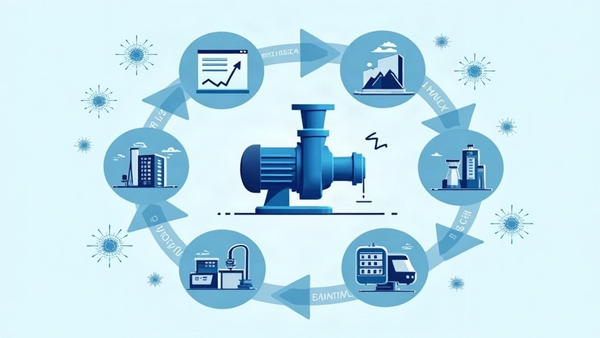
Health and Predict together form a continuous improvement cycle. Health tells you the current state. Predict tells you what is likely to happen next. Work management turns those insights into action. Analytics on completed work refines both the health methodology and the predictive model. Teams that operate this loop consistently outperform teams that treat each component as a separate tool.
Maximo Condition Insight: Explainable, Agentic Maintenance Recommendations
In late 2025 IBM announced Maximo Condition Insight, an agentic AI capability within Maximo Asset Performance Management. The capability interprets asset data and returns plain-language explanations of condition, trends, and recommended actions. The promise is to reduce the time reliability engineers spend translating raw data into maintenance decisions.
Condition Insight works by evaluating work orders, metrics, time-series data, meter readings, failure mode and effects analysis (FMEA), and alerts. It then produces a summary that explains what is happening, why it matters, and what the user should consider doing. Because it is powered by watsonx, the output is generated rather than pulled from a fixed rule set, which allows it to handle combinations of signals that would be tedious to encode manually.
The agentic aspect means the system does more than display a score. It can recommend corrective actions, highlight emerging trends, and support a unified condition-based maintenance approach across the Maximo ecosystem. For example, if a motor shows rising vibration, elevated temperature, and a recent lubrication work order, Condition Insight might explain that the temperature trend is inconsistent with normal post-lubrication behavior and recommend a follow-up inspection before the next scheduled run.
Explainability is critical for adoption. Maintenance organizations are rightfully skeptical of black-box recommendations, especially when safety or production is on the line. Condition Insight addresses this by returning clear reasoning in natural language and by grounding recommendations in Maximo's asset data model. Users can trace a recommendation back to the work orders, sensor readings, and failure modes that informed it.
The capability fits into the broader MAS strategy of embedding AI into workflows rather than offering AI as a separate product. It works with Maximo Health, Predict, Manage, and Monitor. This integration means recommendations can become work orders, alerts can trigger dispatch, and outcomes can feed back into the model. The alternative, a stand-alone AI tool that emails reports to engineers, rarely achieves that same operational velocity.
Organizations interested in Condition Insight should start by ensuring their foundational data is clean. AI explanations are only as good as the asset records, sensor mappings, work history, and FMEA content behind them. A common mistake is to deploy AI on top of messy master data and then blame the algorithm for poor recommendations. Data governance is a prerequisite, not an afterthought.
Visual Inspection and Technician Assistance
AI in Maximo is not limited to predictive models and natural language summaries. Visual inspection uses computer vision to analyze images and video from cameras, drones, and mobile devices. Inspectors can photograph a transformer, pipeline, rail track, or structural component and have the system flag defects such as corrosion, cracks, or vegetation encroachment. The model can be trained on the organization's own images, improving accuracy for specific asset types and defect classes.
Mobile technician assistance is another emerging use case. Voice interaction and computer vision can help technicians capture data hands-free while performing inspections or repairs. Instead of stopping work to type notes into a device, the technician can speak observations or photograph a part number. Natural language processing converts the speech into structured data in Maximo, reducing administrative burden and improving data completeness.
These capabilities are most valuable when they remove friction from field work. A drone inspection that covers a solar farm in minutes, a mobile app that reads equipment nameplates, or a voice interface that logs safety observations all reduce the time between observation and record. They also reduce the risk of transcription errors that creep in when technicians retype notes at the end of a shift.
The practical deployment pattern is to start with a narrow use case, train the model on real site imagery or audio, and integrate the output into work orders. Pilots should run long enough to capture seasonal variation and edge cases. Once accuracy and workflow fit are proven, the capability can expand to additional asset classes and crews.
Building the Data Foundation for AI in Maximo
AI features attract attention, but the data foundation determines whether they deliver value. A reliable predictive model requires historical sensor data, accurate asset attributes, and a complete work history. A useful health score requires clean meter mappings and consistent inspection data. A meaningful Condition Insight recommendation requires current work orders, relevant FMEA content, and sensor thresholds that reflect actual operating modes.
The first step is usually an asset data audit. Verify that asset tags match physical equipment, that class hierarchies are consistent, and that sensor mappings point to the right meters. Clean up duplicate records and retired assets that still appear active. This work is unglamorous but necessary. Models trained on dirty master data will learn the wrong patterns.
Next, establish data lineage for sensor and work data. Know which historian feeds which meter, how often it updates, and what preprocessing happens before the data reaches Maximo. Document transformations, units of measure, and any interpolation or aggregation. When a model produces a surprising result, this lineage is what lets the data scientist debug it.
Finally, define feedback loops. Every prediction should be traceable to a work order outcome. Every recommended action should have a resolution status. Build a process to review model performance quarterly or after significant operating changes. AI in maintenance is not a set-it-and-forget-it system. It requires the same operational discipline as the assets it monitors.
Practical Implications
Teams exploring AI in Maximo should begin with health scoring and a small predictive model before expanding to agentic recommendations or visual inspection. Validate the data foundation first. Choose one asset class with good sensor coverage and failure history. Build a model, deploy it, and close the loop by generating work orders from predictions. Measure whether the model changes maintenance outcomes. Once that cycle works, expand to other asset classes and capabilities. Trying to deploy every AI feature at once usually leads to scattered pilots that never reach production.
Bottom Line
IBM is embedding AI throughout Maximo Application Suite, from health scoring and predictive modeling to agentic condition explanations and visual inspection. The technology is real, but the outcome depends on the data foundation and the workflow integration. Organizations that treat AI as an extension of their maintenance program, with clean data, closed feedback loops, and disciplined model management, will get the most value. Those that expect algorithms alone to fix broken processes will be disappointed.