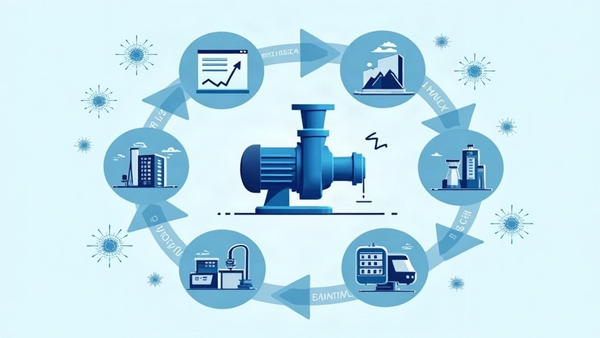
From Predictive to Prescriptive: The Maturation of AI Inside Maximo
MAS 9.2 embeds five AI capabilities into daily maintenance workflows. This guide explains each capability, their data requirements, and a phased deployment roadmap from data audit to agentic workflows.


From Predictive to Prescriptive: The Maturation of AI Inside Maximo
For years, AI in Maximo was a separate module that organizations opted into. You purchased Maximo Predict, hired a data scientist, trained models, and hoped the predictions were good enough to justify the investment. The results were inconsistent. Some organizations achieved dramatic reductions in unplanned downtime. Others produced predictions that maintenance planners ignored because the models were trained on bad data or the recommendations did not account for operational constraints.
MAS 9.2, released in June 2026, changes that equation. AI is no longer a separate module that organizations opt into. It is embedded in the daily workflows that reliability, maintenance, field service, safety, and operations teams already use. The predictions, condition assessments, recommended actions, and visual inspection results appear in context, alongside the asset record, the work order, the inspection form, or the safety checklist. This is not AI as a science project. It is AI as an operational tool.
This article walks through the five AI capabilities available in MAS 9.2, explains their data requirements, and provides a phased deployment roadmap that organizations can follow to build their AI maturity incrementally.
The Five AI Capabilities in MAS 9.2
As of the MAS 9.2 release, five AI capabilities are available to organizations running the platform. Each capability addresses a different stage of the maintenance maturity curve, and each has different data requirements and implementation considerations.
Maximo Condition Insight is the centerpiece of MAS 9.2's AI strategy. Introduced in late 2025 and matured through the 9.2 release, it brings together work orders, inspections, meter readings, and reliability strategies to identify patterns in asset behavior and recommend what to do next. It is an agentic AI capability within Maximo Asset Performance Management (APM) that evaluates work orders, metrics, time-series data, meter readings, FMEA (Failure Mode and Effects Analysis) records, and alerts to produce a clear, plain-language assessment of asset condition, emerging trends, and recommended corrective actions.
Maximo Predict is the application that started the AI journey in Maximo, and it remains the foundation for everything MAS 9.2 builds on. Predict uses AI and machine learning to analyze historical maintenance records, operational data, inspection reports, and environmental data to predict downtime, degradation, and failures. The output is a forecast: probability of failure, days to failure, remaining useful life, and other key indicators that planners and reliability engineers can act on.
Maximo Monitor (formerly Maximo Health) provides AI-enabled remote monitoring of asset condition at scale. It uses IoT data from asset sensors, weather data, asset records, and work history to provide a consolidated, global view of asset health. Monitor is the data backbone that feeds Predict and Condition Insight with the real-time condition data they need to generate predictions and recommendations.
Maximo Visual Inspection uses computer vision models to detect defects from images and video, with the option to run inference locally on mobile devices. Technicians take photos of assets during inspections, and the trained models identify defects such as corrosion, cracks, misalignment, or wear. The models can run on edge devices, which means inspection results are available immediately without requiring network connectivity.
Maximo Assistant on Mobile uses natural-language AI to help technicians find asset information, review history, and complete work efficiently in the field. A technician can ask "what is the failure history of Pump P-104?" in natural language and receive a synthesized answer drawn from work orders, inspections, and asset records. The assistant reduces the time technicians spend searching for information and ensures they have the context they need to complete work correctly.
Maximo Predict: Building the Predictive Foundation
Maximo Predict is where most organizations begin their AI journey, and for good reason. It is the most mature AI capability in MAS, it has the most well-documented implementation workflow, and it produces measurable value within the first six months when deployed correctly.
The implementation workflow for Predict follows a clear sequence. First, create asset groups based on asset type, criticality, or operational context. Predict works best when analyzing groups of similar assets rather than individual assets in isolation. A group might be all centrifugal pumps at the north plant or all transformers rated above 500 kVA. The grouping should reflect operational similarity, not just asset type, because the prediction models need enough examples of failure patterns to learn from.
Second, train predictive models using the default notebooks provided with Predict. A data scientist works with the group ID and uses Jupyter notebooks to build and train model instances. The notebooks handle the common algorithms, and the data scientist focuses on feature engineering and model selection. The default notebooks support failure prediction (probability and estimated date), remaining useful life estimation, and anomaly detection.
# Example: Training a Maximo Predict model (simplified workflow)
# The actual training happens in Jupyter notebooks within the MAS environment

import pandas as pd
from maximo_predict import ModelTrainer, AssetGroup

# Step 1: Define the asset group
asset_group = AssetGroup(
    group_id="CENTRIFUGAL_PUMPS_NORTH",
    description="Centrifugal pumps at North Plant",
    asset_criteria={
        "asset_type": "PUMP-CENT",
        "location": "NORTH-PLANT",
        "criticality": ["HIGH", "MEDIUM"]
    }
)

# Step 2: Prepare training data
training_data = pd.read_sql("""
    SELECT a.assetnum, a.installationdate,
           w.wonum, w.status, w.failurecode, w.actstart, w.actfinish,
           m.readingdate, m.metername, m.reading
    FROM asset a
    LEFT JOIN workorder w ON a.assetnum = w.assetnum
    LEFT JOIN meterreading m ON a.assetnum = m.assetnum
    WHERE a.assettype = 'PUMP-CENT'
      AND w.status = 'CLOSE'
      AND w.failurecode IS NOT NULL
""", connection)

# Step 3: Train the failure prediction model
trainer = ModelTrainer(
    group_id="CENTRIFUGAL_PUMPS_NORTH",
    model_type="failure_prediction",
    target_variable="failed_within_30_days",
    features=["age_days", "avg_daily_runtime", "last_pm_days_ago",
              "failure_count_12m", "vibration_avg", "temperature_avg"]
)

model = trainer.train(training_data)
print(f"Model accuracy: {model.accuracy}")
print(f"Precision: {model.precision}")
print(f"Recall: {model.recall}")

# Step 4: Deploy the trained model
model.deploy()
# The model now generates predictions for each asset in the group
# Predictions include: failure_probability, estimated_failure_date, RUL
Third, deploy the trained model so that it generates predictions for each asset in the group. Predictions include current failure probability and estimated failure date. Fourth, monitor predictions through the Predictions section in Maximo, which shows failure probability, estimated failure date, and recommended actions for each asset. Fifth, use work queues to track assets with high failure probability or assets predicted to fail before the next scheduled PM work order. These work queues become the daily planning tool for reliability engineers.
The data requirements for Predict are significant. You need at least 30 documented failure examples for each failure mode you want to predict. The failures must be coded consistently, with accurate failure codes and work order completion data. You need meter readings or sensor data that correlate with the failure patterns. And you need enough historical data to capture seasonal and operational cycle variations. Organizations with poor work order data quality will not get reliable predictions, and they should invest in data remediation before attempting to deploy Predict.
Condition Insight: The Agentic Shift
Condition Insight represents the most significant AI advance in MAS 9.2. While Predict forecasts what might fail, Condition Insight explains what is happening right now and recommends what to do about it. This is the shift from predictive to prescriptive AI, and it changes how maintenance teams interact with the system.
Condition Insight works by analyzing data from multiple sources within the MAS ecosystem. It reads work order history to understand what has been fixed, what has failed, and what patterns have emerged. It reads inspection results to understand current asset condition as documented by human inspectors. It reads meter readings and time-series data from Maximo Monitor to understand real-time asset health. It reads FMEA records to understand the failure modes that have been identified for each asset class. And it reads alerts from Monitor to understand what anomalies have been detected.
The output is not a probability score or a days-to-failure estimate. It is a plain-language assessment that says, for example: "Pump P-104 is showing elevated vibration levels that have increased 15% over the past 30 days. This pattern is consistent with bearing degradation, which was the failure mode for 3 similar pumps in the past 12 months. Recommended action: schedule a vibration analysis within 7 days and order replacement bearings (part number BRG-204) to avoid an unplanned failure estimated within 45 days."
This is the agentic shift. The AI does not just predict. It diagnoses, recommends, and provides the context that maintenance teams need to act. The recommendation includes the specific action, the timeframe, and the parts needed, which means the planner can create a work order directly from the recommendation.
The implementation requirements for Condition Insight are more demanding than for Predict alone. You need the underlying data from Monitor (real-time sensor data), Predict (failure probability and RUL estimates), and Manage (work order history, FMEA records, asset hierarchy). Condition Insight layers on top of these data sources, which means it should be deployed after the foundational applications are running and producing reliable data.
Visual Inspection: Computer Vision for Asset Defects
Maximo Visual Inspection brings computer vision into the maintenance workflow. Technicians take photos of assets during inspections, and trained models detect defects that might be missed by visual inspection alone. The models can identify corrosion, cracks, leaks, misalignment, wear patterns, and other defect types that have been trained into the system.
The implementation process for Visual Inspection is straightforward but requires investment in labeled training data. You need a library of images for each inspection type, with defects clearly labeled. The more images you have, the more accurate the models become. IBM recommends starting with a single inspection type, such as corrosion on storage tanks, and expanding from there.
# Example: Training a Visual Inspection model for corrosion detection

# Step 1: Prepare the labeled image dataset
# Images should be categorized by defect type
corrosion_images = {
    "severe": ["img_001.jpg", "img_002.jpg", ...],  # 100+ images
    "moderate": ["img_101.jpg", "img_102.jpg", ...],  # 100+ images
    "minor": ["img_201.jpg", "img_202.jpg", ...],  # 100+ images
    "none": ["img_301.jpg", "img_302.jpg", ...],  # 100+ images
}

# Step 2: Train the model using the Visual Inspection application
# The training happens in the MAS Visual Inspection interface
# Upload the image sets, define the defect categories, and train

# Step 3: Validate model predictions against human inspections
# IBM recommends validating for 90 days before production deployment
validation_results = {
    "total_inspections": 450,
    "model_correct": 412,
    "model_false_positive": 18,
    "model_false_negative": 20,
    "accuracy": 0.916
}

# Step 4: Deploy to mobile devices for field use
# Models can run locally on mobile devices for offline inspection
Visual Inspection does not depend on the historical data that Predict requires, which means it can be deployed in parallel with other AI capabilities. This makes it a good early win for organizations that want to demonstrate AI value while building the data foundation for more advanced capabilities.
The Phased Deployment Roadmap
The recommended sequence for organizations starting their Maximo AI journey in 2026 follows a phased approach that builds the data foundation while delivering incremental value at each step.
Month 1 to 2: Audit the data foundation. Look at the asset hierarchy, the meter history, the work order history, and the failure records. Identify the asset classes where the data is complete and consistent enough to support AI. This audit will reveal that 20 to 30 percent of assets have data quality good enough for Predict, while the rest need remediation. This is normal. Do not attempt to fix all data issues before starting. Focus on the asset classes with the best data and build from there.
Month 3 to 4: Deploy Maximo Assistant on Mobile. This does not require a strong data foundation and provides immediate value to field technicians. It also builds user familiarity with AI capabilities in the Maximo context, which helps with adoption of the more advanced features later. Technicians who have experienced the mobile assistant are more likely to trust and use the predictions and recommendations from Predict and Condition Insight.
Month 5 to 6: Pilot Maximo Predict on one asset class. Choose the asset class with the best data quality from the audit. Train the default models and deploy them. Measure the prediction accuracy and the impact on maintenance planning. This pilot will demonstrate the value of predictive maintenance to executive sponsors and justify further investment. Document the results: prediction accuracy, number of unplanned failures avoided, estimated cost savings, and feedback from maintenance planners on the usefulness of the predictions.
Month 7 to 8: Deploy Maximo Visual Inspection. Choose two or three high-value inspection types where computer vision can augment human inspection. Train models and deploy them to mobile devices. This does not depend on the historical data that Predict requires, so it can run in parallel. Validate model predictions against human inspections for the first 90 days before relying on them for maintenance decisions.
Month 9 to 12: Pilot Condition Insight. Deploy Condition Insight on the same asset classes where Predict and Monitor are already running. The agentic recommendations layer on top of the underlying predictions, so the data foundation from the Predict pilot supports the Condition Insight pilot. Measure the impact on maintenance decision-making and the quality of the AI-generated recommendations.
Month 12 and beyond: Scale and mature. Expand to additional asset classes, integrate additional data sources, and begin building agentic workflows that coordinate across multiple systems. The MCP Server in MAS 9.2 enables these workflows by allowing AI agents to interact with Maximo data programmatically. This is the most experimental phase, and organizations should start with the simplest workflows (safety incident triage, MOC routing) and build up to more complex orchestration.
Practical Implications
The AI capabilities in MAS 9.2 are powerful, but they are not plug-and-play. Each capability has specific data requirements, implementation steps, and operational considerations that determine whether it will produce value or sit unused.
The most important lesson from organizations that have successfully deployed AI in Maximo is this: the AI is only as good as the data it runs on. If your work order history is incomplete, your failure codes are inconsistent, your meter readings are sparse, and your asset hierarchy is wrong, the predictions will be wrong. No amount of machine learning sophistication can overcome a data quality problem. Invest in data quality first, and the AI capabilities will follow.
The second lesson is that AI adoption requires change management. Maintenance planners who have been scheduling work based on experience and intuition for years will not automatically trust predictions from a model. The pilots should include a structured feedback process where planners review predictions, document whether they acted on them, and track outcomes. Over time, as the predictions prove accurate, trust builds organically.
The third lesson is that AI in Maximo is a journey, not a destination. The phased roadmap above is not a suggestion. It is a sequence that builds on itself. Deploying Condition Insight without a functioning Predict deployment will not produce value because Condition Insight depends on the predictions and monitoring data that the other applications provide. Deploying Predict without a data audit will produce unreliable predictions that erode trust. Each phase prepares the organization for the next.
The fourth lesson is that the MCP Server opens possibilities that were not available before MAS 9.2. AI agents can now interact with Maximo directly, creating work orders from predictions, querying asset history for condition assessments, and orchestrating maintenance workflows across systems. Organizations with mature AI deployments should pilot the MCP Server to explore these capabilities. Organizations just starting their AI journey should note it on the roadmap but not attempt to deploy it until the foundational capabilities are in place.
Bottom Line
AI inside Maximo in 2026 is no longer experimental. MAS 9.2 has shipped five AI capabilities to production in hundreds of organizations, and the results are measurable: 47% reduction in unplanned downtime, 26% more productive technicians, and faster, more consistent maintenance decisions.
The implementation path is clear: audit your data, start with the Mobile Assistant for immediate value, pilot Predict on your best-data asset class, deploy Visual Inspection in parallel, and build up to Condition Insight. The journey from predictive to prescriptive AI takes 12 to 18 months for most organizations, and each phase delivers incremental value that justifies the investment in the next.
The organizations that succeed with AI in Maximo are not the ones with the most advanced models or the biggest data science teams. They are the ones that invest in data quality, follow the phased deployment roadmap, measure outcomes, and build trust with their maintenance teams one prediction at a time.