NEMUG Fall 2026: Turn the Agenda Into an Evidence Plan
NEMUG's published fall agenda brings data decisions, AI Service components, facilities integration, and peer discussion into the same event. Use those topics to prepare testable questions and return with evidence rather than an unqualified roadmap promise.

NEMUG Fall 2026: Turn the Agenda Into an Evidence Plan
A user group agenda is useful before anyone presents a slide. It identifies subjects that an organizing community has chosen to put in front of its members. It does not establish what attendees believe, which products they have deployed, or what a vendor will deliver next. That distinction matters when a conference programme becomes the starting point for a technology investment decision.
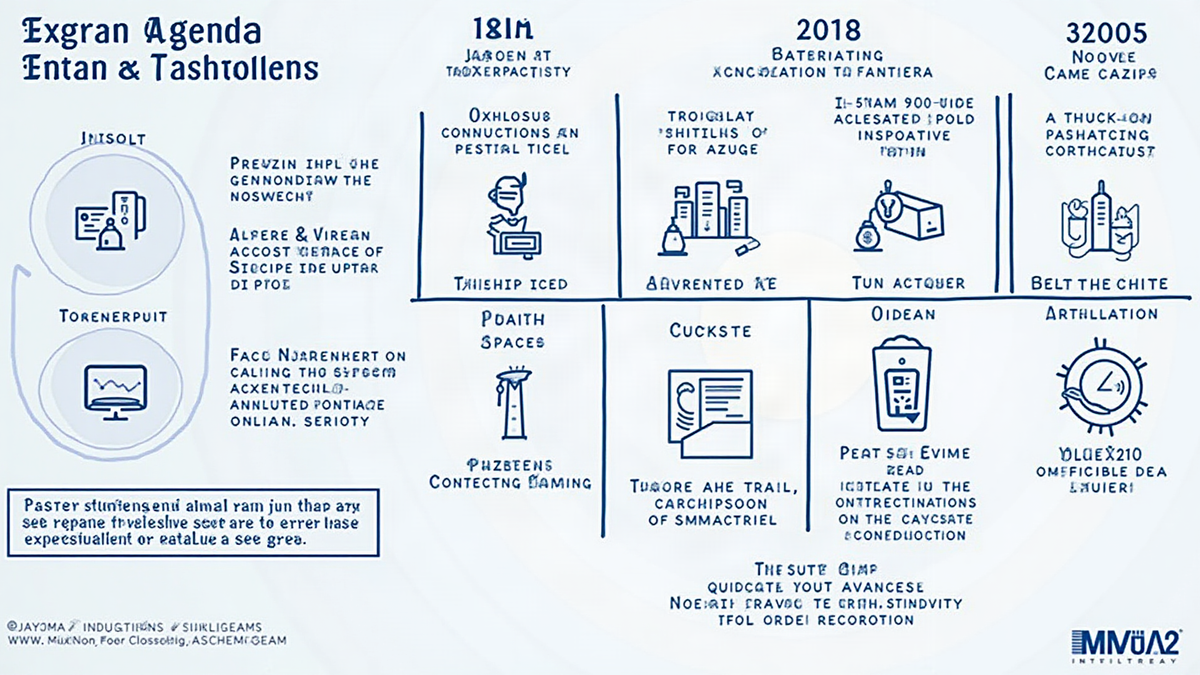
The Northeast Maximo User Group's event page lists its fall conference for October 21 and 22, 2026, at the Wyndham Newport Hotel in Middletown, Rhode Island. The JFC & Associates event listing describes sessions on turning Maximo data into decisions, the roadmap, AI Service components, TRIRIGA and Maximo Real Estate and Facilities integration, and AI for asset and work order data. It also lists peer stories, roundtable discussions, expert questions, and networking.
Those are substantial subjects, but a delegate can still leave with very little that changes an operating plan. The difference is preparation. Instead of collecting feature names, take a short evidence plan: the business question, the current technical boundary, the claim that needs verification, and the next test that would settle it.
This is an agenda-based preparation guide, not a conference recap. It does not report statements from sessions, attendance, customer outcomes, or new product commitments. The event details come from the two opened listings. Product examples are tied to opened IBM documentation where cited. The remaining questions and working practices are recommendations for delegates who want the value of a community event to survive the trip home.
1. Use the agenda as a question map, not a market survey
The published agenda groups several concerns that are often discussed in separate project meetings. Data-driven decisions sit beside AI Service components. Facilities integration sits beside improving asset and work order data. A roadmap session sits beside peer experience and expert questions. A reasonable preparation strategy is to explore those connections. It would not be reasonable to infer from the agenda alone that most members are buying a particular feature or struggling with the same deployment problem.
Start by selecting an operational decision that your organization actually needs to make. It might be whether to expand an assistant pilot, how to evaluate facilities integration, or which data-quality issue should receive attention before an analytics project. These are example decision types, not claims about the conference's attendees. For each decision, write the current uncertainty in one sentence and identify the evidence that would reduce it.
Then map that uncertainty to an agenda topic. A question about model hosting belongs naturally in the AI Service components discussion. A question about ownership of buildings, equipment, and maintenance records belongs in the facilities integration discussion. A question about how a recommendation becomes an approved action may belong in both the data decisions session and a peer roundtable. This keeps the delegate's attention on a coherent investigation rather than on whichever presentation has the most memorable slide.
Keep a second column for evidence type. A product capability needs a current documentation reference or a supported demonstration. A customer practice needs enough implementation context to judge whether it transfers. A future direction needs its status and uncertainty preserved. A personal opinion can be useful without becoming any of those things. Naming the evidence type prevents notes from flattening every interesting statement into the same apparent level of authority.
The event's participation rules also deserve an accurate reading. NEMUG limits participation to member organizations and sponsoring vendors, and its page limits sponsor staffing unless the committee approves otherwise. It explicitly prohibits suitcasing. Those are access and participation conditions. They do not prove that every discussion is independent, every example is representative, or every answer is free of commercial interest. Respect the setting while evaluating claims on their substance.
Before leaving for the event, agree on what the delegate is expected to bring back. A short list of resolved uncertainties and unresolved questions is more useful than a slide collection without decisions. The strongest return is not necessarily a purchase recommendation. It may be a documented reason to run a small technical test, request a support clarification, or postpone a proposal whose prerequisites are still unclear.
2. Ask the AI Service session for configuration boundaries
The agenda names understanding Maximo AI Service components, which gives delegates a concrete opportunity to ask about deployment conditions rather than only assistant behavior. A useful question begins with an environment: hosted or on-premises, connected or air-gapped, and a specific component level. Without that context, a correct answer about one deployment can become misleading advice when repeated about another.
IBM's agentic assistant enablement page provides a good example of why this matters. For on-premises or air-gapped AI Service 9.2, it distinguishes hardware requirements according to whether the July 2026 patch is present. The documented GPU minimum changes from nine H100 GPUs without the patch to one with it, while the listed node CPU and memory specifications remain unchanged. That is not a universal sizing statement for all Maximo AI features.
A delegate can turn that source into a precise question: which configuration is being discussed, where is its supported prerequisite documented, and what additional evidence is needed to size a real workload? The answer should separate minimum prerequisites from observed capacity. If a presenter gives a demonstration, ask which model arrangement and hosting boundary it uses. Do not treat a responsive demonstration as a throughput guarantee for a different environment.
The assistant architecture page supplies another useful boundary. It describes the supervisory ALM agent, AI Service, the Maximo MCP server, and Maximo Manage APIs in the request path. A strong technical question asks where the intended task is executed and which component's readiness demonstrates that the task can succeed. A chat interface answering a general question is not the same evidence as an authorized operational record being retrieved correctly.
Ask also how configuration changes become visible to the assistant. IBM's enablement instructions describe a 10-minute refresh of active configurations and require tool readiness checks. The conference question is not whether an administrator can click a setting. It is how the team confirms the effective configuration after the change, accounts for refresh behavior, and records the service state used in an acceptance test.
Take back the documentation reference and the conditions attached to any answer. If a question cannot be resolved in the session, capture the smallest follow-up needed: a supported component combination, a relevant prerequisite page, or a nonproduction test. That produces an actionable engineering task. A note saying AI Service is simpler now may be encouraging, but it cannot support an infrastructure estimate or a production approval by itself.
3. Turn facilities integration questions into ownership questions
The JFC listing explicitly includes TRIRIGA and Maximo Real Estate and Facilities integration. That establishes the topic's presence on the agenda, not its implementation details. It does not identify supported interfaces, a migration sequence, a synchronization direction, or the treatment of local customizations. Delegates should resist filling those gaps from product names alone and instead ask for the boundaries relevant to their own estate.
Begin with ownership of information. Which application is authoritative for each record type in the proposed design? What happens when a location changes, equipment is reassigned, or an identifier is corrected? These questions are architectural prompts, not statements about a particular IBM integration. They matter because an interface can move data successfully while leaving two teams with contradictory assumptions about which copy is allowed to change.
Request a concrete example from creation through update and exception handling. An example is most useful when it names the business event, the initiating application, the receiving application, and the expected reconciliation behavior. If the example relies on a customization, record that condition. If the presenter cannot discuss a specific failure mode, mark it as unresolved rather than assuming that the successful path also defines recovery.
Next ask what the proposed integration does not do. A facilities programme may combine portfolio information, space data, physical assets, and maintenance execution, but the presence of several applications does not prove that every relationship is synchronized. The delegate's task is to discover the supported boundary and the remaining manual or project-specific responsibilities. A clear exclusion can be more valuable than a broad statement that two platforms integrate.
For a useful take-home artifact, sketch the proposed ownership map in ordinary language. List the record, the system of record, the permitted change source, the exchange trigger, and the person responsible for reconciling discrepancies. Treat every field as a question until it is supported by documentation or an agreed design. This map can later guide a technical workshop without pretending to be a product specification gathered from an agenda listing.
Finally, connect integration scope to an operating decision. Ask which workflow becomes more reliable or less ambiguous after the exchange, and how the organization would verify that outcome. Do not invent an efficiency percentage or an implementation duration to make the answer sound complete. If a peer shares an improvement, preserve the context and measurement method before considering whether it applies elsewhere. The purpose of the community conversation is not to copy another organization's diagram. It is to discover which questions your own design still needs to answer before data movement becomes a business commitment.
4. Keep AI data improvement separate from decision authority
Two published agenda themes make an important pairing: using AI to enhance asset and work order data, and turning Maximo data into insight-driven decisions. They are connected, but they are not the same activity. Improving a description, proposing a classification, retrieving a history, and authorizing maintenance all have different consequences. A delegate should ask where a presented example ends and where a human or established business process takes over.
Prepare a question around a specific information defect. Examples might include inconsistent descriptions, incomplete failure information, or an ambiguous asset relationship. These are hypothetical investigation targets, not a claim about what the event's speakers will demonstrate. Ask what evidence identifies the defect, what the AI proposes, and how someone checks whether the proposed correction is appropriate. A more complete field is not automatically a more accurate field.
For assistant examples, IBM's architecture documentation offers a clear permission principle. The assistant follows the security, permissions, and approval rules of Maximo Manage and Maximo Application Suite, and users can receive different answers according to their access. A meaningful question is therefore how a demonstration was tested across legitimate user scopes. An administrator's successful answer does not establish what a planner or technician should see in production.
Also ask how an answer's evidence is made usable. The documentation describes a curated documentation search tool and notes that its IBM Documentation reference links do not work in on-premises or air-gapped environments. If a proposed work practice expects users to verify an answer through those links, the operating environment matters. The right follow-up is to establish an available verification route, not to assume that every generated explanation is self-validating.
The boundary between recommendation and authority should appear in the return report. If an example suggests work, who reviews it? If it proposes a record update, how is the accepted result distinguished from the original suggestion? If the answer is incomplete, what stops that incompleteness from becoming a planning assumption? These are evaluation questions. They should not be written afterward as features the product already supplies unless the session and supporting documentation actually establish them.
Peer discussions are particularly useful here because they can reveal operating practices around the software. Ask how teams investigate mistakes and revise acceptance tests. Preserve any constraints they disclose: data scope, role, environment, and the type of task. A modest example with a clear review boundary may be more transferable than a dramatic demonstration with an unclear approval path. The objective is not to remove judgment from maintenance. It is to learn where improved information can support judgment without quietly acquiring authority it was never approved to hold.
5. Return with a claim ledger and a small test backlog
The published event listing includes peer success stories, an asset management roundtable, expert questions, and networking. Those formats can produce valuable insights that do not arrive with a formal specification. The delegate needs a way to preserve that value without turning informal conversation into an official product commitment. A simple claim ledger is one practical approach.
For each consequential note, record the claim, its context, its evidence type, and the follow-up needed. Distinguish a currently documented capability from a presenter demonstration, a peer practice, a future direction, and an unresolved question. These categories are a recommended note-taking discipline, not an event requirement. They help a programme team understand what it can act on immediately and what still needs verification.
Roadmap material needs particular care. The agenda promises exploration of the Maximo roadmap and upcoming innovations, but the listings do not specify features, delivery dates, or contractual commitments. This article therefore makes no such predictions. During the event, preserve whatever qualification accompanies a future statement. Do not promote a possible direction into a committed release date simply because the internal project plan would benefit from certainty.
After the event, convert the most relevant unresolved claims into small tests. Each test should have an owner, an environment, a narrow question, and an observable acceptance result. An assistant test might compare one authorized data question across two roles. An integration investigation might confirm ownership of one record type through creation and update. A data-quality exercise might compare a proposed correction with a reviewed source record. These are examples of test design, not reported conference outcomes.
Keep the backlog selective. A conference can generate more ideas than a team can responsibly pursue. Prioritize tests that influence a real near-term decision, especially where the cost of a wrong assumption is high. Put interesting but nonessential ideas into a reference list rather than disguising them as approved delivery work. The event should sharpen the programme, not create an unowned queue of fashionable experiments.
Finally, share an appropriately sanitized summary with colleagues and, where suitable, the community. Obtain permission before attributing an informal peer example or circulating restricted material. Separate publicly sourced facts from private implementation details. A good contribution can simply explain the question, the evidence used, and what remains uncertain. That makes the next community conversation better while avoiding the common failure in which a useful exchange returns home as an unsupported claim that everyone is doing the same thing.
Practical Implications
Before the conference, choose the decisions that justify the delegate's attention. Attach each decision to a published agenda topic and write the evidence needed to move it forward. Bring the current environment details for technical questions, including component levels and hosting boundaries where relevant. A precise question gives a presenter a chance to provide a precise answer.
During the sessions, label notes by evidence type. Preserve documentation references, demonstration conditions, and qualifications on future direction. Ask for the boundary of a capability as well as its successful path. In peer discussions, learn the operating context before borrowing the conclusion, and respect restrictions on attribution and materials.
Afterward, produce a concise decision brief rather than an unfiltered conference diary. State what was resolved, what remains uncertain, and which small tests deserve ownership. Keep product facts, engineering recommendations, and roadmap possibilities visibly separate. If no evidence supports a planned commitment, say so and identify the verification step.
For community contributors, the useful output is often a reusable question or a clearly bounded lesson. Sharing how an uncertainty was tested can help other practitioners more than repeating a broad claim about transformation. The conference's lasting value should be visible in better decisions and better questions, not only in a folder of slides.
Bottom Line
NEMUG's fall agenda puts operationally important subjects in one room: data decisions, AI Service components, facilities integration, asset and work order data, and peer discussion. The opened listings support that description. They do not support a recap of sessions that this article has not observed, a claim about attendee sentiment, or a prediction of future Maximo functionality.
Use the programme as an evidence plan. Ask which configuration a capability depends on, who owns information across an integration, where an AI recommendation ends, and what would prove a proposed approach works in your environment. Preserve the distinction between documentation, demonstration, experience, and direction.
The best result is a smaller set of uncertainties, backed by references and a testable follow-up. That is a practical contribution a delegate can make immediately: bring the community's questions into the organization's engineering process without turning an interesting conversation into an unsupported promise. A user group becomes more valuable when its ideas are carried home with their context intact.