Maximo Monitor 9.2 Breaks Free: What the IoT Platform Decoupling Actually Changes for Reliability Teams
Maximo Monitor 9.2 decouples from the Watson IoT Platform, becoming a stand-alone system of record for asset monitoring. This is arguably the single biggest architectural change in the release, yet partner coverage of its practical implications remains thin. This article walks through what the…

Maximo Monitor 9.2 Breaks Free: What the IoT Platform Decoupling Actually Changes for Reliability Teams
Introduction
Most MAS 9.2 release coverage has centered on the AI features: the agentic assistant, the MCP server, the confidence-scored insights. Those are the headlines. But for reliability engineers and asset performance management teams, the most consequential change in the release may be one that has received comparatively little attention: Maximo Monitor 9.2 has decoupled from the Watson IoT Platform and now operates as a stand-alone system of record for asset monitoring data. An IBM community blog published in late August confirmed the change, and community commentators have called it the single biggest architectural shift in the release. The lack of partner content explaining the implications is notable, and it leaves many organizations about to upgrade without a clear picture of what is actually changing under their feet.
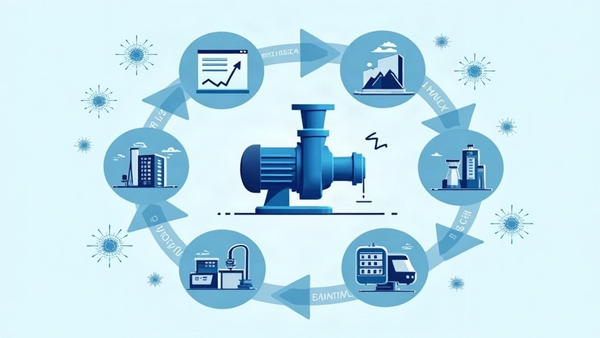
To understand why this matters, it helps to recall how the architecture worked before. In earlier MAS releases, Maximo Monitor depended on IBM's Watson IoT Platform as its underlying device connectivity, message brokering, and time-series data backbone. Device telemetry flowed into the IoT Platform, Monitor consumed it from there, and the two products were architecturally joined in a way that shaped everything from deployment topology to data retention design. If you deployed Monitor, you were in practice also deploying and operating the IoT Platform as a coupled dependency. That coupling had consequences: it complicated licensing conversations, it added an operational component that many reliability teams neither fully understood nor needed, and it created upgrade coupling, where changes in one product rippled into the other.
The 9.2 decoupling changes that relationship fundamentally. Monitor now owns its monitoring data model, its device connectivity pathways, and its data lifecycle directly, without requiring the IoT Platform as a mandatory intermediary. For greenfield deployments this simplifies the architecture considerably. For existing estates, especially hybrid ones running both Maximo Manage and Monitor, it raises questions that upgrade teams need to answer before they touch production: What happens to existing device integrations built against the IoT Platform? Where does historical time-series data live after the upgrade? How do alerting and automation workflows that spanned the two products need to be rebuilt?
This article walks through the decoupling in practical terms: what architecturally changed, what it means for data ownership and retention, how existing integrations are affected, what it means for hybrid Manage-Monitor deployments, and how reliability teams should approach their monitoring architecture as they plan their move to MAS 9.2. The goal is to fill the gap between the IBM announcement and the operational reality, because this is precisely the kind of change that looks abstract in release notes and becomes very concrete during an upgrade cut-over.
What Actually Changed in the Architecture
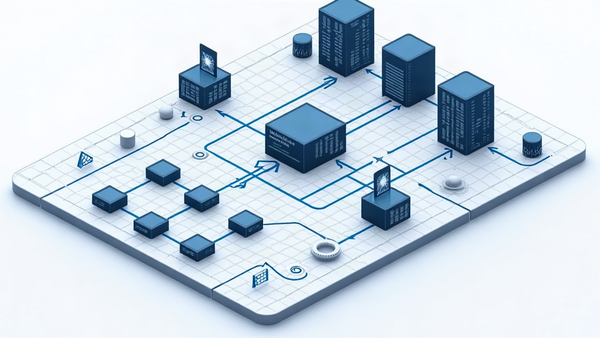
The core of the decoupling is straightforward to state: in MAS 9.2, Maximo Monitor no longer requires the Watson IoT Platform as a mandatory middleware layer between connected devices and the monitoring application. In prior releases, the dependency chain looked like this: devices and gateways published telemetry to the IoT Platform, the IoT Platform handled device management, message brokering, and time-series storage, and Monitor sat on top of that layer, reading device data and applying analytics. The IoT Platform was not optional. You could not run Monitor without it, and its operational characteristics, quotas, and lifecycle were entangled with Monitor's.
In 9.2, Monitor incorporates the capabilities it needs to function as a self-contained monitoring system. Device connectivity, telemetry ingestion, and the storage of time-series monitoring data are handled within the Monitor deployment's own scope, governed by MAS's shared platform services rather than a separate Watson IoT Platform product dependency. Monitor is now positioned explicitly as the system of record for asset monitoring data, which is a meaningful phrase: it means the authoritative copy of monitoring data, device definitions, and calculated metrics lives inside Monitor itself, not in an adjacent platform that Monitor merely queries.
Two clarifications are worth making, because community discussion has produced some confusion on both. First, decoupling does not mean IBM has abandoned IoT connectivity standards or that device protocols have changed overnight. Devices still speak standard protocols, gateways still aggregate telemetry, and existing industrial connectivity investments at the edge generally remain relevant. What changed is the middleware ownership: the mandatory IoT Platform hop in the middle is no longer part of the required architecture. Second, decoupling is not the same as deprecation of integration. Organizations that built integrations on the IoT Platform do not find those integrations severed at upgrade, but they do find themselves on an integration surface whose strategic position has changed, which is a planning matter rather than an emergency.
The practical effect is that the Monitor deployment footprint simplifies. Fewer moving parts means fewer components to license, patch, secure, and monitor in their own right. For organizations that found the two-product architecture confusing, and there were many, the 9.2 topology is easier to explain to auditors, easier to budget for, and easier to hand to an operations team. For organizations that relied on IoT Platform capabilities beyond what Monitor needed, such as broader device fleet management across non-Maximo use cases, the calculus is different, because those broader capabilities are no longer delivered incidentally as part of a Monitor deployment. That latter group needs to decide whether those capabilities justify running the IoT Platform on its own merits, independent of Monitor.
Data Ownership, Retention, and the System of Record Question
The phrase "stand-alone system of record" deserves scrutiny, because data ownership is where architectural changes translate into operational consequences. In the coupled architecture, a reliability team asking "where is my device telemetry?" had an answer that spanned two products: raw device messages lived in the IoT Platform, and Monitor held the device definitions, calculated metrics, and analytics outputs derived from that telemetry. Data lifecycle decisions, such as how long raw telemetry is retained versus aggregated metrics, had to be made across both layers, and the tooling for those decisions lived in different consoles.
With Monitor 9.2 as its own system of record, the answer consolidates: monitoring data, from device telemetry through calculated metrics to analytics outputs, is governed within Monitor's own data management scope. For reliability teams this is mostly good news. It means one place to define retention policies for monitoring data, one place to audit who accessed what, and one data model underpinning dashboards, alerts, and reports. It also aligns with how most organizations actually think about their monitoring data: as an asset in its own right, subject to retention requirements, backup strategies, and access governance, rather than as a byproduct of an adjacent messaging platform.
There are practical consequences upgrade teams need to plan for. Historical data migration is the most common question: organizations with years of accumulated monitoring history need a documented answer for what carries forward into the 9.2 data model, what remains accessible in archive form, and what is deliberately left behind. IBM's upgrade tooling addresses the migration path, but the business decision of what history matters is the customer's to make. A reliability program that uses multi-year vibration trends for failure mode analysis has different migration requirements than one that only needs rolling operational dashboards, and these differences should drive the migration scoping conversation rather than being discovered after cut-over.
Retention design also becomes more visible. In the decoupled architecture, retention tiers for raw telemetry, aggregated metrics, and derived analytics are configured against Monitor's own storage policies, which makes it easier to align retention with regulatory or engineering requirements, but it also makes those policies explicit, auditable, and, if poorly designed, visibly wrong. Teams upgrading to 9.2 should treat the migration as a forced opportunity to rationalize retention: most organizations have accumulated retention settings that nobody can justify, and rebuilding them deliberately in the new architecture is cheaper than carrying forward unexamined ones.
Finally, integration consumers of monitoring data, such as enterprise reporting platforms, data lakes, or third-party analytics tools, need to re-point at the new authoritative source. Any downstream consumer reading monitoring data from the IoT Platform layer should be inventoried during upgrade planning, because their integration contracts change when the system of record moves.
What Happens to Existing Device Integrations
For organizations with live device fleets feeding Monitor today, the first practical question about the decoupling is blunt: what happens to my existing device integrations? The honest answer is that nothing breaks at upgrade, but everything needs review, and the distinction between those two statements is where upgrade projects succeed or stumble.
Existing connections between devices, gateways, and the monitoring stack do not sever when you upgrade to 9.2. IBM's migration path preserves functioning device connectivity, and organizations should not expect a cut-over event where thousands of sensors suddenly go dark. But the integration surface those connections rest on has changed strategically. The IoT Platform integration points that integrations were built against are no longer the architectural center of gravity for Monitor. New development should target Monitor's native connectivity and data interfaces, and existing integrations should be evaluated for whether they should be migrated proactively or left functioning on legacy pathways until natural replacement cycles catch up with them.
A useful way to frame the review is a three-bucket triage. The first bucket is passive telemetry ingestion: sensors pushing readings upstream. These integrations are typically the simplest, because the decoupled architecture still needs to ingest telemetry, and migration usually amounts to re-pointing ingestion endpoints and validating data continuity. The second bucket is bidirectional integrations: device management operations, command-and-control flows, firmware orchestration, or anything where the monitoring platform writes back to devices. These deserve closer scrutiny, because device management semantics were an IoT Platform strength, and teams need to verify that equivalent capabilities exist in the 9.2 architecture for their specific device types. The third bucket is integrations that use the IoT Platform for purposes beyond Monitor: enterprise device fleets shared with other applications, custom event processing pipelines, or integrations with non-IBM systems that happen to route through the platform. These are the ones where the decoupling forces a genuine architectural decision, because the shared infrastructure no longer comes along with Monitor by default.
Edge investments deserve specific attention in this review. Organizations that deployed edge gateways, especially those running IBM's edge computing stack, should verify the supported integration paths between their edge estate and the 9.2 Monitor architecture. In many cases the edge layer insulates the integration from the middleware change, since the edge gateway abstracts the upstream connection, but this is a verification task, not an assumption.
The timing consideration matters too: organizations planning a MAS 9.2 upgrade in the coming quarters should fold this integration triage into their existing upgrade planning rather than treating it as a separate project. It adds discovery work, but not necessarily net new work, since any upgrade to 9.2 would have required integration validation regardless. The decoupling changes what that validation needs to check, not whether it needs to happen.
Implications for Hybrid Manage and Monitor Estates
A large share of Monitor deployments do not exist in isolation: they run alongside Maximo Manage, with work order generation, asset master data, and operational history in Manage and real-time telemetry, anomaly detection, and predictive insights in Monitor. For these hybrid estates, the decoupling changes the integration picture between the two halves of the estate, and teams should understand how before upgrading.
The good news is that the Manage-Monitor integration contract is, if anything, cleaner after the decoupling. In the coupled architecture, data flows between Manage and Monitor sometimes traversed the IoT Platform layer, making the effective integration topology three products deep. In 9.2, the integration between Manage and Monitor is a more direct product-to-product relationship, which simplifies troubleshooting, security review, and data lineage documentation. When a work order in Manage traces back to an anomaly detected in Monitor, the data path that justifies that connection is shorter and easier to explain, which matters in regulated environments where auditability of automated decisions is a requirement.
Asset data synchronization remains the heart of the hybrid integration, and its fundamentals are unchanged: asset hierarchies and master data originate in Manage, and Monitor consumes that structure to organize telemetry and analytics. What teams should reassess is the operational coupling of failure and alert data. With Monitor as the system of record for monitoring data, alerts and anomalies generated by Monitor's analytics carry their supporting data with them in a more self-contained way. When an anomaly spawns a work order in Manage, the evidence trail, the readings, the calculated deviation, the confidence of the prediction, lives in the system of record for that data rather than being reconstructed across platform boundaries.
One genuine opportunity the decoupling opens for hybrid estates is deployment flexibility. Because Monitor no longer mandates the IoT Platform, organizations can adopt Monitor for specific asset classes or sites without committing to the broader platform footprint, which lowers the barrier to incremental adoption. A reliability team that wants to pilot continuous monitoring on a single critical unit, compressors say, can stand up Monitor scoped to that pilot without the infrastructure commitment the coupled architecture required. This is a meaningful change for organizations that previously deferred Monitor adoption because the entry cost seemed disproportionate to a pilot's scope.
The planning caveat for hybrid estates is sequencing. Organizations upgrading both Manage and Monitor to 9.2 should coordinate the two upgrades so that integration validation happens once against consistent versions, rather than upgrading Monitor first and running cross-version integration validation as a separate exercise. Mixed-version operation is supportable in transition, but it doubles the validation matrix, and the decoupling adds enough integration surface change on the Monitor side that consolidating validation is worth the coordination effort.
How Reliability Teams Should Reassess Their Monitoring Architecture
For reliability and APM program leaders, the decoupling is an invitation to revisit monitoring architecture decisions that may have been made years ago under different constraints. The coupled architecture made some choices for you: if you wanted Monitor, you accepted the IoT Platform, and your architecture conformed to that reality. With the coupling removed, choices that were previously forced are now genuinely open, and it is worth re-examining them deliberately rather than defaulting to what the old architecture implied.
The first question worth revisiting is scope: which assets actually justify continuous monitoring. The economics of monitoring deployments have shifted, and the ability to adopt Monitor incrementally means the answer no longer has to be all-or-nothing. Reliability teams using criticality analysis to drive monitoring investment, the disciplines of RCM and asset criticality ranking that underpin mature reliability programs, now have an architectural path that matches that selectivity. Monitoring spend can follow criticality rather than platform topology.
The second question is data strategy. With Monitor as the system of record for monitoring data, reliability leaders should decide explicitly what the relationship is between monitoring data and the enterprise data estate: what gets exported to data lakes or enterprise analytics platforms, at what granularity, and under what governance. The consolidation of monitoring data into a single authoritative system makes these decisions cleaner to implement and audit. It also strengthens the case for treating condition monitoring data with the same data governance discipline applied to other asset master data, which many organizations have historically neglected for sensor data specifically.
The third question is vendor and integration posture. Organizations with multi-vendor monitoring stacks, mixing IBM Monitor with third-party condition monitoring or SCADA-derived analytics, should use the decoupling as a checkpoint to clarify which system plays which role. The decoupled Monitor is easier to position as one component in a broader reliability technology stack rather than the hub of an IBM-centric architecture, and some organizations will find that this simplifies integration contracts with equipment vendors whose monitoring solutions they already run.
Finally, teams should treat the 9.2 upgrade itself as the forcing function for this reassessment. Architecture reviews that happen in the abstract rarely change anything; reviews anchored to an upgrade cut-over date get done. If your organization is moving to MAS 9.2 in the next two quarters, the decoupling decisions, integration triage, data migration scoping, retention redesign, are not optional work to be minimized. They are the upgrade. Budgeting them explicitly, with named owners and cut-over criteria, is the difference between an upgrade that lands cleanly and one that discovers its real scope in production.
Practical Implications
For teams currently running Maximo Monitor on MAS 8.x or earlier 9.x releases, the decoupling changes upgrade planning in three concrete ways. First, add an integration triage workstream to the upgrade project: inventory every integration that touches the IoT Platform layer, classify each as passive telemetry, bidirectional device management, or out-of-scope platform usage, and assign each a disposition before cut-over planning begins. Second, scope the historical data question early: decide what monitoring history must carry forward into 9.2 based on actual engineering use, not archive sentiment, and validate IBM's migration tooling against that scope with a representative data sample before committing to a cut-over date. Third, rebuild retention policies deliberately in the new architecture rather than carrying forward inherited settings; the migration is the cheapest moment your organization will ever have to rationalize them.
For hybrid Manage-Monitor estates, coordinate the Manage and Monitor upgrades as a single validation exercise, and use the cleaner post-decoupling integration topology to refresh data lineage documentation, which auditors in regulated industries will eventually ask about. For organizations that deferred Monitor adoption due to the platform footprint, re-evaluate with a scoped pilot on your most critical asset class: the incremental adoption path is now architecturally real, not just a sales pitch. And for anyone building new device integrations today against legacy pathways: stop. Target Monitor's native connectivity interfaces in 9.2, because new investment against the old middleware is investment in a surface whose strategic position has just changed.
Bottom Line
The Maximo Monitor 9.2 decoupling from the Watson IoT Platform is the quiet architectural headline of the release: less glamorous than agentic AI, but more likely to change how your monitoring estate is deployed, integrated, and governed. Monitor is now a self-contained system of record for asset monitoring data, which simplifies the footprint for new adopters, clarifies data ownership for existing ones, and forces a deliberate integration triage for anyone with a live device fleet. None of this is a reason to delay a MAS 9.2 upgrade; it is a reason to upgrade with eyes open about what changed. The organizations that treat the decoupling as a forced opportunity to rationalize integrations, retention, and monitoring scope will come out of the 9.2 transition with a cleaner, cheaper, more explainable monitoring architecture than they had going in. The ones that treat it as a version bump will carry their old complexity forward and wonder why nothing got simpler. The technology did the simplifying. The rest is up to the upgrade plan.