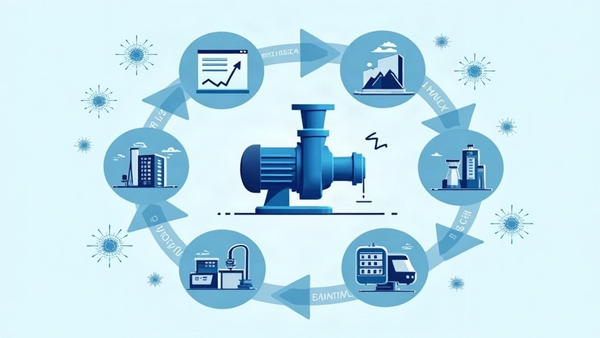
Maximo in the Field: Industry Case Studies from Utilities, Oil and Gas, Manufacturing, and Transit in 2026
Five documented Maximo implementations across utilities, oil and gas, manufacturing, and transit reveal the patterns that drive measurable outcomes. From a 60% reduction in approval times to AI-driven asset onboarding, the lessons translate across industries.


Enterprise asset management platforms are not theoretical investments. Organizations deploy them to solve real operational problems, and the results, when measured, tell a story that every practitioner can learn from. This article examines five documented case studies from 2026 that span power generation, downstream oil and gas, brewing, transit, and public utilities. The goal is not to celebrate the technology but to draw out the patterns that apply across industries and the lessons that practitioners can take back to their own organizations.
The common thread across these case studies is not technology. It is integration. Every organization profiled here faced a challenge that Maximo alone could not solve. The solution in each case involved connecting Maximo to other systems, including financial systems, production systems, fleet management systems, and telematics, in ways that made the whole greater than the sum of its parts. The technology choices differ, but the architectural pattern is consistent: Maximo as the asset and work management core, surrounded by specialized systems that extend its reach.
The industries examined here represent the core of Maximo's installed base. Utilities, oil and gas, manufacturing, and transportation account for the majority of enterprise Maximo deployments worldwide. The challenges they face, including aging infrastructure, regulatory compliance, safety management, and the pressure to reduce unplanned downtime, are shared across capital-intensive industries. The solutions they implemented, and the measurable outcomes they achieved, provide a benchmark for any organization evaluating or optimizing a Maximo deployment.
Utilities: Austin Energy's Unified Platform and Evergy's AI-Driven Asset Onboarding
The utility sector has been one of the earliest and most enthusiastic adopters of Maximo's advanced capabilities. Electric, gas, and water utilities share three characteristics that make EAM platforms essential: aging infrastructure that requires proactive maintenance, regulatory compliance requirements that demand audit trails for every action taken on every asset, and the high cost of unplanned outages where a single transformer failure can affect thousands of customers. The case studies from Austin Energy and Evergy illustrate two different but complementary approaches to Maximo deployment in utilities.
Austin Energy, the community-owned electric utility serving the City of Austin, Texas, deployed IBM Maximo Application Suite to create a consistent and uniform platform for managing all assets and work across Generation, Transmission, and Distribution. Before the MAS deployment, the utility managed different parts of its asset portfolio in different systems, with different workflows, different asset hierarchies, and different data standards. This fragmentation created blind spots where a maintenance decision in one business unit could have unintended consequences in another. The result, documented in a June 2026 case study, is a platform with seamless integration to the City of Austin's financial systems.
The key architectural decision was to treat the financial system integration as a first-class requirement from the start, not a post-deployment afterthought. This meant that purchase orders, work order costs, and inventory transactions flowed between Maximo and the city's financial system without manual reconciliation. The integration uses the Maximo Integration Framework for outbound cost postings and the JSON REST API for real-time purchase order lookups. By designing the integration before configuring work order screens, Austin Energy ensured that every work order created in the system would have the correct cost coding, GL allocation, and budget tracking from day one.
The outcome for Austin Energy includes improved asset visibility across the entire portfolio, from generation assets at power plants to transmission lines and distribution equipment. Work management processes are standardized across business units, which previously had different workflows, different asset hierarchies, and different naming conventions. The integration with the financial system means that cost accounting is accurate and timely, with no month-end reconciliation surprises.
Evergy, a major utility serving 1.6 million customers in Kansas and Missouri, took a different path. Their challenge was not platform unification but data quality. Specifically, getting accurate asset data from engineering documents into the EAM system. This is one of the most persistent problems in utility asset management. Engineering documents, including P&IDs, single-line diagrams, and equipment lists, contain the authoritative information about assets, but extracting that information into structured data that an EAM system can consume has traditionally been a manual, error-prone process that can take months for a single substation.
Evergy's solution, developed in partnership with 1898 and Co., combined generative AI, optical character recognition, computer vision, and semantic parsing to extract structured data from engineering documents automatically. The system reads P&IDs to identify equipment and their interconnections, extracts nameplate data from scanned equipment lists, and populates Maximo asset records with accurate, validated information. The AI models identify equipment types (transformers, breakers, switches), extract ratings and specifications from nameplate photos, and map the parent-child relationships between assets based on the one-line diagram topology.
This approach dramatically reduced the time required to onboard new assets into the EAM system and improved the accuracy of the asset hierarchy, which is the foundation for every downstream process from preventive maintenance to failure analysis. It also addressed a knowledge gap. Experienced engineers who could read P&IDs and manually extract asset data were retiring, and the institutional knowledge they carried was leaving with them. The AI-driven extraction process captures that knowledge in a repeatable, scalable form.
The lessons from these two utility implementations are complementary. Austin Energy shows the value of designing integration architecture before configuring a single work order screen. Evergy shows that data quality, not technology features, is often the binding constraint on EAM value. Both organizations invested in fundamentals before layering on advanced capabilities, and both defined measurable outcomes before they started.
Oil and Gas: Hubco's 60% Reduction in Approval Times
The oil and gas industry operates in challenging environments where equipment reliability directly impacts production revenue and safety. Drilling platforms, refineries, pipelines, offshore facilities, and processing plants all depend on highly reliable equipment operating under demanding conditions. A single unexpected failure at a refinery can cost millions of dollars per day in lost production, and safety incidents in oil and gas operations can have catastrophic consequences.
Hubco, a downstream oil and gas operator, engaged IBM Business Partner Systech International to deploy and integrate Maximo for Oil and Gas 7.6. The deployment addressed several operational pain points that are common across the downstream oil and gas sector, including management of change processes that took months to complete, safety incident backlogs that grew faster than they could be resolved, and invoice processing that tied up cash flow for weeks longer than necessary.
The most striking result is a 60% reduction in approval times for management of change (MOC) processes. The MOC process, previously administered manually across multiple disconnected systems, was streamlined through the MOC module in Maximo, which integrates with work order and safety systems. Approvals that previously took six months to a year were reduced to a couple of months. This is not just a convenience improvement. In oil and gas, delayed approvals for equipment changes can delay maintenance, extend downtime, and create safety risks. Cutting approval time by 60% has direct revenue and safety implications.
The MOC module in Maximo for Oil and Gas provides structured workflows for initiating, reviewing, approving, and implementing changes to equipment, processes, or procedures. Each change request goes through a defined approval chain with automatic notifications, documented risk assessments, and closure verification. Before the Maximo deployment, Hubco's MOC process involved email chains, spreadsheets, and physical signatures, which made tracking impossible and accountability unclear.
The deployment also achieved a 20% reduction in safety incidents being investigated or pending investigation. The risk assessment application improved work order safety management, and enhanced monitoring of safety-related actions and tasks reduced the incident backlog. This matters because safety incident backlog is a leading indicator of safety culture maturity. A shrinking backlog means investigations are happening faster, corrective actions are being implemented sooner, and the organization is learning from incidents rather than accumulating them.
The safety improvements came from two specific Maximo capabilities. First, the risk assessment application requires that every work order with identified hazards has a corresponding risk assessment before work begins. The system enforces this by preventing status changes to "In Progress" until the risk assessment is complete. Second, the safety-related action tracking system links corrective actions from incident investigations directly to work orders, so the actions that come out of an incident investigation are tracked to completion with the same rigor as any other work order.
Invoice processing time dropped by 50% after Maximo was integrated with Oracle Financials using the Maximo ERP Integration add-on. Average invoice processing time fell from 50 to 60 days down to 30 to 35 days, creating faster cash flow from operations. The integration eliminated manual invoice matching, which was a significant source of processing delays and errors. The ERP integration maps Maximo purchase orders, receipts, and invoices to Oracle's accounts payable system, with three-way matching (PO, receipt, invoice) automated through the integration layer.
| Metric | Before | After | Improvement |
|---|---|---|---|
| MOC approval time | 6-12 months | 2-3 months | 60% reduction |
| Safety incidents pending | Baseline | 20% fewer | 20% reduction |
| Invoice processing time | 50-60 days | 30-35 days | 50% reduction |
Additional benefits included more timely reviews of preventive maintenance records, better monitoring of temporary changes, and improved compliance management with safety walk schedules. These are the kind of incremental improvements that do not make headlines but compound over time to create a materially different operational posture. The combination of structured MOC workflows, enforced risk assessments, and automated invoice processing transformed Hubco's operations from a reactive, manual environment to a proactive, system-driven one.
Manufacturing: Spendrups Bryggeri and Toyota's Indiana Assembly
Manufacturing is the broadest Maximo vertical, spanning everything from discrete assembly to process manufacturing. The challenges vary by subsector but share a common theme: production equipment failures directly impact output, quality, and revenue. Two case studies illustrate the range of Maximo applications in manufacturing.
Spendrups Bryggeri, a Swedish brewery supporting EUR 380 million in annual revenue, shifted from schedule-based to condition-based maintenance using Maximo. The brewery's production equipment, including fillers, pasteurizers, and packaging lines, is critical to throughput. A single line failure can halt production for hours, with direct revenue impact measured in thousands of euros per hour. By implementing condition-based maintenance triggered by asset health indicators in Maximo, Spendrups reduced unplanned downtime and extended equipment life.
The shift from calendar-based to condition-based maintenance meant that maintenance was performed when needed, not when the calendar said so, which reduced both unnecessary maintenance and unexpected failures. The brewery implemented Maximo Health to continuously assess asset condition based on meter readings, inspection results, and work order history. Assets with declining health scores trigger inspection work orders automatically, allowing maintenance planners to intervene before a failure occurs.
Toyota's Indiana Assembly plant uses IBM Maximo Health and Predict to power a smarter, more digital factory. The deployment enables real-time monitoring of production equipment, reducing downtime and defects, and ensuring consistent vehicle assembly quality. Maximo Health provides the continuous asset condition scoring, and Maximo Predict applies machine learning models to forecast failure probability. When the probability exceeds a configured threshold, the system triggers an inspection work order, allowing maintenance to intervene before a failure disrupts production.
The Toyota deployment is notable for its scale. The Indiana Assembly plant operates hundreds of robots, conveyors, presses, and welding machines on a production schedule that leaves little room for unplanned downtime. The real-time monitoring capability means that equipment health is visible to maintenance planners and operators simultaneously, creating a shared awareness of asset conditions that drives faster, better-coordinated maintenance decisions.
A food manufacturer's experience with Maximo Predict further illustrates the potential of AI-driven maintenance in manufacturing. The manufacturer deployed Maximo Predict on their critical rotating equipment, including pumps, fans, blowers, and compressors. The models used vibration data from Maximo Monitor, combined with work order history from Maximo Manage, to predict failure probability within a 30-day window. When the probability exceeded 65%, the system triggered an inspection work order. This approach caught several emerging failures before they became production-impacting events, and the maintenance team was able to schedule repairs during planned downtime rather than reacting to unexpected breakdowns.
The manufacturing pattern is clear: the highest-value use case for Maximo in manufacturing is connecting condition monitoring data to maintenance workflows. Organizations that connect their SCADA and condition monitoring systems to Maximo, enabling automatic work order creation when parameters exceed thresholds, see the fastest return on investment. The combination of Maximo Monitor for data ingestion and Maximo Predict for failure prediction creates a closed loop from sensor data to maintenance action.
Transit: NCRTC and the Regional Rapid Transit System
The transportation sector, particularly transit, presents unique asset management challenges. Assets are distributed across large geographic areas, maintenance windows are constrained by service schedules, and failures have immediate public safety implications. A signal failure at a junction can halt an entire line. A cracked rail can derail a train. An escalator failure at a busy station can create dangerous crowd conditions.
NCRTC, the organization behind India's Regional Rapid Transit System, deployed IBM Maximo to enable real-time asset visibility, predictive maintenance, and faster response times across the transit system. The implementation coordinates maintenance across track infrastructure, rolling stock, signaling systems, and station equipment, all within a single EAM platform. The result is improved safety, enhanced operational efficiency, and a platform that can scale as the transit system expands.
The NCRTC case study demonstrates a pattern that is particularly relevant to transit organizations: the value of a unified asset hierarchy. In transit, assets range from trains and tracks to escalators and fare gates. Managing these in separate systems creates blind spots, where a track maintenance issue might not be visible to the team managing rolling stock, even though the two are operationally connected. A slow order on a section of track affects train scheduling, which affects maintenance window availability for rolling stock. A unified platform eliminates those blind spots.
The implementation also leverages Maximo's mobile capabilities extensively. Maintenance crews in the field use Maximo Mobile to access work orders, record completion data, capture photos of defects, and update asset status in real time. This is particularly important in transit, where maintenance windows are often measured in hours between service runs. The ability to access and update work order information from the field, without returning to a maintenance depot, extends the effective maintenance window and improves productivity.
East Kentucky Power Cooperative (EKPC), shortlisted for a 2026 MaximoWorld Award for their asset management transformation program, provides another example from the broader utility and infrastructure space. EKPC's program focused on standardizing asset management processes across their generation and transmission systems, improving reliability metrics, and creating a data-driven maintenance planning capability. The recognition from the Maximo community validates the approach and the outcomes.
The Pattern Across Industries
The patterns that emerge from these case studies are instructive. While each industry has unique requirements, the successful implementations share common characteristics.
First, strong executive sponsorship is non-negotiable. Every successful implementation had a leader who understood that EAM is not an IT project but an operational transformation. The organizations that treated Maximo deployment as a technology installation, rather than a business process change, struggled to realize value.
Second, a phased deployment approach works better than a big-bang implementation. Austin Energy, Hubco, and NCRTC all started with a defined scope, proved value, and then expanded. This approach manages risk, builds organizational confidence, and allows the team to learn before scaling.
Third, integration with existing operational technology is the highest-value activity. Maximo delivers the most value when it is connected to other operational systems. The utilities that connected their SCADA systems, the oil and gas operators that connected their financial systems, and the manufacturers that connected their condition monitoring systems all saw faster returns than organizations that deployed Maximo in isolation.
Fourth, data quality is the foundation. Evergy's AI-driven asset onboarding and Austin Energy's asset hierarchy standardization both address the same root issue: if the asset data is wrong, every process that depends on it will produce wrong results. Investing in data quality before deploying advanced capabilities is not optional.
Fifth, measurable outcomes must be defined before deployment begins. "Reduce unplanned downtime by 25%" is a better goal than "implement predictive maintenance." Hubco's 60% reduction in MOC approval times, Austin Energy's financial integration, and the food manufacturer's 65% failure probability threshold are all examples of measurable outcomes that drove implementation decisions.
Practical Implications
For practitioners planning their own Maximo investment, the benchmark data from these case studies provides concrete guidance. Well-run deployments produce measurable improvements in maintenance cost, downtime, safety, compliance, and procurement cycle time, with the largest gains materializing in the second and third year of operation.
The implementation cost benchmarks from 2026 provide a realistic baseline. For SaaS deployments on the Maximo Application Suite, the monthly subscription pricing tiers documented for the Utility, Manufacturing, and Public Sector segments range from approximately $3,150 to $3,675 per month for up to 25 users at the Maintenance Essentials level, to $5,000 to $7,200-plus per month for the Standard tier covering typical mid-sized deployments with Manage plus one or two additional capabilities such as Health, Predict, or Visual Inspection. First-year total cost of ownership for a mid-sized deployment, including subscription, implementation, and consulting, runs $150,000 to $350,000. Implementation and consulting alone typically costs $80,000 to $100,000 for a standard deployment using a preconfigured industry accelerator.
A well-implemented Maximo deployment in a capital-intensive industry should produce measurable improvements in at least three of the following areas: maintenance cost reduction, unplanned downtime reduction, safety incident reduction, regulatory compliance improvement, inventory carrying cost reduction, and procurement cycle time reduction. If a deployment is not producing measurable improvements in at least three of these areas within 18 months, the implementation approach needs to be reevaluated. The case studies show that the organizations achieving the best results measured consistently from the start, establishing baselines before deployment and tracking progress against those baselines monthly.
The industry-specific lessons translate across sectors. The utility pattern of integrating with financial systems applies to manufacturing. The oil and gas pattern of structuring MOC workflows applies to utilities. The manufacturing pattern of connecting condition monitoring to maintenance workflows applies to transit. The transit pattern of unified asset hierarchies applies to every industry. The specific configurations differ, but the architectural patterns are universal.
Bottom Line
The case studies from Austin Energy, Evergy, Hubco, Spendrups, Toyota, the food manufacturer, and NCRTC tell a consistent story. Maximo delivers measurable business value when it is implemented as an operational transformation, not a technology installation. The organizations that succeed invest in data quality, integration architecture, and measurable outcomes before they invest in advanced features. The organizations that struggle are the ones that skip the fundamentals and expect the technology to deliver value on its own.
For practitioners, the guidance is straightforward. Conduct an industry-specific readiness assessment. Invest in integration architecture early. Build for the mobile workforce. Plan data migration as a project in itself. Design for regulatory compliance from day one. Define measurable outcomes before you start. And treat the Maximo deployment as a multi-year operational transformation, not a one-time IT project. The case studies prove the pattern. The question is whether your organization will follow it.