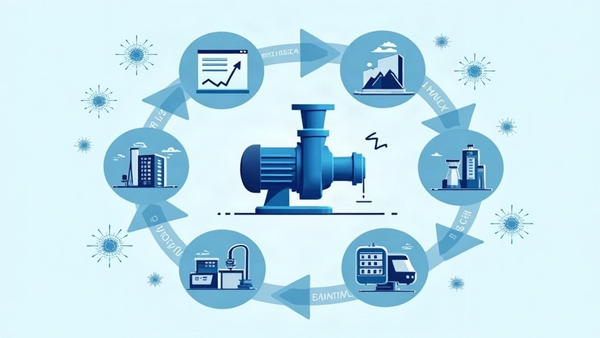
Maximo in the Wild: Industry Case Studies from Utilities, Manufacturing, Oil and Gas, and Transportation
Real-world Maximo implementations across four major industries, with measurable outcomes, lessons learned, and patterns that can be replicated in your organization.


Introduction
Enterprise Asset Management is not a theoretical discipline. It is the practical art of keeping critical infrastructure running, production lines moving, and operations safe. And no two industries approach it the same way. A utility managing 10,000 distribution transformers faces fundamentally different challenges than a manufacturer running a high-speed packaging line, an oil and gas operator maintaining offshore platforms, or an airport keeping passenger operations flowing.
What makes Maximo Application Suite powerful is not just its feature set -- it is the platform's ability to adapt to these diverse operational contexts while providing a common foundation for asset management best practices. The 2026 MaximoWorld Awards and recent industry conferences have highlighted a wave of implementations that demonstrate what is possible when organizations combine Maximo's capabilities with industry-specific domain expertise.
This article examines real-world Maximo implementations across four major industries: utilities, manufacturing, oil and gas, and transportation. For each industry, we will look at specific case studies, the problems they solved, the approaches they took, and the measurable outcomes they achieved. These are not theoretical scenarios -- they are implementations that have been recognized by the Maximo community and validated by operational results.
The patterns that emerge from these case studies are instructive. While each industry has unique requirements, the successful implementations share common characteristics: strong executive sponsorship, a phased deployment approach, integration with existing operational technology, and a focus on measurable business outcomes rather than technology features.
Utilities: From Reactive to Predictive at Scale
The utility sector has been one of the earliest and most enthusiastic adopters of Maximo's advanced capabilities. The reasons are clear: utilities manage long-lived, geographically distributed assets where failure consequences range from expensive to catastrophic. A transformer failure can cost over a million dollars in replacement costs alone, not counting the regulatory penalties and customer impact of an extended outage.
Case Study: Evergy's AI-Driven Asset Onboarding
Evergy, a major utility serving 1.6 million customers in Kansas and Missouri, demonstrated what is possible when you combine Maximo with AI-driven data extraction. Working with 1898 and Co., Evergy tackled one of the most persistent challenges in utility asset management: getting accurate asset data from engineering documents into the EAM system.
The problem was familiar to anyone who has worked in utility asset management. Engineering documentation -- P&IDs, one-line diagrams, equipment lists, and DCS I/O files -- contained the detailed asset information needed for accurate maintenance planning. But this data existed in PDFs, scanned documents, and legacy formats. Manual data entry was slow, error-prone, and created a bottleneck that left critical assets undocumented for months after installation.
Evergy's solution combined generative AI, optical character recognition, computer vision, and semantic parsing to extract structured data from these engineering documents automatically. The system read P&IDs to identify equipment and their interconnections, extracted nameplate data from scanned equipment lists, and populated Maximo asset records with accurate, validated information.
The results were transformative. Asset onboarding time dropped from weeks to days. Data accuracy improved dramatically because the AI system eliminated transcription errors. And the structured data foundation enabled more accurate condition-based maintenance programs, because asset records now contained the detailed specifications needed for predictive models.
Case Study: East Kentucky Power Cooperative's Reliability Transformation
East Kentucky Power Cooperative (EKPC) was shortlisted for a 2026 MaximoWorld Award for their asset management transformation program. EKPC, a generation and transmission cooperative serving 1.1 million people across Kentucky, took a disciplined approach to pairing process improvement with Maximo capabilities.
EKPC's approach was notable for its focus on fundamentals. Rather than jumping directly to predictive analytics, they first established rigorous data governance, standardized work processes, and built a culture of reliability. Maximo was the enabler, not the driver. The cooperative implemented standardized failure coding, consistent work order practices, and closed-loop corrective action processes before layering on advanced capabilities.
The results demonstrated the power of getting the basics right. Equipment reliability improved measurably, maintenance costs decreased as work was better targeted, and the organization built the data foundation needed for future AI and predictive initiatives. EKPC's experience reinforces an important lesson: advanced analytics are only as good as the data they consume, and building quality data requires process discipline.
Patterns for Utility Success
Several patterns emerge from utility implementations. First, the integration of engineering and operational data is critical. Utilities generate enormous amounts of data from SCADA systems, protection relays, dissolved gas analysis, and inspection programs. The organizations that succeed are those that break down the silos between engineering, operations, and maintenance data.
Second, phased deployment works. The most successful utility implementations start with a focused scope -- a single substation, a specific asset class, or one geographic region -- prove the value, and then expand. This approach builds organizational confidence and allows the team to refine processes before scaling.
Third, the integration of condition monitoring data with maintenance workflows is the highest-value use case. Utilities that connect their SCADA and condition monitoring systems to Maximo, enabling automatic work order creation when parameters exceed thresholds, see the fastest return on investment.
Manufacturing: Reducing Unplanned Downtime Through Predictive Maintenance
Manufacturing organizations face a different set of challenges. Production lines operate on tight schedules where every minute of unplanned downtime costs thousands of dollars in lost output. The margin for error is thin, and the pressure to maintain overall equipment effectiveness (OEE) is constant.
Case Study: Food Manufacturer's Predictive Maintenance Journey
A food manufacturer's experience with Maximo Predict illustrates the potential of AI-driven maintenance in manufacturing. The company operated multiple production lines running 24/7, with planned maintenance windows limited to weekends. Unplanned downtime was their biggest operational cost, and bearing failures on rotating equipment were the most common cause.
The manufacturer deployed Maximo Predict on their critical rotating equipment: pumps, fans, blowers, and compressors. The models used vibration data from Maximo Monitor, combined with work order history from Maximo Manage, to predict failure probability within a 30-day window. When the probability exceeded 65%, the system triggered an inspection work order.
The results were immediate and measurable. Unplanned pump failures dropped by 40% in the first six months. The plant manager noted a pattern they called "the weekend bearing" -- bearing failures that consistently occurred on Friday nights when weekend production ramped up. Predict could see the degradation trend days before the failure, giving the maintenance team time to schedule replacement during the Friday afternoon changeover.
The manufacturer expanded the program to include motor winding degradation prediction, conveyor belt wear monitoring, and packaging machine jam prediction. Each use case followed the same pattern: identify the failure mode, collect the relevant data, train the model, and trigger action when the probability threshold was exceeded.
Case Study: Pharmaceutical Line Stop Prevention
A pharmaceutical manufacturer took a different approach, focusing on production line stops rather than individual asset failures. Their analysis revealed that 60% of unplanned line stops were preceded by detectable cycle time variance 4 to 8 hours before the actual stop. The variance was too small for operators to notice but was a reliable leading indicator of impending failure.
The manufacturer deployed cycle time monitoring across their packaging lines, feeding data into Maximo Monitor. When cycle time variance exceeded a threshold, the system flagged the station for operator inspection during the next scheduled break. This proactive approach reduced unplanned line stops by 25% and improved OEE by 8 percentage points.
Manufacturing Implementation Patterns
Manufacturing implementations share several success patterns. The most important is starting with a specific, measurable problem. "Reduce unplanned downtime on Line 3" is a better starting point than "implement predictive maintenance." The focused approach makes it easier to measure results and build the business case for expansion.
The second pattern is the importance of failure coding discipline. Predictive models require historical failure data, and that data is only useful if failures are coded consistently. Manufacturers that invest in standardized failure coding before deploying predictive analytics see significantly better model accuracy.
The third pattern is the integration of production scheduling with maintenance planning. The most effective manufacturing implementations don't just predict failures -- they predict failures in the context of production schedules, enabling maintenance to be performed during planned changeovers rather than requiring additional downtime.
Oil and Gas: Safety, Compliance, and Remote Operations
Oil and gas operations present some of the most demanding asset management challenges. Assets are often in remote or hazardous locations, regulatory compliance is stringent, and the consequences of failure can be catastrophic. Maximo implementations in this sector must address safety, environmental compliance, and operational reliability simultaneously.
Case Study: TAQA North's Safety Operations Transformation
TAQA North, a top 15 oil and gas producer in Western Canada producing 78,000 barrels of oil equivalent per day, faced a common challenge in the industry: limited access to critical systems in remote field locations. Their existing health, safety, and environment (HSE) tracking system was outdated and disconnected from their maintenance operations.
TAQA North implemented Maximo with EZMaxMobile by Naviam to provide field workers with mobile access to work orders, safety procedures, and asset information. The mobile solution was designed for the harsh operating conditions of Western Canada's oil fields, where connectivity is intermittent and temperatures range from extreme cold to extreme heat.
The results went beyond operational efficiency. By giving field workers access to up-to-date safety procedures and enabling real-time incident reporting, TAQA North reduced site risks and saw fewer safety incidents. Documentation that previously took days to complete and submit was now done in real-time from the field, improving both safety and compliance.
Case Study: Summit Midstream's Asset Management Overhaul
Summit Midstream, a midstream energy company, embarked on a major initiative to identify areas for improvement in their asset management system. Working with Cohesive Solutions, they created a roadmap for current and future success while building a culture of reliability and trust.
The project, presented at MaximoWorld 2026, focused on the fundamentals: standardizing work processes, improving data quality, and building the organizational capability to sustain improvements. Summit's approach recognized that technology alone does not transform asset management -- it requires changes in processes, skills, and culture.
Case Study: ONEOK's OpenShift Bootcamp
ONEOK, one of North America's largest diversified energy infrastructure companies, took a different approach to their Maximo journey. Working with Red Hat and Cohesive Solutions, ONEOK conducted a hands-on OpenShift bootcamp designed to sharpen their team's expertise in the containerized platform that underpins MAS. This investment in team capability recognized that the shift to MAS is not just an application upgrade -- it is a platform transformation that requires new skills in container management, Kubernetes orchestration, and cloud-native operations.
Oil and Gas Implementation Patterns
Oil and gas implementations emphasize safety and compliance as primary drivers. The most successful deployments integrate safety procedures directly into work management workflows, ensuring that hazard assessments, permit-to-work processes, and safety checklists are part of every maintenance task.
Remote operations capability is another critical pattern. Field workers in oil and gas often operate in locations with limited connectivity. Mobile solutions that support offline operation, with synchronization when connectivity is available, are essential for adoption.
The third pattern is the integration of integrity management with maintenance management. Pipeline integrity, pressure vessel inspection, and corrosion management programs must be tightly integrated with the work management system to ensure that integrity findings result in timely corrective actions.
Transportation: Keeping Complex Operations Moving
Transportation organizations manage diverse asset portfolios -- aircraft, trains, vehicles, infrastructure, and facilities -- often across multiple geographic locations. The challenge is maintaining high availability while managing lifecycle costs across these diverse asset types.
Case Study: Edmonton International Airport's Mobile Transformation
Edmonton International Airport (YEG) demonstrated the power of mobile Maximo in a complex facility environment. In a large airport, technicians and asset teams need real-time data on the go to ensure smooth operations across terminals, runways, baggage systems, and support facilities.
YEG rolled out Maximo Mobile to give technicians access to work orders, asset information, and inspection checklists from their mobile devices. The implementation faced the typical challenges of a complex facility: multiple stakeholder groups, diverse asset types, and the need to maintain operations 24/7 during the rollout.
The benefits were substantial. Technicians could access work order details, asset history, and parts information without returning to a central office. Inspection data was captured digitally, eliminating paper forms and the associated data entry errors. Response times to maintenance requests improved as dispatchers could see technician availability and location in real-time.
Case Study: Denver International Airport's Platform Mastery
Denver International Airport (DEN) was recognized at the 2026 Maximo User Choice Awards for Platform MAStery -- demonstrating how complex, mission-critical operations can thrive on the Maximo platform. DEN, one of the busiest airports in the world, manages a vast portfolio of assets including baggage handling systems, HVAC, electrical systems, escalators, and airfield lighting.
DEN's approach was to make Maximo the central platform for all facility and infrastructure management, integrating with building management systems, security systems, and financial systems. The result was a single source of truth for asset information that eliminated the data silos that plague many large facilities.
Transportation Implementation Patterns
Transportation implementations succeed when they focus on integration. Airports, rail systems, and transit authorities typically have dozens of operational systems -- building management, security, ticketing, and financial systems. The organizations that get the most value from Maximo are those that make it the integration hub for all asset-related data.
Mobile capability is not optional in transportation. Technicians in large facilities or across distributed networks need access to information where they work, not back at a desk. The organizations that invest in mobile deployment see higher data quality, faster response times, and better technician satisfaction.
Cross-Industry Lessons and Replicable Patterns
Looking across all four industries, several patterns emerge that any organization can apply regardless of sector. The first is the importance of starting with a clear problem statement. Every successful case study began with a specific operational problem -- slow asset onboarding, high unplanned downtime, safety risks in remote locations, or data silos in complex facilities. The technology was the solution, not the starting point.
The second pattern is the value of phased deployment. No organization in these case studies attempted to transform their entire asset management program at once. They started with a focused scope, proved the value, learned from the experience, and expanded. This approach reduces risk, builds organizational confidence, and creates a template for future phases.
The third pattern is the critical role of data quality. Every organization that achieved significant results invested in data quality before deploying advanced capabilities. Standardized failure codes, accurate asset hierarchies, and complete equipment specifications were prerequisites for success. Organizations that tried to skip this step found their predictive models produced unreliable results.
Practical Implications
The case studies across these four industries reveal common success factors that transcend industry boundaries. First, start with the fundamentals. Every successful implementation invested in data quality, process standardization, and organizational capability before layering on advanced capabilities. The organizations that tried to skip this foundation struggled.
Second, measure what matters. The most successful implementations defined clear, measurable outcomes before they started. "Reduce unplanned downtime by 25%" is a better goal than "implement predictive maintenance." Measurable goals create focus, enable ROI calculation, and build organizational support for continued investment.
Third, integrate early and often. Maximo delivers the most value when it is connected to other operational systems. SCADA, building management systems, ERP, and mobile platforms all amplify Maximo's value when properly integrated.
Fourth, invest in your people. The organizations that succeeded invested in training, change management, and building internal capability. Technology is the enabler, but people execute the processes that deliver results.
The Bottom Line
The diversity of Maximo implementations across utilities, manufacturing, oil and gas, and transportation demonstrates the platform's versatility. But the common patterns are more important than the differences. Successful implementations start with fundamentals, measure outcomes, integrate systems, and build organizational capability.
The 2026 MaximoWorld Awards and User Choice Awards have highlighted a new generation of implementations that combine traditional EAM excellence with AI, mobile, and integration capabilities. These are not science projects -- they are production systems delivering measurable business value. The patterns they have established are available for any organization to follow.