MaximoWorld 2026 (Aug 17-20 Nashville), TechXchange (Oct 26-29 Atlanta), and the Q3-Q4 Community Calendar: A Practitioner's Guide
A practitioner's guide to the Q3 and Q4 2026 Maximo community events, with session recommendations, the MaximoWorld 2026 agenda highlights, the regional Maximo User Group calendar, and how to make the most of the IBM TechXchange conference as a Maximo attendee.

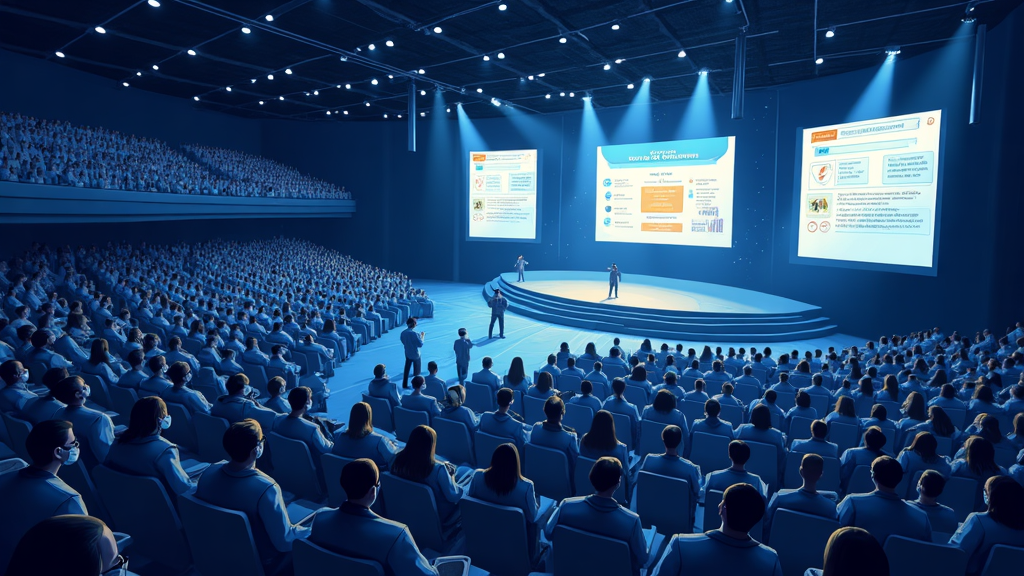
The Maximo community calendar for the second half of 2026 is the densest it has been in at least five years. Three flagship events anchor the calendar: MaximoWorld 2026 at the Gaylord Opryland Resort in Nashville (August 17-20), the Asset Management & Innovation Conference at St. Louis Union Station (September 14-17), and IBM TechXchange 2026 in Atlanta (October 26-29). Around those three flagships, more than fifteen regional Maximo User Group (MUG) meetings, Maximo Utility Working Group (MUWG) sessions, and international Maximo Live events fill the calendar from July through December. For practitioners, the question is not whether to attend; it is how to allocate the limited travel budget across the three flagships, how to choose between overlapping MUG sessions, and how to extract maximum value from each event.
This article walks the Q3-Q4 2026 calendar with the precision a senior practitioner needs: the dates, venues, registration windows, the session recommendations that match specific operational roles, the network-building opportunities that justify the travel investment, and the pre-event preparation that determines whether an event is a one-day experience or a four-day deep dive.
MaximoWorld 2026: Nashville, August 17-20
MaximoWorld 2026 is the flagship Maximo practitioner conference, hosted at the Gaylord Opryland Resort and Convention Center (2800 Opryland Drive, Nashville, TN 37214). The event runs from August 17 through August 20, with the standard four-day format: Monday is workshop day, Tuesday and Wednesday are the main conference with keynotes and breakout sessions, Thursday is the final day with additional workshops and the closing session.
The MaximoWorld 2026 agenda is built around four tracks: Implementation and Upgrades, Reliability and APM, Mobile and Field Service, and AI and Innovation. The Implementation and Upgrades track is the most relevant for sites approaching a MAS 9.1 deployment or upgrade; the session recommendations for this track include the MAS 9.1.18 post-mortem (covering the Kafka CVE-2026-35554 fix and the Monitor security bundle), the Maximo 7.6 to MAS 9 upgrade deep dive, and the OpenShift 4.18 sizing and capacity planning workshop.
The Reliability and APM track is the most relevant for sites operating or deploying Maximo Health and Predict; the session recommendations include the Condition Insight in production workshop (covering the 90-day rollout pattern), the reliability-centered maintenance strategy session, and the Maximo Predict model retraining workshop.
The Mobile and Field Service track is the most relevant for sites operating or deploying Maximo Mobile; the session recommendations include the MX-Edge architecture deep dive, the offline-first field service deployment workshop, and the Maximo Mobile 9.1 meter reading restructure session.
The AI and Innovation track is the most relevant for sites approaching the Maximo AI Assistant or watsonx Orchestrate deployments; the session recommendations include the active prompting workshop, the agent operations discipline session, and the AI Service AppPoint economics deep dive.
The registration cost for MaximoWorld 2026 is in the USD 1,500-2,500 range for the full four-day conference, depending on the registration window. Early registration (before June 30) typically saves USD 200-400. The hotel block at the Gaylord Opryland fills quickly; the recommended pattern is to book the hotel and the conference registration at the same time, no later than mid-July.
Asset Management & Innovation Conference: St. Louis, September 14-17
The Asset Management & Innovation Conference at St. Louis Union Station Hotel (1820 Market Street, St. Louis, MO 63103) is a newer event that has grown in prominence over the last two years. The conference is positioned as a more focused event than MaximoWorld, with a stronger emphasis on the practical implementation of asset management strategies. The session format is heavier on workshops and lighter on keynotes, which makes it the better choice for practitioners who prefer hands-on learning over presentation-style sessions.
The conference covers Maximo, IBM Envizi, IBM TRIRIGA, and the broader IBM asset management portfolio. For Maximo practitioners, the relevant tracks are the MAS 9.1 implementation track, the AI in asset management track, and the sustainability and ESG track. The sustainability track is a new addition in 2026 and is positioned as a complement to the existing reliability and APM tracks.
The registration cost is in the USD 1,200-1,800 range, which is slightly lower than MaximoWorld. The September timing (after MaximoWorld, before TechXchange) makes the Asset Management & Innovation Conference a good choice for practitioners who want to attend two of the three flagships without the time commitment of all three.
IBM TechXchange 2026: Atlanta, October 26-29
IBM TechXchange 2026 is the broader IBM technical conference, covering the full IBM software portfolio (watsonx, Maximo, Instana, Turbonomic, Guardium, QRadar, etc.). The Maximo track within TechXchange is significant but is one of many tracks at the conference. For practitioners whose organizations have broader IBM software footprints, TechXchange is the better value because the single registration covers access to all of the IBM tracks.
The Maximo track at TechXchange 2026 typically includes 30-40 sessions across the four days, with a mix of IBM-led sessions, customer-led case studies, and partner-led technical deep dives. The customer-led case studies are the highest-value sessions for practitioners because they offer a peer perspective on real-world deployments.
The TechXchange registration cost is in the USD 2,000-3,000 range, depending on the registration window and the inclusion of workshops. Early registration (before August 31) typically saves USD 300-500.
The Atlanta venue for TechXchange 2026 is still TBD as of June 2026, but the conference is typically held at a major convention center (the 2024 event was at the Mandalay Bay in Las Vegas, and the 2025 event was in Orlando). The Atlanta venue will be confirmed by mid-July 2026.
Regional Maximo User Groups: The Backbone of the Community
The regional Maximo User Groups (MUGs) are the backbone of the Maximo community, with active chapters across the United States, Canada, Europe, and the Asia-Pacific region. The Q3-Q4 2026 calendar includes:
Florida Maximo User Group 2026 Annual Meeting. October 2026, exact dates TBD. The Florida MUG is one of the largest regional chapters, with meetings that typically draw 100-150 attendees. The October meeting is the annual flagship event.
Maximo Utility Working Group Fall 2026 Conference. September 2026, exact dates TBD. The MUWG is the utilities-focused Maximo user group, with a strong concentration of investor-owned utility and public power utility practitioners.
Carolinas Maximo User Group 2026 Annual Meeting. October 2026, Charleston, South Carolina. The Carolinas MUG has been one of the most active regional chapters, with meetings that include hands-on workshops and customer-led case studies.
Greater Atlanta Maximo User Group. Recurring meetings throughout the year, with the 2026 Annual Meeting held on May 19 in Suwanee, Georgia (already past).
Northeast Maximo User Group. Recurring meetings throughout the year, with the 2026 Spring Meeting held on May 7-8 in Long Island City, New York (already past). The Fall Meeting is expected in October or November 2026.
Maximo Live 2026. Melbourne, Australia, June 14-15 (already past). Maximo Live is the Australian Maximo conference, hosted annually. The 2026 theme was "Maximising MAS."
For practitioners who cannot attend the three flagship events, the regional MUGs offer a more accessible alternative. The MUG meetings are typically free or low-cost (USD 50-200 for a full day), the travel is regional rather than national, and the format is more interactive than the flagship conferences.
International Maximo Community
The international Maximo community is organized around regional conferences and user groups. The major international events in Q3-Q4 2026 include:
Maximo Live 2026. Melbourne, Australia (already past in June 2026). The Australian Maximo community is one of the most active international chapters.
Maximo UK User Group. Quarterly meetings in the UK, with the Fall 2026 meeting expected in October or November.
Maximo Brasil User Group. Annual conference, typically held in Sao Paulo. The 2026 conference dates have not been finalized as of June 2026.
Maximo India User Group. Quarterly meetings in India, with a strong concentration of practitioners from the utilities, manufacturing, and transportation verticals.
Maximo BeNeLux User Group. Quarterly meetings in Belgium, Netherlands, and Luxembourg, with a strong focus on the European Union regulatory environment.
For practitioners outside North America, the regional MUGs offer the most accessible community engagement. The international MUGs often partner with the North American MUGs to share session content, which means the Q3-Q4 2026 calendar includes a steady stream of cross-regional content.
Pre-Event Preparation: The Four-Step Pattern
The pre-event preparation pattern that consistently delivers the highest return on the conference investment is a four-step process:
Step 1: Set three learning objectives. Before registering for any event, identify the three specific operational challenges that the event should help address. The objectives should be measurable (e.g., "identify a reference architecture for the MAS 9.1 OSLC adapter pattern that I can adapt for our lifecycle collaboration use case") rather than vague ("learn about MAS 9.1").
Step 2: Build the session plan. Review the conference agenda when it is published (typically 4-6 weeks before the event) and identify the sessions that map to the three learning objectives. The recommended pattern is to select 3-5 primary sessions and 3-5 backup sessions, with the backup sessions covering adjacent topics that might be relevant.
Step 3: Identify the people to meet. Review the conference attendee list (typically published 1-2 weeks before the event) and identify the 5-10 specific people you want to meet. The attendees include IBM product managers, IBM Champions, partner consultants, and fellow practitioners. The most valuable connections are typically the IBM Champions, who are recognized community experts and who often have deep operational experience.
Step 4: Schedule the meetings in advance. Reach out to the identified people 2-3 weeks before the event and schedule specific meeting times. The conference format makes it difficult to have meaningful conversations in the session rooms; the meaningful conversations happen in the hallways, at the networking events, and at the meals. The pre-scheduled meetings ensure that you have dedicated time with the people who matter most.
The IBM Champion Program
The IBM Champion program is the recognition program for the most active and influential members of the IBM technical community. The 2026 IBM Champions were announced in February 2026, and the list includes approximately 50 Maximo-focused Champions globally. The Champions are practitioners, consultants, and educators who contribute to the community through blog posts, conference sessions, user group leadership, and direct engagement with IBM product teams.
For practitioners attending the Q3-Q4 2026 events, the IBM Champions are the most valuable people to connect with. The Champions have deep operational experience, they have direct relationships with the IBM product teams, and they often have early visibility into upcoming product capabilities.
The Champions are typically easy to identify at conferences because they wear distinctive Champion ribbons on their badges. The recommended pattern is to make a point of meeting at least 3-5 Champions at each event.
Session Recommendations by Role
The session recommendations vary by operational role. For practitioners approaching the conference calendar, the role-based recommendations below are the starting point for building the session plan.
For Maximo Administrators. The most relevant sessions are the MAS 9.1.18 post-mortem, the cron task tuning deep dive, the BIRT reporting patterns session, and the OpenShift 4.18 sizing and capacity planning workshop. The pre-event preparation should focus on the specific operational challenges in the practitioner's environment, with the conference sessions providing reference architectures and lessons learned.
For Reliability Engineers. The most relevant sessions are the Condition Insight in production workshop, the reliability-centered maintenance strategy session, the Maximo Predict model retraining workshop, and the AI Service AppPoint economics deep dive. The pre-event preparation should focus on the specific reliability challenges in the practitioner's environment, with the conference sessions providing the patterns for the 90-day rollout and the contributor configuration.
For Field Service Managers. The most relevant sessions are the MX-Edge architecture deep dive, the offline-first field service deployment workshop, and the Maximo Mobile 9.1 meter reading restructure session. The pre-event preparation should focus on the specific field service challenges in the practitioner's environment, with the conference sessions providing the patterns for the connectivity profile and the device fleet management.
For Integration Architects. The most relevant sessions are the OSLC adapter pattern deep dive, the OIDC SSO configuration session, and the Kafka hardening workshop. The pre-event preparation should focus on the specific integration challenges in the practitioner's environment, with the conference sessions providing the patterns for the decision tree and the CVE-2026-35554 fix.
For AI Engineers. The most relevant sessions are the active prompting workshop, the agent operations discipline session, and the multi-agent architecture pattern deep dive. The pre-event preparation should focus on the specific AI challenges in the practitioner's environment, with the conference sessions providing the patterns for the active prompting loop and the agent operations configuration.
Post-Event Follow-Up: The Often-Skipped Step
The post-event follow-up is the step that determines whether the conference attendance translates into operational improvement. The recommended pattern is to schedule a one-hour debrief meeting within two weeks of the event, attended by all practitioners who attended the conference, and structured around three questions: (1) what did we learn that changes our plans, (2) what connections did we make that we should follow up on, and (3) what is the next action item from each session or meeting.
The post-event follow-up pattern should be scheduled before the event itself, not after. The event itself is a poor time to schedule the follow-up because the practitioners are tired and the post-event calendar fills up quickly.
The deliverables from the post-event follow-up are: (1) a one-page summary of the key takeaways, (2) a list of follow-up actions with assigned owners and due dates, and (3) a list of connections to follow up on with specific next steps. The summary should be shared with the broader team, the actions should be tracked in the team's project management system, and the connections should be followed up on within one month of the event.
The MaximoWorld Virtual Pre-Event Series
MaximoWorld 2026 is running a virtual pre-event series in the four weeks leading up to the conference, with weekly webinars covering the key topics that will be explored in depth at the conference. The pre-event webinars are free and open to anyone, regardless of conference registration. The topics for 2026 include: the MAS 9.1.18 patch overview (July 23), the Maximo Health Condition Insight deep dive (July 30), the MX-Edge architecture overview (August 6), and the AI Service active prompting workshop (August 13).
For practitioners who cannot attend the conference in person, the pre-event series is a low-cost way to engage with the content. The webinars are recorded and made available on-demand after the live session.
Practical Implications
For practitioners planning the Q3-Q4 2026 calendar, the recommended pattern depends on the travel budget and the operational priorities. The three flagship events (MaximoWorld, AMIC, TechXchange) are each valuable, but attending all three requires a significant time and budget commitment. The recommended prioritization is: MaximoWorld 2026 first (the highest-value Maximo-specific event), IBM TechXchange 2026 second (the broadest IBM technical event), and AMIC 2026 third (the most focused asset management event).
For practitioners who can attend only one event, MaximoWorld 2026 is the recommended choice because of the Maximo-specific focus, the high concentration of Maximo practitioners, and the four-day format that allows for deep engagement.
For practitioners who cannot attend any of the three flagships, the regional MUGs offer a more accessible alternative. The regional MUGs are particularly valuable for the network-building opportunities, which often lead to longer-term professional relationships than the flagship events.
For practitioners approaching a MAS 9.1 deployment or upgrade, the pre-event preparation is particularly important. The session recommendations and the people-to-meet lists should be built around the specific deployment challenges, and the time after the event should be reserved for following up on the connections and implementing the lessons learned.
Bottom Line
The Q3-Q4 2026 Maximo community calendar is the densest it has been in at least five years. The three flagship events (MaximoWorld 2026 in Nashville, AMIC 2026 in St. Louis, TechXchange 2026 in Atlanta) anchor the calendar, with more than fifteen regional MUG and international events filling the gaps. For practitioners, the key to extracting maximum value from the calendar is the pre-event preparation: setting three learning objectives, building a session plan, identifying the people to meet, and scheduling the meetings in advance.
For sites planning the second half of 2026, the recommended pattern is to send at least two practitioners to MaximoWorld 2026 (one operational, one technical), allocate time for follow-up after the event, and use the lessons learned to inform the MAS 9.1 deployment or upgrade plan. Sites that follow this pattern consistently see a measurable improvement in their operational practices and a stronger connection to the broader Maximo community.