Maximo APM in 2026: From Reactive Maintenance to AI-Driven Reliability with Condition Insight
IBM's Maximo APM stack in 2026 integrates Health, Predict, Monitor, and the new Condition Insight AI capability into a closed-loop process from condition monitoring to work order execution. This guide covers the full stack, how the pieces connect, and what it takes to operationalize APM in a…


The APM Stack in MAS 9.2: What Each Application Does and How They Connect
The Maximo APM stack in 2026 is the closest the industry has come to closing the gap between asset performance management and maintenance execution. The MAS 9.x architecture integrates APM capabilities directly with the EAM application (Manage), creating a closed-loop process from condition monitoring to work order execution. The introduction of Maximo Condition Insight in late 2025, and its maturation through MAS 9.2 in June 2026, adds an agentic AI layer that interprets asset data and recommends corrective actions in natural language.
The APM stack consists of five integrated applications that work together to move maintenance organizations from reactive to predictive:
Maximo Monitor is the IoT data ingestion layer. It connects to sensors and control systems through 1,600+ pre-configured device partners, ingesting time-series data (vibration, temperature, pressure, flow, voltage, current) into the MAS platform. Monitor provides real-time dashboards, anomaly detection, and alerting. It is the data foundation for the rest of the APM stack.
Maximo Health is the asset condition scoring layer. It takes data from Manage (work order history, failure codes, meter readings), Monitor (sensor data, alerts), and asset master data (criticality, priority, age) to calculate a health score for each asset. The health score is a 0-100 value that represents the current condition of the asset relative to its expected performance. Health also calculates criticality scores and risk scores, which together drive maintenance prioritization.
Maximo Predict is the failure prediction layer. It uses AI and machine learning to forecast asset failures before they occur. Predict analyzes historical failure data from Manage and sensor data from Monitor to build predictive models that estimate days to failure, probability of failure, and likely failure mode. These predictions feed into work queues in Manage, so that maintenance planners can schedule interventions before failures occur.
Maximo Condition Insight is the AI interpretation layer. Introduced in late 2025 and matured through 9.2, it is an agentic AI capability that interprets asset data across the APM stack to explain asset condition and recommend corrective actions. Powered by IBM watsonx, Condition Insight evaluates work orders, metrics, time-series data, meter readings, FMEA data, and alerts to produce a clear, explainable summary of asset condition with recommended actions in plain language.
Maximo Reliability Strategies provides the RCM methodology layer. It includes a built-in FMEA library covering 800 asset types and 58,000 failure modes, and it connects failure modes to job plans and PMs. Reliability Strategies is where the reliability engineering work happens: identifying failure modes, assessing risk, and defining the maintenance actions that address those failures.
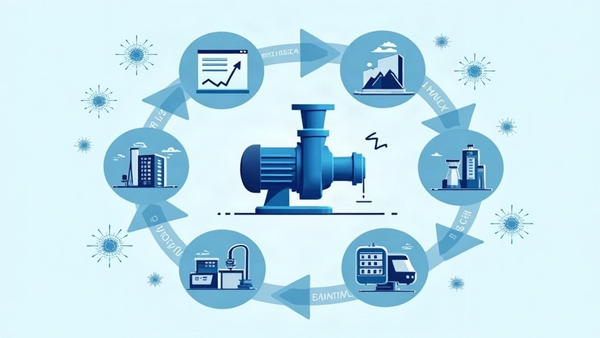
The connection between these applications is what makes the APM stack work. Monitor detects an anomaly in a vibration sensor. Health recalculates the asset health score based on the anomaly. Predict updates the failure probability based on the new sensor data. Condition Insight interprets the combined data and recommends a corrective action. The recommendation generates a work order in Manage. The work order is linked to the failure mode in the Reliability Strategy. When the work is completed, the results feed back into Health and Predict, updating the models. This is the closed-loop process that distinguishes APM from standalone condition monitoring.
Maximo Health: Asset Scoring, Criticality, and Risk
Maximo Health is the entry point for most APM programs. It provides asset health scoring, asset criticality scoring, and risk scoring, all driven by the data that already lives in Manage. The scoring methodology is transparent and configurable, which is important for organizations that need to explain their maintenance prioritization decisions to auditors and regulators.
The health score is calculated from multiple factors:
- Number of open service requests and corrective work orders
- Remaining useful life (based on historical failure patterns)
- Chronological age as a proportion of expected life
- Meter readings and condition monitoring data
- Inspection results and their scores
Each factor has a weight that is configurable. The default weights are based on IBM's research across thousands of asset types, but organizations can adjust them based on their own operational experience. The health score is recalculated on a schedule (daily, weekly, or monthly depending on the asset criticality and data volume).
Criticality scoring is separate from health scoring. Criticality is an intrinsic property of the asset: how important is this asset to the business operation? It is based on factors like production impact, safety risk, environmental impact, and replacement cost. An asset can be in perfect health (high health score) but highly critical (high criticality score), which means it should be monitored closely even though it is not currently failing.
Risk is the combination of health and criticality. The risk score is calculated as ((100 - health) / 100) * criticality. This means a low-health, high-criticality asset has the highest risk, and a high-health, low-criticality asset has the lowest. The risk score drives the prioritization of maintenance work: high-risk assets are scheduled first, and low-risk assets may be allowed to run to failure if the maintenance budget is constrained.
Health provides dashboards with matrix views (health vs. criticality), automated analysis, work history drill-down, and sensor data visualization. The Work Queue Manager in Manage can display health-based work queues, so planners can see which assets need attention based on declining health scores. This is the operational link between APM and EAM: the health score is not just a dashboard metric, it drives actual work order generation.
Maximo Predict: AI-Driven Failure Forecasting
Maximo Predict is where AI moves from descriptive analytics (what is happening now) to predictive analytics (what will happen next). Predict uses machine learning models to forecast asset failures, estimating days to failure, probability of failure, and likely failure mode for each asset in a prediction group.
The prediction process works as follows. You create prediction groups, which are sets of similar assets (e.g., all centrifugal pumps at Site A). You work with a data scientist (or use Predict's built-in model templates) to train a prediction model on historical failure data for that group. The model analyzes patterns in sensor data (from Monitor), work order history (from Manage), and asset characteristics to identify the conditions that precede failures.
Once a model is trained and deployed, Predict generates predictions for each asset in the group. The predictions include:
- Current failure probability (0-100%)
- Estimated days to failure
- Likely failure mode (based on historical patterns)
- Confidence interval (how certain the model is about the prediction)
These predictions are displayed in the asset's Predictions section and can be pushed to work queues in Manage. A high probability of failure within the next 30 days generates a high-priority work queue entry, prompting the planner to schedule an inspection or preventive maintenance action.
Predict also supports anomaly detection models that identify unusual patterns in sensor data without requiring historical failure data. These models learn the normal operating pattern for an asset and flag deviations. This is useful for new assets or asset types where historical failure data is sparse, as it allows you to start monitoring condition even before you have enough data to build a failure prediction model.
The quality of predictions depends on data quality. Predict needs clean, consistent failure data with accurate failure codes and dates. It needs continuous sensor data from Monitor. And it needs a sufficient volume of historical data to train reliable models. Organizations starting APM programs often begin with anomaly detection (which requires less historical data) and move to failure prediction as they accumulate failure history.
Maximo Condition Insight: Agentic AI for Asset Interpretation
Maximo Condition Insight is the most significant AI capability in MAS 9.x for APM. Introduced in late 2025 and matured through 9.2, it is an agentic AI capability that interprets asset data across the APM stack to explain asset condition and recommend corrective actions. Powered by IBM watsonx, Condition Insight evaluates work orders, metrics, time-series data, meter readings, FMEA data, and alerts to produce a clear, explainable summary of asset condition with recommended actions.
The key innovation is the agentic approach. Instead of a simple dashboard or alert, Condition Insight acts as an AI agent that can query multiple data sources, correlate findings, and produce a narrative explanation. For example, for a pump showing increasing vibration in Monitor, Condition Insight might produce a report like:
"Asset P-1001 is showing increasing vibration on the drive-end bearing over the past 14 days. Vibration velocity has increased from 2.1 mm/s to 4.8 mm/s, approaching the ISO 10816 alarm threshold of 5.0 mm/s. The last work order on this asset was a bearing replacement 8 months ago. The FMEA library identifies bearing degradation as a high-severity failure mode for this pump type. Recommended action: Schedule a vibration analysis inspection within 7 days. If the bearing is confirmed degraded, initiate a bearing replacement work order using job plan JP-BEARING-001."
This level of interpretation is what separates Condition Insight from traditional analytics. It does not just flag an alert. It provides context (last work order, FMEA data, threshold comparison) and a specific recommendation (inspect within 7 days, use this job plan). The reliability engineer reviews the recommendation and decides whether to act on it.
Condition Insight works across the APM stack. It pulls data from Monitor (sensor readings, alerts), Health (health score, criticality), Predict (failure probability, days to failure), Manage (work order history, failure codes), and Reliability Strategies (FMEA data, linked job plans). The AI agent orchestrates these queries and synthesizes the results into a coherent narrative.
The configuration of Condition Insight involves defining which data sources the agent can access, setting up the watsonx model parameters, and configuring the recommendation templates. The system supports customization of the recommendation logic, so organizations can tailor the recommendations to their maintenance practices and risk tolerance.
Reliability Strategies: From FMEA to PM Generation
Maximo Reliability Strategies closes the loop from risk assessment to maintenance execution. The built-in FMEA library, covering 800 asset types and 58,000 failure modes, provides a starting point that most organizations can use immediately. For each asset type, the library identifies the likely failure modes, their effects, their severity, and recommended maintenance actions.
The process of creating a reliability strategy is:
- Select an asset type or asset group
- The system populates failure modes from the FMEA library
- Review and adjust severity, occurrence, and detection ratings (the RPN calculation)
- Link job plans to each failure mode (the maintenance action that addresses that failure)
- Set the review frequency and PM generation schedule
- Activate the strategy
When the strategy is active, it generates PM work orders based on the defined schedule. Each PM is linked to the specific failure modes it addresses, creating an audit trail from risk assessment through maintenance execution. This is the core of RCM methodology: every PM has a documented reason for existing, tied to an identified failure mode with a known effect and severity.
The FMEA Builder Assistant, added in 9.1, uses AI to suggest failure modes for assets not covered by the built-in library. This is useful for specialized equipment (custom machinery, proprietary designs) where the standard library does not apply. The assistant analyzes the asset description, class, and historical failure data to suggest potential failure modes, which are then reviewed by a reliability engineer before being added to the strategy.
Operationalizing APM: What It Takes to Make It Work
Deploying the Maximo APM stack is not a software installation project. It is an operational transformation that requires data, people, and process changes. Organizations that succeed with APM share certain characteristics:
Data quality is foundational. Health scoring requires accurate asset master data (installation dates, criticality ratings, expected life). Predict requires clean failure history (accurate failure codes, consistent date recording). Monitor requires properly configured sensors with calibrated data feeds. If the data is messy, the APM outputs will be unreliable, and users will lose trust in the system.
Reliability engineering capability is essential. The APM stack provides tools, but it does not replace the need for reliability engineers who can interpret results, validate models, and make maintenance strategy decisions. Organizations without dedicated reliability engineering staff should plan to either hire or train this capability before deploying Predict and Condition Insight.
Start with Health, expand to Predict, then add Condition Insight. A phased approach works best. Start with Health, which uses data you already have in Manage. Get health scoring working and validated. Use the health-based work queues to drive maintenance prioritization. Then add Monitor for assets where condition data is available. Then add Predict for asset types with sufficient failure history. Finally, enable Condition Insight to get the AI-driven interpretation layer.
Sensor deployment is often the bottleneck. Monitor requires physical sensors on assets, connected through IoT gateways or directly to the MAS platform. This is a capital expenditure and an engineering project. Prioritize sensor deployment on high-criticality assets where condition monitoring has the highest ROI. Do not try to instrument everything at once.
Practical Implications
The Maximo APM stack in 2026 is a credible platform for moving from reactive to predictive maintenance. The integration between APM applications and Manage creates a closed-loop process that has been the goal of asset performance management for years. The addition of Condition Insight with agentic AI brings interpretation and recommendation capabilities that were not previously available in any EAM/APM platform.
However, the technology is only as good as the data and the people behind it. Organizations that invest in data quality, reliability engineering capability, and sensor infrastructure will see significant returns. Organizations that deploy the software without these foundations will get dashboards that nobody trusts and predictions that nobody acts on.
The phased approach (Health first, then Monitor, then Predict, then Condition Insight) is the proven path. Each phase delivers value on its own, and each phase builds the foundation for the next. Trying to deploy everything at once typically results in partial implementation, user frustration, and a stalled APM program.
Bottom Line
Maximo APM in 2026 is the most integrated, capable asset performance management platform available, and it is the only one that combines full EAM and APM in a single suite. Health provides the scoring. Predict provides the forecasting. Monitor provides the data. Condition Insight provides the AI-driven interpretation. Reliability Strategies provides the methodology. Together, they form a closed-loop process from condition monitoring through maintenance execution to feedback and model improvement. For organizations serious about moving from reactive to predictive maintenance, the MAS 9.2 APM stack is the platform to build on. But the technology is only the starting point. The real work is in data quality, reliability engineering, and the operational discipline to act on what the system tells you.