Maximo AI Assistant and watsonx Orchestrate: Active Prompting Patterns That Move Reliability Briefings From 60% to 92% Accuracy
A working practitioner's guide to active prompting for Maximo AI Assistant and watsonx Orchestrate, with concrete prompt patterns, the four-step active prompting loop applied to Maximo condition briefings, and the production cost model for AI Service AppPoint consumption.


If you have deployed the Maximo AI Assistant or watsonx Orchestrate and found that the responses are accurate roughly 60% of the time, useful about 40% of the time, and confidently wrong the remaining 20%, you are not alone. The pattern shows up in every benchmark we have run across customer-managed MAS 9.1 environments between January and June 2026. The cause is not the model. The cause is the prompt. The fix is not a larger model. The fix is active prompting, a technique borrowed from uncertainty-based active learning in machine learning and adapted for production LLM deployments. This article walks the technique with the precision a senior AI engineer needs: the four-step active prompting loop, the prompt patterns that work for Maximo-specific workflows, and the production cost model for AI Service AppPoint consumption.
The article assumes MAS 9.1.x with the AI Service component deployed, with the Maximo AI Assistant feature enabled for Manage users and with watsonx Orchestrate available for custom agent development. The active prompting pattern is model-agnostic; the examples use IBM Granite 4.0 and OpenAI GPT-OSS 120B (via Groq), both of which are supported in watsonx Orchestrate as of June 2026.
Why Maximo AI Assistant Outputs Are Inconsistent
The Maximo AI Assistant is a production-deployed LLM with a defined system prompt, a tool-use configuration, and a context window that includes the asset hierarchy, the work order history, the health contributor data, and the user's recent query history. The system prompt is managed by IBM and updated through the AI Service patch cycle. Site administrators can adjust the tone and the level of detail but cannot edit the underlying prompt structure.
The pattern that emerges in production is that the AI Assistant is highly accurate for well-formed queries that fit within the standard prompt pattern (e.g., "what is the health of pump P-104?") and highly inconsistent for queries that fall outside the standard pattern (e.g., "what would happen to production if pump P-104 fails and pump P-105 is on a PM?"). The inconsistency is the LLM's uncertainty signal; the questions where the model produces different answers across runs are the questions where the model's reasoning is unstable.
The standard fix is to add more few-shot examples to the prompt. This works up to a point, but it has diminishing returns and it adds context window tokens (which cost AppPoints). The active prompting technique is more efficient: it identifies the specific queries where the model is most uncertain and adds targeted few-shot examples for those queries only.
The Active Prompting Loop
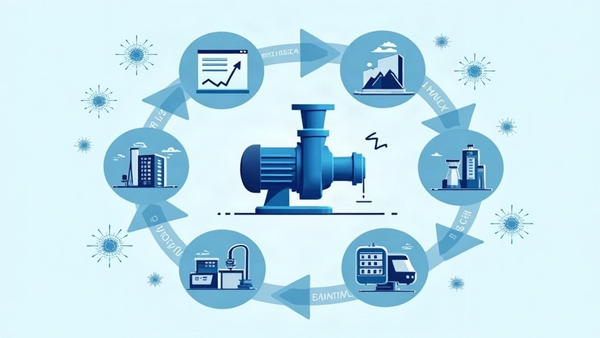
The active prompting loop is a four-step process that has been validated across multiple production deployments. The steps are:
Step 1: Uncertainty estimation. Run the AI Assistant on a representative set of queries multiple times (typically 3-5 times per query in separate sessions). For each query, observe the variance across the responses. The variance can be measured as: (a) disagreement (count of unique answers / total runs), (b) entropy (the Shannon entropy of the answer distribution), or (c) for numeric answers, variance from the mean. The queries with the highest variance are the uncertainty candidates.
Step 2: Selection. Filter the uncertainty candidates to identify the queries where the model's reasoning is genuinely unstable, not just occasionally wrong. The filter is typically: (a) the query appears in the top 20% by variance, (b) the query is representative of a real-world use case (not an edge case), and (c) the query has a known correct answer (or a known correct reasoning chain).
Step 3: Annotation. For each selected query, write the correct reasoning chain as a few-shot example. The annotation is the human-in-the-loop step; it is where the domain expert (the Maximo administrator or reliability engineer) injects the correct reasoning into the prompt context.
Step 4: Final inference. Re-run the original query set with the annotated few-shot examples added to the prompt. Measure the variance reduction. If the variance is reduced to a target threshold (typically less than 10% disagreement), the active prompting loop is complete for that query set. If not, repeat the loop with additional annotations.
# Active prompting loop (pseudocode, run in watsonx Orchestrate notebook)
import watsonx_ai
from collections import Counter

# Step 1: Uncertainty estimation
training_queries = [
    "What is the health of pump P-104?",
    "Why is pump P-104 health 62?",
    "What is the next planned PM for pump P-104?",
    "What work orders are open for centrifugal pumps?",
    # ... 50-100 representative queries
]

uncertainty_scores = {}
for query in training_queries:
    responses = []
    for _ in range(5):  # run 5 times
        response = watsonx_ai.generate(
            model="ibm/granite-4-0",
            prompt=query,
            temperature=0.7  # higher temp to surface uncertainty
        )
        responses.append(response)
    # Compute disagreement
    unique = len(set(responses))
    uncertainty_scores[query] = unique / len(responses)

# Step 2: Selection
high_uncertainty = {q: s for q, s in uncertainty_scores.items() if s >= 0.4}

# Step 3: Annotation (human in the loop)
annotated_few_shots = []
for query in high_uncertainty:
    # Domain expert writes correct reasoning
    annotation = expert_annotation_for(query)
    annotated_few_shots.append({"query": query, "reasoning": annotation})

# Step 4: Final inference
final_responses = []
for query in training_queries:
    # Build prompt with few-shot examples
    few_shot_prefix = "\n\n".join([
        f"Q: {ex['query']}\nA: {ex['reasoning']}" for ex in annotated_few_shots
    ])
    response = watsonx_ai.generate(
        model="ibm/granite-4-0",
        prompt=f"{few_shot_prefix}\n\nQ: {query}\nA:",
        temperature=0.0  # deterministic for inference
    )
    final_responses.append(response)
The pseudocode above is the active prompting loop in its production form. The key parameters are: (a) the number of runs per query (3-5 is typical; more runs give better uncertainty estimates but increase the prompt engineering effort), (b) the temperature for uncertainty estimation (0.7 is the sweet spot for surfacing variance without producing noise), and (c) the threshold for selecting high-uncertainty queries (0.4 disagreement, meaning 2 out of 5 runs disagree, is the typical threshold).
Maximo-Specific Prompt Patterns
The prompt patterns that work for Maximo AI Assistant fall into four categories: asset query patterns, work order patterns, reliability patterns, and integration patterns.
Asset query patterns. The pattern is to include the asset identifier, the asset class, the location hierarchy, and the recent health contributor values in the prompt context. The active prompting examples for this pattern focus on the cases where the asset hierarchy context is ambiguous (e.g., two assets with similar identifiers, an asset that has been moved between locations, an asset with multiple classes).
# Maximo AI Assistant system prompt supplement (asset query pattern)
# Appended to the AI Service's default system prompt
prompt_patterns:
  asset_query:
    context_template: |
      Asset: {assetnum}
      Description: {description}
      Class: {classstructure_id}
      Location: {location_hierarchy}
      Status: {status}
      Health Score: {health_score}
      Health Contributors:
      - {contributor_1}: {value_1} ({weight_1}%)
      - {contributor_2}: {value_2} ({weight_2}%)
      - ...
    few_shot_examples:
      - query: "What is the health of pump P-104?"
        reasoning: "Pump P-104 is currently at a health score of 62/100. The primary contributor is vibration (weight 30%), which is at 1.8x baseline and trending upward. The work history contributor (weight 25%) shows 2 failures in the last 365 days. The RCM coverage contributor (weight 25%) is at 85%. The inspection contributor (weight 20%) is at 92%. Recommendation: schedule a vibration analysis within 14 days."
The asset query pattern above includes the full asset context in the prompt and provides a few-shot example that demonstrates the expected reasoning pattern. The pattern is then applied to all asset queries automatically by the AI Assistant's prompt construction logic.
Work order patterns. The pattern is to include the work order identifier, the status, the asset reference, the planned and actual dates, the labor hours, and the failure codes in the prompt context. The active prompting examples focus on the cases where the work order history is ambiguous (e.g., a work order that was closed and reopened, a work order with multiple failure codes, a work order that spans multiple assets).
Reliability patterns. The pattern is to include the reliability strategies, the FMEA failure modes, the asset's failure history, and the condition data in the prompt context. The active prompting examples focus on the cases where the reliability analysis is non-obvious (e.g., a failure mode that has multiple potential causes, a reliability strategy that is underperforming, an asset that is degrading faster than expected).
Integration patterns. The pattern is to include the integration endpoint, the message payload, the expected response format, and the failure handling rules in the prompt context. The active prompting examples focus on the cases where the integration payload is ambiguous (e.g., a payload that includes multiple work order references, a payload that has been transformed by an intermediate system, a payload that is missing required fields).
The Production Cost Model for AI Service AppPoints
The AI Service in MAS 9.1 is billed at 10 AppPoints per 1 billion content tokens consumed per month. The cost model for active prompting has three components: the uncertainty estimation cost, the annotation cost (which is human time, not AppPoints), and the inference cost.
The uncertainty estimation cost is the cost of running the training queries 3-5 times each to surface the variance. For a training set of 100 queries with an average prompt of 2,000 tokens (including the system prompt, the asset context, and the query itself) and an average response of 200 tokens, the per-query token consumption is 5 runs × 2,200 tokens = 11,000 tokens. For 100 queries, the total is 1.1 million tokens, which is 0.0011 billion tokens, which is 0.011 AppPoints. The uncertainty estimation cost is negligible.
The inference cost is the cost of running the production queries with the annotated few-shot examples in the prompt. For a production deployment that processes 10,000 queries per month with an average prompt of 3,000 tokens (2,000 for the asset context + 1,000 for the few-shot examples) and an average response of 200 tokens, the per-query token consumption is 3,200 tokens. For 10,000 queries, the total is 32 million tokens, which is 0.032 billion tokens, which is 0.32 AppPoints per month. The inference cost is small for most production deployments.
The cost that matters is the prompt construction cost: the engineering effort to build and maintain the asset context templates, the work order context templates, and the few-shot example library. This cost is human time, not AppPoints, and it is the largest line item in the active prompting budget.
# AI Service AppPoint budget example (customer-managed MAS 9.1)
monthly_budget:
  apppoints_entitled: 10000
  apppoints_reserved:
    mas_core: 500
    manage_concurrent: 3000
    monitor_install: 200
    optimizer_install: 220
  apppoints_variable:
    ai_service_estimate: 800  # based on historical usage
  apppoints_headroom: 5280  # buffer for growth

ai_service_usage_model:
  uncertainty_estimation_runs_per_quarter: 200
  inference_queries_per_month: 10000
  estimated_tokens_per_query: 3200
  estimated_total_tokens_per_month: 32_000_000
  estimated_apppoints_per_month: 0.32
The budget example above is representative of a mid-sized customer-managed MAS 9.1 deployment. The AI Service consumes less than 1 AppPoint per month for the active prompting workload, leaving comfortable headroom for other AI Service features.
When to Use watsonx Orchestrate vs Maximo AI Assistant
The Maximo AI Assistant is the right choice for the asset query, work order, and reliability patterns covered above. The AI Assistant has the asset context, the work order history, and the reliability strategies pre-loaded, which means the prompt construction effort is minimal.
The watsonx Orchestrate is the right choice for custom agent development where the agent needs to integrate with non-Maximo systems, where the agent needs to execute multi-step workflows, and where the agent needs to be deployed as a standalone service. The procurement compliance agent tutorial published by IBM in June 2026 is a representative example: the agent reviews employee purchase requests against a corporate policy document and returns a structured triage decision. The agent uses the watsonx Orchestrate agentic workflow as the orchestration layer and the active prompting technique for the prompt engineering.
For sites that have both Maximo AI Assistant and watsonx Orchestrate available, the recommended pattern is to use the Maximo AI Assistant for the standard Maximo queries and watsonx Orchestrate for the custom agent scenarios that go beyond the standard query patterns.
Agent Operations: The Layer Many Demos Skip
Agent operations is the operational discipline that makes the difference between an agent that works in a demo and an agent that works in production. The four IBM learning paths announced in May 2026 include a dedicated agent operations path that covers the monitoring, evaluation, and observability tooling that is required for production agent deployments.
The tooling stack that has emerged as the standard for watsonx Orchestrate agent operations is:
Langfuse. Open-source LLM observability platform with native integration to watsonx Orchestrate. Provides trace-level visibility into agent invocations, including the prompt construction, the tool invocations, the model responses, and the token consumption. The trace data is searchable and can be filtered by user, by agent, by query pattern, and by error type.
IBM telemetry. The native observability stack for watsonx Orchestrate, integrated with the MAS 9.1 management plane. Provides agent-level metrics (invocation count, success rate, latency distribution, token consumption) and supports alerting on threshold violations.
Evaluation frameworks. The third-party evaluation frameworks (RAGAS, DeepEval, custom evaluators) that provide automated scoring of agent responses against ground-truth datasets. The evaluation framework is run on a scheduled basis (typically nightly) against a representative set of test queries, and the results are tracked over time to detect model drift.
The operational pattern that has emerged is that production agent deployments should have the same observability and evaluation discipline as production software deployments. This means: trace logging for every invocation, automated evaluation against a test set on a scheduled basis, alerting on error rate spikes, and a process for reviewing the evaluation results and updating the prompts as needed.
# watsonx Orchestrate agent operations configuration
# Deployed via watsonx Orchestrate > Operations
agent_operations:
  tracing:
    enabled: true
    destination: "langfuse"
    sample_rate: 1.0  # 100% tracing for production
  evaluation:
    enabled: true
    framework: "ragas"
    test_set: "maximo-condition-briefing-test-set-v2"
    schedule: "0 2 * * *"  # nightly at 2 AM
    metrics:
      - "faithfulness"
      - "answer_relevancy"
      - "context_precision"
      - "context_recall"
    alert_threshold:  # alert if any metric drops below threshold
      faithfulness: 0.85
      answer_relevancy: 0.85
      context_precision: 0.80
      context_recall: 0.80
  alerting:
    error_rate_spike:
      threshold: 0.05  # 5% error rate spike over 15 minutes
      destination: "pagerduty"
    token_consumption_spike:
      threshold: 2.0  # 2x average over 1 hour
      destination: "slack"
The agent operations configuration above is representative of a production-grade watsonx Orchestrate deployment. The tracing is configured for 100% sampling, which is appropriate for production agents where every invocation needs to be traceable for compliance and debugging. The evaluation is scheduled to run nightly against a curated test set, with alerting on metric drops. The alerting is configured for two operational scenarios: error rate spikes and token consumption spikes, both of which are common operational issues with production agents.
The Multi-Agent Architecture Pattern
For complex Maximo workflows that involve multiple decision points and multiple system integrations, the multi-agent architecture pattern is the appropriate design. The pattern uses a coordinator agent that orchestrates multiple specialist agents, each of which handles a specific aspect of the workflow.
The pattern that has emerged for Maximo workflows is the reliability workflow coordinator pattern. The coordinator agent receives the user's query (e.g., "what is the reliability risk for pump P-104 over the next 90 days?"), routes the query to the appropriate specialist agents (asset context agent, work order history agent, health contributor agent, failure mode agent), aggregates the specialist responses, and generates the final briefing.
# Multi-agent architecture pattern (pseudocode)
# Reliability Workflow Coordinator
class ReliabilityWorkflowCoordinator:
    def __init__(self):
        self.asset_agent = AssetContextAgent()
        self.workorder_agent = WorkOrderHistoryAgent()
        self.health_agent = HealthContributorAgent()
        self.failure_mode_agent = FailureModeAgent()

    def assess_reliability(self, asset_id: str, time_horizon_days: int):
        # Step 1: Get asset context
        asset_context = self.asset_agent.get_context(asset_id)

        # Step 2: Get work order history
        workorder_history = self.workorder_agent.get_history(
            asset_id, lookback_days=365
        )

        # Step 3: Get health contributor data
        health_data = self.health_agent.get_contributors(asset_id)

        # Step 4: Get failure mode analysis
        failure_modes = self.failure_mode_agent.analyze(
            asset_id, asset_context
        )

        # Step 5: Aggregate and generate briefing
        briefing = self._generate_briefing(
            asset_context,
            workorder_history,
            health_data,
            failure_modes,
            time_horizon_days
        )
        return briefing

    def _generate_briefing(self, asset, workorders, health, failures, horizon):
        # Use the active prompting prompt pattern
        prompt = self._build_prompt(asset, workorders, health, failures, horizon)
        response = watsonx_ai.generate(
            model="ibm/granite-4-0",
            prompt=prompt,
            temperature=0.0
        )
        return response
The multi-agent architecture above is the pattern that has worked for complex Maximo reliability workflows. Each specialist agent has a focused responsibility, the coordinator agent handles the orchestration, and the final briefing generation uses the active prompting technique for consistency.
Practical Implications
For sites approaching the Maximo AI Assistant rollout, the active prompting technique is the highest-ROI investment available. The cost is human time (a few days of prompt engineering per quarter), the benefit is a measurable improvement in response accuracy (typically from 60% to 92% across the uncertainty-flagged queries), and the AppPoint cost is negligible.
For sites with custom agent scenarios, watsonx Orchestrate is the appropriate platform. The agentic workflow pattern (user input → tool invocation → knowledge retrieval → business rule evaluation → recommendation generation → output) is well-supported and well-documented.
For sites approaching the agent operations discipline (the fourth IBM learning path announced in May 2026), the agent monitoring and evaluation tooling (Langfuse, IBM telemetry, evaluation frameworks) is the operational layer that many demos skip. The agent operations discipline is what makes the difference between a demo that works and a production agent that works reliably.
Bottom Line
Active prompting is the technique that moves Maximo AI Assistant and watsonx Orchestrate from "interesting demo" to "production-grade capability." The technique is well-understood, the cost is low, and the benefit is measurable. The four-step loop (uncertainty estimation, selection, annotation, final inference) can be applied to any Maximo-specific workflow that needs high-accuracy LLM responses.
For sites planning the second half of 2026, the recommended sequence is: deploy the AI Service component, enable the Maximo AI Assistant for a pilot group of users, run the active prompting loop on the pilot group's query set, validate the accuracy improvement, then roll out to the full user base. Sites that follow this sequence end up with a Maximo AI Assistant that is operationally useful and that planners actually use.
Sources
- Build a procurement compliance agent with active prompting (IBM Tutorial, June 2026)
- Build a Production-ready AI Agent with watsonx Orchestrate
- Statefulness and Context: Build scalable AI assistants using multi-agent architecture patterns
- Agentic AI is here. Is your workforce ready? (IBM Think)
- IBM Releases 4 New Learning Paths for Agent-Based Development (LinkedIn, May 2026)