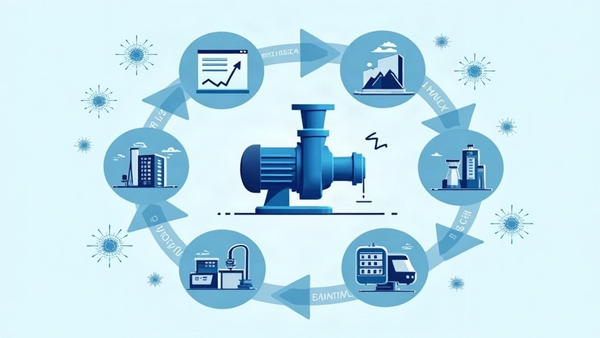
Maximo Across Industries: Real-World Lessons from Utilities, Oil & Gas, Transportation, and Manufacturing
Maximo is the EAM of choice across the asset-intensive economy. This article examines real implementations at New York Power Authority, NCRTC, Toyota, Sandvik, and TAQA North, and extracts the cross-industry patterns that separate successful deployments from stalled ones.


Maximo Across Industries: Real-World Lessons from Utilities, Oil & Gas, Transportation, and Manufacturing
If you have ever wondered whether Maximo is still relevant in 2026, the answer is hiding in plain sight on the IBM case studies page. New York Power Authority runs 60,000 generation and transmission assets on it. Toyota's Indiana Assembly uses it to power predictive maintenance on a vehicle production line. NCRTC uses it to coordinate maintenance across India's Regional Rapid Transit System. Sandvik uses it to connect assets and teams in mining and rock processing operations, both online and offline. The pattern is consistent: in any industry where physical assets are expensive, critical, and worth maintaining, Maximo is somewhere in the stack.
But the case studies are not all the same story. The challenges a utility faces are different from the challenges a transit authority face, which are different again from the challenges a brewery or a mining operation face. This article walks through the major industry verticals where Maximo is deployed at scale, summarizes how leading organizations are using the platform, and extracts the cross-industry patterns that separate successful deployments from the ones that stall out.
Why Maximo Fits the Asset-Intensive Economy
Maximo's longevity in the EAM market is not an accident. The platform was built for asset-intensive operations, and the industries that have the most assets, the highest cost of failure, and the most stringent regulatory requirements tend to be the same ones that show up on every Maximo reference list. Utilities, oil and gas, transportation, manufacturing, defense, facilities, and public infrastructure all share three characteristics: physical assets that are expensive to replace, downtime that costs real money, and regulatory bodies that require audit trails for everything.
The 2026 version of Maximo, delivered as the Maximo Application Suite, addresses all three of those concerns. Reliability engineering and predictive maintenance are now first-class capabilities, not bolt-on modules. The Maximo Integration Framework and the new JSON API handle the ERP, IoT, and field service connections that asset-intensive operations need. Industry-specific configurations, like Maximo for Oil and Gas, Maximo for Transportation, and Maximo for Utilities, provide pre-built workflows, screens, and data models that compress implementation timelines from years to months.
The case studies IBM publishes, and the ones that third-party Maximo partners like Naviam publish, show a consistent pattern of measurable outcomes. Spendrups Bryggeri, a Swedish brewery, supports EUR 380 million in annual revenue with a Maximo-driven shift from schedule-based to condition-based maintenance. TAQA North, a top 15 oil and gas producer in Western Canada producing 78,000 barrels of oil per day, reduced site risks and improved safety incident reporting after a mobile-enabled Maximo deployment. The numbers are not just marketing. They reflect a platform that has been refined over decades for exactly these use cases.
Utilities: Power Generation, Transmission, and Water
Utilities are Maximo's home turf. The platform was originally built at Project Software & Development (PSDI) in the 1980s for the power industry, and the utility vertical remains the largest Maximo user base. Electric utilities, water utilities, and gas utilities all share the same fundamental problem: a network of physical assets that must be kept running reliably for decades, in a heavily regulated environment, with capital constraints that force every maintenance dollar to be justified.
The New York Power Authority (NYPA) case study is one of the most comprehensive public examples. NYPA is the largest state public power organization in the United States, and its leadership set a goal of becoming the nation's first fully digital public power utility. The asset base is enormous: approximately 60,000 power generation and transmission assets, with associated work processes, inspection schedules, and compliance requirements. Before Maximo consolidation, NYPA's Fleet Department used a separate, standalone system for vehicle management, which prevented cross-organizational visibility. The migration to Maximo for Transportation, integrated with the existing SAP ERP, unified the asset view and made fleet vehicles visible alongside generation and transmission assets.
The technical pattern in utilities is consistent. Maximo is the system of record for asset hierarchy, location, and work history. SCADA, OSIsoft PI, and other operational historians feed real-time data into Maximo via the integration layer. Work orders, inspections, and preventive maintenance schedules are managed in Maximo, with field execution handled by Maximo Mobile. Health, Predict, and Reliability modules layer predictive analytics on top of the historical work data. The result is a closed loop where asset condition drives maintenance planning, and maintenance outcomes feed back into the asset record.
For water utilities, the pattern is similar but with different regulatory drivers. The EPA's Lead and Copper Rule Revisions, the America's Water Infrastructure Act, and state-level requirements around asset management plans all require utilities to demonstrate rigorous asset stewardship. Maximo's audit trail, document management, and inspection capabilities directly support these requirements. Several large water utilities have used Maximo to build the kind of asset management plans that satisfy consent decrees and rate cases.
Oil and Gas: From Upstream Wells to Refineries
The oil and gas industry has a unique set of asset management challenges. Assets are often in remote, harsh environments (offshore platforms, desert pipelines, arctic wells). Failure modes have severe safety and environmental consequences. Regulatory requirements are intense, with overlapping federal, state, and international rules. The cost of unplanned downtime can run into millions of dollars per day on a major platform.
Maximo for Oil and Gas addresses these challenges with specialized health, safety, and environment (HSE) capabilities, role-based start centers for different operational roles, and workflows tuned to industry-standard processes like permit-to-work, lockout/tagout, and management of change. The platform's location hierarchy is flexible enough to model offshore platforms, onshore wells, midstream pipelines, and downstream refineries within a single deployment.
The TAQA North case study is illustrative. TAQA is a top 15 oil and gas producer in Western Canada, producing 78,000 barrels of oil per day across remote sites. The previous HSE system was outdated, and limited site access made safety reporting difficult. By implementing Maximo with a mobile solution (EZMaxMobile, a Naviam accelerator), TAQA achieved broader access to the safety system, faster documentation, and a measurable reduction in safety incidents. The mobile component was the key. Field workers could complete safety observations, near-miss reports, and inspection forms from a tablet or phone, even in areas with limited connectivity. Data was cached locally and synced when the device came back online.
Downstream operators (refineries and petrochemical plants) face a different set of challenges. The asset base is dense, the failure modes are well understood, and the focus is on reliability and energy efficiency. IBM's product blog on downstream asset lifecycle management highlights how Maximo supports the energy transition by enabling operators to manage aging refining assets while integrating new renewable and low-carbon infrastructure. The compliance and inspection management features in Maximo directly support the regulatory reporting that downstream operators face, including OSHA process safety management (PSM), EPA risk management plans (RMP), and various international equivalents.
Transportation: Rail, Airports, and Ports
Transportation is another Maximo stronghold. The asset base is varied: rail cars, locomotives, signaling systems, station infrastructure, runways, taxiways, terminal buildings, bridges, gantry cranes, and more. Failure of any of these assets can have cascading effects on the entire network, and passenger safety is non-negotiable.
NCRTC (National Capital Region Transport Corporation) is the most recent high-profile Maximo transportation case study. NCRTC is implementing the Regional Rapid Transit System (RRTS) in India, a high-speed rail network connecting Delhi with surrounding cities. The deployment covers real-time asset visibility, predictive maintenance, and faster incident response times across the network. The goal is to ensure safety and efficiency while building a scalable foundation for future expansion. Maximo's role here is not just asset management. It is the operational backbone that connects maintenance, operations, and customer-facing service delivery.
For rail operators generally, Maximo handles rolling stock, infrastructure (track, signaling, overhead lines), and station assets within a single asset hierarchy. The maintenance planning capabilities support time-based and usage-based preventive maintenance, which is critical for compliance with FRA regulations in the US and equivalent bodies elsewhere. Maximo Mobile enables field workers to receive work assignments, capture labor and material data, and complete inspections from the field, with offline sync when working in tunnels or remote track sections.
Airports use Maximo to manage runways, taxiways, terminal buildings, baggage handling systems, and airside equipment. The asset hierarchy is complex, with multiple geographic locations (terminal, concourse, gate), multiple functional systems (electrical, mechanical, IT), and multiple stakeholders (airline, ground handler, airport authority). Maximo's location and asset structure handles this well, and the mobile inspection capabilities support the FAA Part 139 airfield inspection requirements in the US and equivalent bodies worldwide.
Ports and maritime operations are an emerging growth area. Container terminals, bulk cargo facilities, and cruise terminals all have similar asset management challenges: gantry cranes, ship-to-shore cranes, yard equipment, and a fixed network of quay infrastructure. Maximo's flexibility allows operators to model port assets alongside the wider transportation network, which is important for intermodal operations.
Manufacturing: Discrete and Process
Manufacturing is the broadest Maximo vertical, and it spans everything from discrete assembly (automotive, electronics) to process manufacturing (chemicals, food and beverage, pharmaceuticals). The asset management priorities vary by sector, but the underlying need is the same: keep production lines running, minimize unplanned downtime, and maintain product quality.
Toyota's Indiana Assembly is a flagship example. The plant uses Maximo Health and Predict to monitor production line equipment, detect anomalies, and schedule maintenance before failures occur. The shift from reactive to predictive maintenance has reduced downtime and defects, which directly translates to throughput and quality improvements on a high-volume assembly line. The integration with IoT sensors on the production equipment, feeding data into Maximo Monitor and then into Health, is the technical backbone of this capability.
For process manufacturers, Maximo's role is somewhat different. The production process is continuous, and the priority is keeping the plant running within tight quality and safety envelopes. Maximo's reliability-centered maintenance (RCM) capabilities, integrated with the process historian, support the kind of condition-based maintenance that process plants need. Inspection management handles the regulatory requirements around pressure vessels, relief valves, and other safety-critical equipment.
Sandvik's deployment illustrates a more recent trend: mobile-enabled Maximo in harsh, distributed environments. Sandvik operates in mining and rock processing, with equipment in remote locations and a workforce that is often in the field rather than at a desk. The mobile solution enables the workforce to connect with assets and teams both online and offline, streamlining maintenance and supporting digital transformation. This kind of deployment is increasingly common in mining, oil and gas, and other extractive industries where field connectivity is limited.
Cross-Industry Patterns: What Successful Deployments Share
Looking across these case studies, several patterns emerge that are independent of the specific industry.
First, successful Maximo deployments treat the platform as a long-term investment, not a one-time project. The implementations that deliver the most value are the ones where the organization commits to a multi-year roadmap, with incremental releases that add capability over time. The ones that stall are usually the ones that try to do everything at once or that treat Maximo as an IT project rather than a business transformation.
Second, the integration layer is always the make-or-break component. Every case study discussed here involves significant integration work, whether with SAP ERP, OSIsoft PI, IoT platforms, or custom-built field service applications. The integrations are where the value is realized, and they are also where most of the project risk lives. Teams that underinvest in integration planning and overinvest in custom Maximo development tend to regret it.
Third, mobile and field enablement are no longer optional. Almost every recent Maximo case study mentions mobile deployment, and the ones that deliver the strongest ROI are the ones that put the platform in the hands of the field workforce. The shift from paper-based or standalone systems to mobile-enabled Maximo is a common starting point for broader digital transformation.
Fourth, data quality is the silent prerequisite. Predictive maintenance, AI-driven insights, and reliability analytics all depend on clean, consistent historical data. Organizations that invest in data quality early, particularly in the asset hierarchy and work order history, get more value out of Maximo Health, Predict, and the AI capabilities. Organizations that try to bolt AI on top of messy data get poor results and lose trust in the platform.
A fifth pattern is increasingly visible: sustainability and energy transition are no longer separate workstreams. The same asset management discipline that drives reliability also drives emissions reduction, energy efficiency, and regulatory reporting. Organizations that frame Maximo as a sustainability platform as much as a maintenance platform tend to attract broader executive sponsorship and unlock larger budgets. The energy transition is creating new asset classes (wind farms, solar arrays, battery storage, hydrogen production) that need the same rigorous asset management as legacy generation, and Maximo is increasingly the system of record for both.
Facilities, Healthcare, and the Public Sector
Outside the heavy-industrial verticals, Maximo has a substantial footprint in facilities management, higher education, healthcare, and government. The use cases are different in scale and complexity, but the underlying platform is the same, and the patterns translate.
Cornell University is a flagship example in higher education. The university manages 180 million square feet of facilities with Maximo, gaining real-time visibility into building systems, improving maintenance efficiency, and supporting long-term sustainability goals across a campus environment that is, in asset management terms, comparable to a small city. The asset base includes HVAC, electrical, plumbing, life safety, and a long tail of specialty systems, all of which need coordinated maintenance and inspection. Maximo's location and asset structure handle the campus hierarchy well, and the mobile inspection capabilities support the kind of high-volume, recurring inspection work that facilities teams manage.
Outfront Media, one of the largest outdoor advertising companies in North America, used Maximo Real Estate and Facilities (formerly IBM TRIRIGA) to digitize lease accounting, improve compliance, and transform manual real estate processes into a connected digital experience. The case study is a good example of how the Maximo family extends beyond traditional EAM into real estate, lease, and workspace management. The integration between the EAM and REFM capabilities is increasingly important as organizations look to consolidate asset, real estate, and facilities data into a single platform.
In healthcare, Maximo deployments typically focus on medical equipment (MRI machines, CT scanners, infusion pumps, sterilizers), facility systems (HVAC, medical gas, power), and the regulatory reporting that comes with Joint Commission accreditation and HIPAA compliance. The asset management challenge is acute: a single MRI machine can cost over a million dollars, and downtime directly impacts patient care. Maximo's preventive maintenance and inspection capabilities support both the operational and the regulatory sides of the equation.
In government and defense, Maximo has a long history. Federal agencies, state and local governments, and defense organizations run Maximo for everything from public works to military installation management. The common thread is the need for rigorous audit trails, compliance with federal acquisition regulations, and the ability to demonstrate that public funds are being spent effectively. Maximo's reporting and documentation capabilities are well suited to these requirements, and the platform's longevity in the public sector is a testament to its fit.
Practical Implications
If you are evaluating Maximo for a new deployment, the first question to ask is whether your industry has a Maximo industry solution (like Maximo for Oil and Gas, Maximo for Transportation, or Maximo for Utilities). Starting from an industry solution typically cuts implementation time by 30 to 50 percent compared to a greenfield build, and it provides a tested data model, workflow set, and integration pattern. Even if you eventually need significant customization, the industry solution gives you a baseline to customize from rather than a blank slate.
If you are an existing Maximo customer thinking about a move to MAS 9, the case studies suggest that the highest-value migration paths are the ones that add mobile, predictive, or industry-specific capabilities. The platform upgrade itself is mostly invisible to end users. The visible value comes from the new capabilities you enable on top of the new platform. A migration plan that does not include at least one new capability as a "compelling event" is going to struggle for executive sponsorship.
For organizations in industries without a dedicated Maximo industry solution (like higher education, healthcare, or facilities management), the standard Maximo Manage configuration usually fits well, often supplemented by a third-party industry accelerator. The general principles are the same: invest in integration, invest in mobile, and invest in data quality.
Bottom Line
Maximo's footprint across the asset-intensive economy is broad and deep. Utilities, oil and gas, transportation, manufacturing, mining, and public infrastructure all run on the platform at scale, and the case studies from these industries show consistent patterns of measurable improvement in reliability, safety, and cost.
The cross-industry lessons are clear. Successful deployments treat Maximo as a long-term investment, prioritize the integration layer, put the platform in the hands of field workers through mobile, and invest in data quality to unlock the predictive and AI capabilities. The industry-specific solutions compress implementation timelines and reduce project risk. The 2026 version of the platform, delivered as Maximo Application Suite, is more capable than any previous release, and the case studies show that organizations that commit to a multi-year roadmap are the ones that realize the most value.
If you are starting a new deployment, learn from the case studies. If you are mid-upgrade, take stock of which patterns you have implemented and which you have not. And if you are evaluating Maximo for the first time, the question is not whether Maximo fits your industry. The question is whether your organization is ready to commit to the kind of long-term, integration-heavy, mobile-first, data-driven transformation that successful Maximo deployments require.