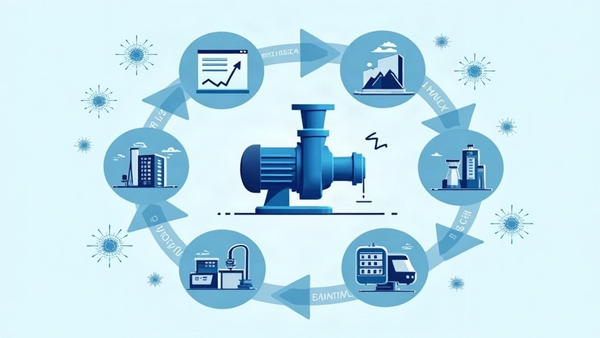
Maximo Condition Insight in MAS 9.2: Turning Asset Data into Maintenance Action
A technical deep dive into Maximo Condition Insight, Alert Insights, RCM Advisor, and Smart Alerts in MAS 9.2, showing how AI turns asset data into prioritized maintenance recommendations.

Maximo Condition Insight in MAS 9.2: Turning Asset Data into Maintenance Action
For decades, asset performance management has suffered from a gap between insight and action. Data piles up in historians, work orders accumulate in CMMS systems, and reliability engineers produce reports that sometimes sit unread. The goal of predictive maintenance is to close that gap, but closing it has required specialized skills, custom integrations, and heroic amounts of manual analysis. MAS 9.2 takes a meaningful step toward making the gap smaller through embedded AI capabilities that bring recommendations directly into the maintenance workflow.
The centerpiece of this shift is Maximo Condition Insight. It combines work order history, meter readings, inspections, failure modes, and reliability strategies to produce a contextual view of asset health and recommend the next action. It is not magic. It does not replace reliability engineers. But it does reduce the time spent collecting and interpreting data, which means engineers can spend more time making decisions and less time assembling spreadsheets.
This article explores Condition Insight and the surrounding APM capabilities in MAS 9.2, including Alert Insights, RCM Advisor, Smart Alerts, and Work Order Automation. We will examine how they work, what data they need, how they fit into existing reliability processes, and what organizations should do before turning them on. The focus is on practical reliability work, not on AI hype.
What Condition Insight Actually Does
Condition Insight is an intelligent agent embedded in the Asset Performance Management module of MAS 9.2. It reads asset-related data across the suite and generates a prioritized summary of health, risk, and recommended actions. The output is designed for humans in a hurry: a reliability engineer looking at a dashboard, a supervisor reviewing the morning work queue, or a maintenance manager preparing for a weekly planning meeting.
The inputs include work order history, both completed and open, meter readings and condition monitoring points, inspection results, FMEA and RCM data, failure mode classifications, and active alerts or notifications. By combining these sources, Condition Insight can identify patterns that might be missed when each source is viewed in isolation. A spike in vibration combined with a recent inspection finding and a history of seal failures is more meaningful than any of those signals alone.
The output includes a condition summary, likely failure modes or degradation patterns, recommended actions ranked by impact and confidence, and links to supporting evidence such as prior work orders or OEM documents. The user remains in control. The AI does not automatically create work orders or override human judgment. It presents a recommendation and lets the organization decide what to do with it.
This design matters because it respects the reality of industrial maintenance. No algorithm can fully capture the context of a plant shutdown window, a parts shortage, or a safety hold. Condition Insight is positioned as a decision support tool, not an autopilot. The value comes from accelerating the early stages of diagnosis so that human expertise can be applied where it matters most.
Alert Insights and the Move from Noise to Context
Alerts have always been a double-edged sword in asset management. They notify teams when something crosses a threshold, but they also generate floods of notifications that obscure the real problems. A single pressure excursion might create one alert. A sensor drift might create another. A downstream blockage might create a third. Without context, each alert looks like a separate emergency.
Alert Insights in MAS 9.2 addresses this by analyzing an alert in context. When an alert fires, the AI examines the asset, its location, related alerts, historical work orders, and the asset's reliability strategy. It then generates a diagnosis of the likely failure mode and recommends prioritized remediation steps. The result is a single, coherent narrative rather than a stream of disconnected notifications.
A common example is a pressure warning on a centrifugal pump. Instead of simply reporting that the pressure is high, Alert Insights might identify the likely cause as a downstream blockage, a stuck relief valve, excessive pump speed, or sensor drift. For each possibility, it suggests inspection steps aligned with the asset's reliability strategy. This allows the maintenance team to act quickly and consistently rather than debating what the alert means.
The benefit is both speed and quality. Experienced engineers might reach the same conclusion eventually, but Alert Insights can get them there faster. Less experienced engineers benefit from a structured starting point that reduces the risk of misdiagnosis. Organizations with high turnover or distributed operations find this especially valuable because it helps preserve and distribute institutional knowledge.
The following table summarizes how Alert Insights changes the response to a common scenario:
| Signal | Traditional Alert | Alert Insights Output |
|---|---|---|
| Pressure high on Pump P-101 | "Pressure exceeds threshold" | Likely causes ranked by confidence, with recommended inspections and linked work history |
| Vibration spike on Motor M-202 | "Vibration alarm" | Correlation with recent alignment work, bearing temperature, and lubrication schedule |
| Temperature rise on Transformer T-05 | "Temperature warning" | Load history, cooling status, similar past events, and recommended diagnostic steps |
This context-rich output transforms alerts from interruptions into starting points for action.
RCM Advisor and the Acceleration of Reliability Strategy
Reliability-centered maintenance is powerful but time-consuming. A traditional RCM study can take months, involving workshops, data gathering, risk scoring, and documentation. The result is a maintenance strategy tailored to the asset, but the effort required means many organizations never complete RCM for all critical assets.
RCM Advisor in MAS 9.2 uses historical data to accelerate this process. It can suggest failure modes, maintenance tasks, intervals, and risk rankings based on the asset's actual performance history and similar assets in the fleet. The output is a draft strategy that reliability engineers can review, adjust, and approve rather than building from a blank page.
This does not eliminate the need for engineering judgment. RCM Advisor proposals should be validated against site-specific conditions, operating context, and safety requirements. An algorithm might miss a known environmental factor or a regulatory constraint that affects task selection. However, starting with a data-informed draft cuts the RCM cycle from months to weeks for many assets.
The practical use case is fleet-wide RCM coverage. A utility with thousands of distribution transformers, a manufacturer with hundreds of pumps, or a rail operator with long rolling stock lists can use RCM Advisor to prioritize which assets need detailed study and to generate initial strategies for the rest. The human team focuses on the highest-risk and most unusual assets while the tool handles the baseline.
A typical RCM Advisor workflow in MAS 9.2 begins with selecting an asset class and a reference reliability strategy. The system analyzes historical failure data, work orders, and inspections for that class and produces a draft. The reliability engineer reviews the draft, adjusts tasks and intervals based on site knowledge, and publishes the strategy. From there, the strategy feeds into Condition Insight and Work Order Automation.
Smart Alerts and Work Order Automation
Smart Alerts add intelligence to threshold-based monitoring. Rather than firing on every excursion, they use context to suppress duplicate or low-priority alerts and to escalate genuine issues. This reduces alert fatigue and ensures that operators and engineers see the notifications that require action.
Work Order Automation connects the insight to execution. When Condition Insight, Alert Insights, or Smart Alerts identifies a maintenance need, the system can generate or update a work order with the appropriate priority, task list, and resource requirements. The exact level of automation is configurable. Some organizations may want the system to draft work orders for human approval. Others may allow automatic creation for low-risk, well-understood failure modes.
The configuration is important. Poorly designed automation can create more noise than it removes. Organizations should start with recommendation mode, where the system suggests actions but does not execute them. After validating the accuracy of recommendations over several weeks or months, they can enable limited automation for specific asset classes and failure modes. Expanding too quickly without validation leads to a backlog of incorrect work orders and erodes trust in the system.
A typical progression might look like this:
| Phase | Condition Insight Mode | Work Order Automation | Scope |
|---|---|---|---|
| 1 | Recommendation only | None | Five critical pumps |
| 2 | Recommendation with confidence scores | Draft only | All pumps at one site |
| 3 | Auto-create low-priority PMs | Approved drafts | Pumps and motors at one site |
| 4 | Full automation for selected failure modes | Auto-create and assign | Critical failure modes only |
This staged approach builds confidence and allows the organization to tune thresholds, task lists, and priorities before increasing automation.
The bridge between insight and action can also be represented as a configuration in Maximo Manage. The following XML snippet shows how a recommended action from Condition Insight might map to a work order template:
<!-- Work order automation rule for Condition Insight recommendation -->
<condition_insight_rule ruleid="CIR-PUMP-SEAL-001"
                        assetclass="PUMP"
                        failuremode="SEAL_LEAKAGE"
                        confidence_threshold="0.75"
                        active="true">
  <trigger source="condition_insight"
           recommendation_type="INSPECT_REPAIR"
           max_age_hours="72"/>
  <workorder_template woclass="WORKORDER"
                      worktype="PDM"
                      wopriority="2"
                      description="Inspect and repair pump seal per Condition Insight"
                      jpnum="PUMP-SEAL-INSP-01"
                      leadtime_hours="24"
                      require_approval="true">
    <assignment personid="RELIABILITY_ENG"
                craft="MECHANIC"
                crew="MAINT-A"/>
  </workorder_template>
  <escalation condition="not_completed_in_hours"
              hours="48"
              notify="SUPERVISOR,PLANNER"/>
</condition_insight_rule>
This rule creates a draft work order when Condition Insight identifies seal leakage risk above a confidence threshold. The work order references a job plan, assigns a crew, and escalates if not completed within a defined window. Approval is required until the organization gains confidence in the recommendation accuracy.
Data Quality and Preparation
The effectiveness of Condition Insight depends heavily on data quality. The AI can only find patterns in data that exists, is accurate, and is well-structured. Organizations with incomplete work histories, inconsistent failure codes, or missing meter readings will receive less useful recommendations.
Before enabling Condition Insight, reliability teams should audit their data. Key questions include whether work orders have consistent failure codes and problem-cause-remedy chains, whether meter readings and condition monitoring data are tied to the right assets, whether FMEA and RCM data is current and aligned with actual operations, whether asset classifications and hierarchies are accurate, and whether alerts and notifications are configured correctly rather than generating false positives.
Data cleanup is not glamorous, but it is the highest-leverage preparation step. An organization with clean data and simple models will outperform one with advanced AI and messy data. This is the unglamorous reality of industrial analytics, and Condition Insight is no exception.
A practical data preparation checklist for a Condition Insight pilot includes the following steps:
- Select a pilot asset class with good historical data, such as pumps or motors.
- Standardize failure codes across the pilot asset class using the organization's taxonomy.
- Validate that at least two years of work order history exist for the pilot assets.
- Confirm that meter readings or condition monitoring points are linked to the assets.
- Review and update FMEA records for the pilot asset class.
- Tune alert thresholds to reduce false positives before enabling Smart Alerts.
- Identify the maintenance tasks and priorities that should appear in recommendations.
- Define the success metrics for the pilot, such as reduction in unplanned downtime or maintenance cost.
- Assign ownership of the pilot to a reliability engineer who can review and refine recommendations.
- Establish a cadence for reviewing accuracy and expanding scope.
Integration with the Maximo Workflow
The real power of Condition Insight comes from its placement inside the Maximo workflow. Recommendations appear in Asset Performance Management, in Maximo Manage, and in mobile contexts where work is created and executed. This proximity to action is what separates Condition Insight from a standalone analytics tool.
A reliability engineer reviewing Condition Insight can escalate a recommendation to a work order without exporting data. A supervisor assigning the day's work can see which assets have declining health scores. A technician in the field can review the AI-generated summary of an asset's condition before starting a job. The insight travels with the work, which increases the chance that it leads to action.
The Model Context Protocol server in MAS 9.2 extends this integration further by allowing external AI agents to interact with Maximo Manage APIs. For organizations building custom agents or using enterprise orchestration tools, this opens possibilities such as an agent that reads Condition Insight summaries, checks parts availability, and proposes a maintenance schedule. The key word is propose. Human approval remains the standard pattern for any action that affects operations.
This integration also supports documentation workflows. Retrieval-augmented generation, or RAG, can ground Condition Insight recommendations in OEM manuals, inspection procedures, and internal standards. When the system recommends a seal inspection, it can also surface the relevant section of the pump manual and the last time that inspection was performed. This makes the recommendation more actionable and defensible.
Governance and Trust
For Condition Insight to succeed, the organization must trust it. Trust is not granted by the vendor; it is earned through governance and verification. Organizations should establish clear ownership of the AI recommendations, define how recommendations are reviewed and approved, and track whether recommended actions lead to the expected outcomes.
A feedback loop is essential. When a reliability engineer accepts or rejects a recommendation, that decision should be recorded. When a work order generated from a recommendation is completed, the result should be compared to the predicted outcome. Over time, this feedback improves the model and helps the organization calibrate its use of automation.
Auditability is also important. Regulated industries and safety-critical operations need to explain why a maintenance action was taken. Condition Insight should provide traceability from the recommendation back to the underlying data and model version. This allows organizations to defend decisions during audits and continuous improvement reviews.
Finally, organizations should avoid treating the AI as a black box. Engineers and maintenance managers should understand what data the model uses, what assumptions it makes, and where its limitations are. This understanding is what allows humans to override the model wisely when the operational context demands it.
Practical Implications
For reliability engineers, Condition Insight changes the daily work from data archaeology to decision support. Less time is spent hunting through screens and spreadsheets. More time is spent evaluating recommendations, updating strategies, and working with operations to prioritize action.
For maintenance managers, the benefit is more consistent and earlier identification of degradation. The AI does not sleep, take vacations, or retire. It continuously reviews asset signals and surfaces the ones that need attention. This helps managers allocate resources more effectively and defend maintenance budgets with evidence.
For organizations with mature asset data, Condition Insight can accelerate a move from time-based to condition-based maintenance. For organizations with immature data, the tool provides a clear incentive to invest in data quality. Either way, the release makes the business case for better reliability data stronger.
Bottom Line
Maximo Condition Insight in MAS 9.2 is a practical evolution of asset performance management. It does not replace reliability expertise, but it makes that expertise more productive by reducing the time spent gathering and interpreting data. Combined with Alert Insights, RCM Advisor, Smart Alerts, and Work Order Automation, it creates a coherent pipeline from data to recommendation to action. The key to success is preparation: clean data, clear governance, staged automation, and human review. Organizations that invest in those foundations will find that Condition Insight delivers on its promise.