Building a Condition-Based Maintenance Program with Maximo APM in MAS 9.2: Monitor, Health, Predict, and Condition Insight
MAS 9.2 integrates APM capabilities directly with the EAM application, creating a closed-loop process from condition monitoring to work order execution. This article covers the full APM stack and provides a practical roadmap for building a condition-based maintenance program that delivers…


Building a Condition-Based Maintenance Program with Maximo APM in MAS 9.2: Monitor, Health, Predict, and Condition Insight
The vision of condition-based maintenance is compelling: instead of fixing assets when they break (reactive) or on a fixed schedule (preventive), you monitor asset condition in real time, predict when failure is likely to occur, and schedule maintenance precisely when it is needed. For decades, this vision has been easier to articulate than to execute. The data was in one system, the work management was in another, and the bridge between them was a spreadsheet and a reliability engineer's best guess. IBM's Maximo APM stack in MAS 9.2 is the closest the industry has come to closing that gap.
This article is a practitioner's guide to building a condition-based maintenance program with Maximo APM in MAS 9.2. We will cover the four applications that make up the APM stack: Monitor for IoT data ingestion, Health for asset condition scoring, Predict for AI-driven failure forecasting, and Condition Insight for AI-driven interpretation and recommendations. We will also cover Reliability Strategies for FMEA and RCM methodology, Visual Inspection for computer vision, and the practical steps for building a CBM program that delivers measurable results. This is not a feature catalog. It is a roadmap for reliability engineers and maintenance managers who need to move from theory to execution.
The APM Stack: Four Applications, One Workflow
The Maximo APM stack is a set of integrated applications that work together to move maintenance organizations from reactive to predictive. The integration is not just marketing. These applications share data models, communicate through the MAS platform, and create a closed-loop process from condition monitoring to work order execution. Understanding how they fit together is the foundation for building a CBM program.
Maximo Monitor is the data ingestion and real-time monitoring layer. It connects to IoT sensors, PLCs, SCADA systems, and other operational data sources through 1,600-plus pre-configured device partners. It ingests time-series data, provides anomaly detection and alerting, and feeds data to Health and Predict for analysis. Monitor is the entry point for real-time asset data, and without it, the rest of the APM stack is working with historical data only.
Maximo Health is the asset condition and risk assessment layer. It takes data from Monitor (real-time sensor data), Manage (maintenance history, failure records, asset attributes), and external sources (inspection reports, environmental data) to calculate asset health scores, criticality ratings, and risk scores. Health is the application that answers the question "which assets need attention right now?" and it does so using a scoring model that is configurable and transparent.
Maximo Predict is the failure prediction layer. It uses AI and machine learning to forecast asset failures before they occur. Predict analyzes historical failure data from Manage and sensor data from Monitor to build predictive models that estimate days to failure, probability of failure, and failure mode. Predict is the application that moves maintenance from proactive to predictive, and it is the one that delivers the most measurable ROI when implemented correctly.
Maximo Condition Insight is the most significant AI capability in MAS 9.x. Introduced in late 2025 and matured through 9.2, it is an agentic AI capability that interprets asset data across the APM stack to explain asset condition, highlight emerging trends, and recommend corrective actions. Condition Insight removes the barrier between the data and the decision. Instead of requiring a reliability engineer to interpret dashboards and charts, Condition Insight analyzes the data and returns a clear, explainable summary of condition, trends, and recommended actions.
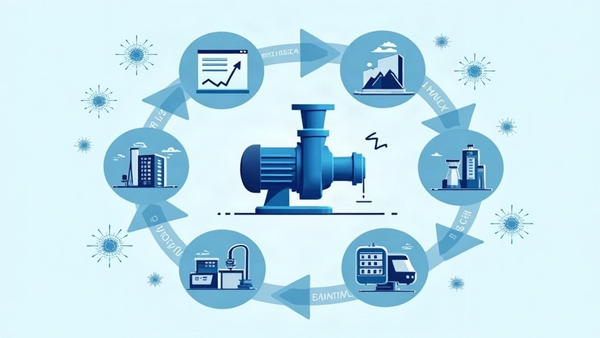
The workflow that connects these four applications is straightforward in concept. Monitor collects sensor data and detects anomalies. Health scores the asset's current condition and criticality. Predict forecasts when failure is likely. Condition Insight interprets the combined data and recommends corrective action. Manage executes the work order that the recommendation generates. The loop is closed: from sensor to score to prediction to recommendation to work order to execution.
Maximo Health: Asset Scoring and Criticality
Maximo Health is the entry point for most APM programs, and it is the application that delivers immediate value without requiring IoT sensors or machine learning models. Health calculates three primary scores for each asset: health (current condition), criticality (business impact of failure), and risk (combination of health and criticality). These scores are available out of the box upon activation, and they cover all assets in the Manage database.
The health score is calculated using a set of default factors that are available immediately upon activation. These factors include the number of open service requests, the number of open corrective work orders, remaining useful life (calculated from asset installation date and expected life), and chronological age as a proportion of expected life. The scoring methodology is transparent and configurable: administrators can adjust the weight of each factor, add custom factors, and define thresholds that trigger alerts.
The criticality score is a normalization of the priority value that is assigned to the asset in Manage. This means that if you have already assigned priority values to your assets (which most Maximo environments have), the criticality score is available immediately without additional configuration. The risk score is calculated as ((100 - health) / 100) * criticality, which combines the current condition with the business impact to produce a single score that prioritizes attention.
The new Asset and Location Dashboard in MAS 9.2 provides a unified view for asset and location performance. It includes matrix views, automated analysis, work history, and drill-down into sensor and inspection data. The dashboard surfaces assets that need attention and corrects missing or inconsistent data automatically. A reliability tab shows failure history (a chronological record of asset or location failures and associated work orders) and total maintenance cost (cumulative maintenance expenses for an asset or location). Clicking on the count of work orders in the failure history opens a dialog with work order details.
The practical value of Health is prioritization. In a typical Maximo environment with tens of thousands of assets, the question "which assets should I focus on this week?" is difficult to answer without a scoring system. Health provides that system, and it does so using data that already exists in Manage. You do not need IoT sensors, predictive models, or data scientists to get started. You need Health activated, priority values assigned, and a willingness to act on the scores.
Maximo Predict: AI-Driven Failure Forecasting
Maximo Predict is where the APM stack moves from scoring to forecasting. Predict uses AI and machine learning to build models that estimate days to failure, probability of failure, and failure mode for individual assets or asset classes. The models are trained on historical failure data from Manage and sensor data from Monitor, and they improve over time as more data becomes available.
The model building process in Predict follows a standard machine learning workflow. First, the training data is assembled: failure records from Manage, sensor data from Monitor, asset attributes from Manage, and any external data sources that are relevant. Second, the model is trained on this data, using algorithms that IBM has selected and tuned for asset failure prediction. Third, the model is validated against a holdout set of historical data to measure its accuracy. Fourth, the model is deployed and begins generating predictions for assets in production.
The output of a Predict model is a set of predictions for each asset: the estimated days to failure, the probability of failure within a given time window, and the most likely failure mode. These predictions are visible in the Manage UI, on the asset record, and in the Operational Dashboard. When a prediction indicates that an asset is likely to fail within a specified time window, the system can automatically generate a work order for preventive maintenance, closing the loop between prediction and action.
The practical challenge with Predict is data quality. Predictive models are only as good as the data they are trained on, and many Maximo environments have incomplete or inconsistent failure data. Failure codes may not be assigned consistently, work order descriptions may be vague, and asset attributes may be missing. Before implementing Predict, organizations should audit their failure data and address any gaps. This is not a technical exercise. It is a data governance exercise that requires engagement from maintenance planners, reliability engineers, and technicians.
Maximo Condition Insight: The Agentic AI Layer
Maximo Condition Insight is the most significant AI capability in MAS 9.x, and it is the feature that most distinguishes 9.2 from earlier releases. Condition Insight is an agentic AI capability that interprets asset data across the APM stack to explain asset condition, highlight emerging trends, and recommend corrective actions. It works in concert with Monitor, Health, Predict, and Manage to deliver a unified, condition-based maintenance approach.
The problem that Condition Insight solves is interpretation. The APM stack generates a lot of data: health scores, risk scores, sensor readings, anomaly alerts, failure predictions, and maintenance history. Making sense of this data requires a reliability engineer who can look at the dashboards, correlate the signals, and decide what to do. This is a skill that is in short supply, and even experienced engineers can only review a limited number of assets per day.
Condition Insight removes that barrier by analyzing asset data in seconds and returning a clear, explainable summary of condition, trends, and recommended actions. The output is not a black-box prediction. It is a narrative explanation that references the specific data points that drove the recommendation, allowing the engineer to validate the reasoning before acting on it. This explainability is critical for adoption, since maintenance teams are understandably cautious about acting on AI recommendations without understanding the basis.
The recommendations from Condition Insight can be reviewed in the Manage UI, where the engineer can accept or reject them. Accepted recommendations can generate work orders automatically, closing the loop between AI-driven analysis and maintenance execution. The work order is created with the recommended action, the asset reference, and the supporting data from Condition Insight, providing the technician with context for the work.
For organizations that are early in their APM journey, Condition Insight provides a way to get value from the APM stack without a full reliability engineering team. For mature organizations, it scales the reliability engineering function by handling the routine analysis, freeing engineers to focus on complex cases that require human judgment.
Reliability Strategies and Visual Inspection
Maximo Reliability Strategies is the application that ties Health, Predict, and Monitor together into a coherent reliability program. It provides pre-built RCM (Reliability-Centered Maintenance) strategies and a built-in FMEA (Failure Mode and Effects Analysis) library that accelerates the development of maintenance strategies for common asset types.
The FMEA library in MAS 9.2 includes pre-built failure modes for common industrial assets: pumps, motors, compressors, heat exchangers, valves, and other equipment classes that are found in most maintenance environments. Each failure mode includes the failure mechanism, the likely causes, the effects, and the recommended maintenance strategy. This library is not a substitute for a site-specific FMEA, but it is a starting point that can reduce the time required to develop a reliability program from months to weeks.
The workflow in Reliability Strategies follows the RCM methodology. First, select the asset or asset class. Second, identify the failure modes (from the FMEA library or custom). Third, assess the criticality of each failure mode (using Health scores). Fourth, select the maintenance strategy for each failure mode (condition-based, preventive, corrective, or run-to-failure). Fifth, implement the strategy in Manage (creating preventive maintenance schedules, condition monitoring points, or inspection routes).
Maximo Visual Inspection adds computer vision to the APM stack. It uses AI-based image analysis to inspect assets visually, identifying defects, wear, and damage that may not be visible to the human eye. Visual Inspection is particularly valuable for inspection of hard-to-reach assets, where sending a technician is expensive or dangerous. A drone equipped with a camera can capture images of an asset, and Visual Inspection can analyze the images to identify corrosion, cracks, or other defects.
A Practical Roadmap for Building a CBM Program
Building a condition-based maintenance program with Maximo APM is not a single project. It is a phased journey that builds capability incrementally, with each phase delivering measurable value. The following roadmap is based on the patterns that successful organizations have followed.
Phase 1: Activate Health and assess your portfolio. Activate Maximo Health and let it calculate default scores for all assets. Review the health, criticality, and risk scores for your top 100 assets. Identify the assets with the lowest health scores and the highest risk scores. These are your first candidates for condition-based maintenance. This phase takes 30 to 60 days and requires no IoT sensors or predictive models.
Phase 2: Clean up failure data and implement Reliability Strategies. Audit your failure code assignments for the top 100 assets. Ensure that failure codes are consistently applied and that work order descriptions provide meaningful information about the failure. Use the FMEA library in Reliability Strategies to define failure modes for these assets and select maintenance strategies. This phase takes 60 to 90 days and requires engagement from maintenance planners and reliability engineers.
Phase 3: Deploy Monitor on critical assets. Select 10 to 20 assets that are candidates for condition-based monitoring and deploy IoT sensors or connect existing SCADA data to Maximo Monitor. Configure anomaly detection thresholds and alerts. Monitor the data for 30 to 60 days to establish baselines and validate that the alerts are meaningful. This phase requires investment in sensors and integration work, and the timeline depends on the complexity of the asset environment.
Phase 4: Build Predict models for high-value assets. Once you have sufficient failure history and sensor data, build Predict models for the assets where you have the most data. Start with one asset class (e.g., centrifugal pumps) and validate the model against known failures. Deploy the model and begin generating predictions. This phase requires data science support, either internal or from an IBM partner.
Phase 5: Enable Condition Insight and close the loop. With Health, Monitor, and Predict all generating data, enable Condition Insight to interpret the combined data and generate recommendations. Review the recommendations with your reliability engineers, validate the reasoning, and accept the ones that make sense. Configure the system to generate work orders from accepted recommendations, closing the loop between AI-driven analysis and maintenance execution.
Practical Implications
The Maximo APM stack in MAS 9.2 is a credible, integrated platform for asset performance management. Health provides the scoring. Predict provides the forecasting. Monitor provides the data. Condition Insight provides the interpretation. Reliability Strategies provides the methodology. Visual Inspection provides the visual analysis. The six together form a workflow that connects the asset, the work, and the performance data in a way that no other Maximo-era platform has done before. The practical implication for maintenance organizations is that the barriers to condition-based maintenance are lower than they have ever been. The data is in one place. The tools are integrated. The AI is explainable. The loop from condition to work order is closed. What remains is the organizational work: data governance, reliability engineering, sensor deployment, and the cultural shift from time-based to condition-based maintenance decisions. The technology is ready. The question is whether the organization is ready to use it.
Bottom Line
MAS 9.2 delivers the most integrated, capable APM platform in the industry. The combination of Health, Predict, Monitor, Condition Insight, Reliability Strategies, and Visual Inspection, all integrated with Maximo Manage, creates a closed-loop process from condition monitoring to work order execution that has not been possible before in a single suite. The phased roadmap, starting with Health activation and building toward Condition Insight, allows organizations to deliver value at each step rather than waiting for a multi-year implementation to complete. The key to success is not the technology, which is proven. It is the data quality, the organizational engagement, and the willingness to act on the insights that the system provides. Start with Health. Clean up your failure data. Deploy sensors on critical assets. Build predictive models where you have data. And enable Condition Insight to scale your reliability engineering function. Each phase delivers value independently, and each phase builds the foundation for the next one.