Closing the Loop: How RCM, Condition Insight, and Cloud-Native APM Are Reshaping Maximo Reliability

# Closing the Loop: How RCM, Condition Insight, and Cloud-Native APM Are Reshaping Maximo Reliability
Asset Performance Management has been through several identity crises over the past decade. First it was reliability centered maintenance, then it was predictive analytics, then it was digital twins, then it was AI. Each wave promised to transform how organizations manage asset reliability, and each wave delivered something, but never quite the closed-loop vision that was promised.
Something is different in 2026. The pieces are finally connecting. IBM's MAS 9.2 release introduces Condition Insight, a capability that bridges the gap between data collection and action. The RCM-EAM-APM convergence, debated at IBM's recent Amsterdam workshop, is moving from theory to practice. And the broader cloud-native APM architecture pattern is settling into a repeatable, proven approach.
This article is about how these pieces fit together. It is written for reliability engineers, maintenance strategists, and APM architects who need to understand not just what the tools do, but how to build a coherent reliability strategy on top of them.
The RCM-EAM-APM Convergence
At the Reliability and Asset Performance Management workshop held at the IBM Innovation Studio in Amsterdam, a conversation that started as a technical session on RCM, Maximo Health, and Maximo Monitor quickly evolved into something broader. The key insight, articulated by Stefan Hoffmanns and echoed by participants, was this: without reliability context, sensor data remains just data.
The Three Pillars
To understand the convergence, you need to understand what each pillar contributes:
Reliability Centered Maintenance (RCM) provides the analytical framework. It answers the questions: What are the failure modes for this asset? What are the consequences of each failure? What maintenance strategy is appropriate for each failure mode? RCM produces a structured maintenance plan that defines which assets need preventive maintenance, which need condition-based monitoring, and which can safely run to failure. Enterprise Asset Management (EAM) provides the execution platform. It manages work orders, preventive maintenance schedules, inventory, purchasing, and the entire work execution lifecycle. EAM is where maintenance plans become actual work performed by actual technicians. Asset Performance Management (APM) provides the condition intelligence. It collects sensor data, calculates health scores, predicts remaining useful life, and identifies anomalies. APM is where data becomes insight.
The problem historically was that these three pillars operated in silos. RCM was a one-time study that produced a static maintenance plan. EAM executed that plan without feedback. APM generated insights that did not always connect to the maintenance strategy. The result was three systems that talked past each other.
The Closed Loop
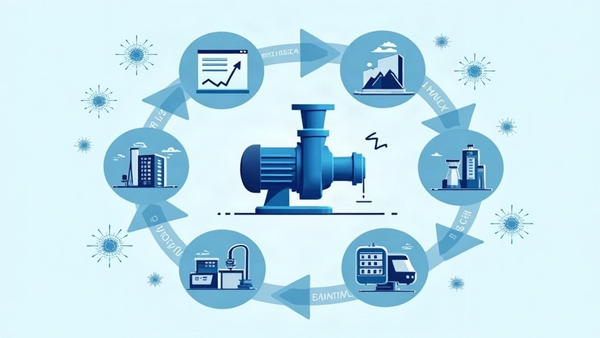
The convergence that is happening in MAS 9.2 and the broader Maximo ecosystem is about closing the loop:
code blockIn this closed loop, RCM is not a one-time study. It is a living analysis that evolves as asset performance data accumulates. EAM is not just executing a static plan. It is receiving condition-based triggers from APM. APM is not just generating alerts. It is feeding data back into the RCM analysis to refine failure mode understanding.
Maximo's Role in the Convergence
IBM's positioning of Manage, Monitor, Health, Predict, and Reliability Strategies as a connected operational capability, not separate products, is the architectural foundation for this convergence.
- Maximo Manage is the EAM execution layer
- Maximo Monitor is the condition monitoring and IoT data ingestion layer
- Maximo Health is the health scoring and asset risk assessment layer
- Maximo Predict is the predictive analytics and remaining useful life layer
- Maximo Reliability Strategies is the RCM and maintenance strategy layer
The integration between these modules is not just API-level. It is workflow-level. A health score degradation in Health can trigger a condition-based work order in Manage. A failure mode identified in Reliability Strategies can define the monitoring parameters in Monitor. A prediction from Predict can update the risk assessment in Health.
MAS 9.2 Condition Insight: From Data to Action
The most significant new APM capability in MAS 9.2 is Condition Insight. This is not just another dashboard or alerting mechanism. It is an AI-powered capability that brings together work orders, inspections, meter readings, and reliability strategies to identify patterns in asset behavior and recommend what to do next.
What Condition Insight Does
Condition Insight ingests data from four sources:
1. Work order history: Failure codes, repair actions, parts used, downtime duration
2. Inspection results: Condition observations, measurement data, pass/fail results
3. Meter readings: Runtime hours, throughput, pressure, temperature, vibration
4. Reliability strategies: Defined failure modes, acceptable performance ranges, maintenance triggers
It then applies pattern analysis to identify:
- Emerging failure patterns: Multiple assets of the same type showing similar degradation signatures
- Strategy gaps: Failure modes that are occurring but are not covered by the current maintenance strategy
- Intervention opportunities: Assets where a small intervention now could prevent a major failure later
- Data quality issues: Inconsistent failure coding, missing meter readings, inspection gaps
The output is not just a list of alerts. It is a set of recommendations: "Review the maintenance strategy for this pump class. Three of twelve units have shown the same bearing degradation pattern that is not covered by the current PM." Or: "Increase inspection frequency on this heat exchanger. Condition scores have been declining faster than the model predicted."
How It Differs from Traditional APM
Traditional APM tools answer the question: "What is the health of this asset right now?" Condition Insight answers a different question: "What should we do differently based on what we are seeing across our asset fleet?"
This is a shift from descriptive analytics (what happened) and diagnostic analytics (why it happened) to prescriptive analytics (what we should do about it). It is the difference between a dashboard that shows a red health score and a recommendation that says: "This health score pattern matches a known failure mode. The recommended action is to replace the bearing within the next 200 operating hours."
The Data Foundation
Condition Insight is only as good as the data it ingests. Organizations that have invested in consistent failure coding, structured inspection data, and reliable meter readings will get more value from Condition Insight than those that have not.
Specifically, Condition Insight benefits from:
- ISO 14224-aligned failure coding: Consistent failure mode, failure mechanism, and failure cause taxonomies
- Structured inspection templates: Inspections that produce quantifiable data, not just free-text notes
- Complete meter histories: Continuous meter reading data with minimal gaps
- Accurate asset hierarchies: Assets classified by type, criticality, and functional location
If your organization is not there yet, Condition Insight is not useless. It will still identify patterns in whatever data you have. But the quality and specificity of its recommendations will improve as your data foundation improves.
The Cloud-Native APM Architecture Pattern
Beyond Maximo specifically, the broader APM industry has settled on a cloud-native architecture pattern that is worth understanding, because it shapes how Maximo's APM capabilities integrate with the rest of the enterprise technology stack.
The Lakehouse Foundation
The single most important architectural decision in modern APM is the data layer. The industry has converged on the lakehouse pattern: Apache Iceberg, Delta Lake, or Apache Hudi as the table format, running on object storage (S3, Azure Blob, GCS), with a query engine (Spark, Trino, DuckDB) on top.
Why the lakehouse won:
- Schema evolution: Industrial data schemas change constantly. New sensor types, new asset classes, new failure modes. The lakehouse handles schema evolution without downtime.
- Multi-modal data: APM needs time-series sensor data, structured work order data, unstructured inspection notes, and semi-structured reliability analyses. The lakehouse stores all of them in one query plane.
- Cost: Storing ten years of one-second sensor tags in a traditional historian is expensive. Storing them as Parquet files on object storage is cheap.
- Separation of compute and storage: You can run heavy ML training jobs on ephemeral compute clusters without affecting the query performance for operational dashboards.
For Maximo organizations, the practical implication is that your APM data strategy should start with the lakehouse, not with the EAM. The lakehouse is the longest-lived decision in your architecture. Maximo is one consumer of that data, alongside your ML pipelines, your reporting tools, and your digital twin applications.
The ML Stack Maturation
The ML stack for APM has also matured into a repeatable pattern:
1. Feature Store (Feast, Tecton, or managed equivalents): Defines, stores, and serves features for ML models. Ensures consistency between training and inference.
2. Model Registry (MLflow, or managed equivalents): Tracks model versions, manages stage transitions (staging, production, archived), and stores model artifacts.
3. Inference Service (KServe, or managed equivalents): Serves models in production with support for shadow rollouts, canary deployments, and drift monitoring.
The key insight for Maximo teams: you do not need to build this yourself. The major cloud providers offer managed versions of all three components. The pattern is well-understood and well-documented. The challenge is not the technology. It is the organizational commitment to treating ML models as software artifacts that need versioning, testing, and monitoring.
Per-Asset-Family Models
The 2026 consensus on ML model granularity: default to per-asset-family models, not per-asset models.
A per-asset-family model is trained on data from all assets of the same type (all centrifugal pumps of a specific class, all transformers of a specific rating). A per-asset model is trained on data from a single asset.
Per-asset-family models are the better default because:
- More training data: A fleet of 50 pumps generates 50 times more training data than a single pump
- Better generalization: The model learns failure patterns that apply across the fleet, not just idiosyncrasies of one asset
- Faster time to value: You can deploy a per-asset-family model as soon as you have enough fleet data, without waiting for each individual asset to accumulate a failure history
- Easier maintenance: 50 models (one per asset family) is manageable. 5,000 models (one per asset) is not.
Per-asset models are appropriate when
...